

Your questions answered · Knockdown rebuild
Knocking down and rebuilding on Brisbane's Bayside:
the whole path, in plain words.
Most families come to a knockdown rebuild one question at a time: can we, should we, what will it cost, who do we trust with it. This page puts all the questions in the order they actually arrive, with the short answer to each and a link to the long one. It's the map. The other posts are the ground.
 Nathan Brain, carpenter and builder at Sabre
23 September 2026
15 min read
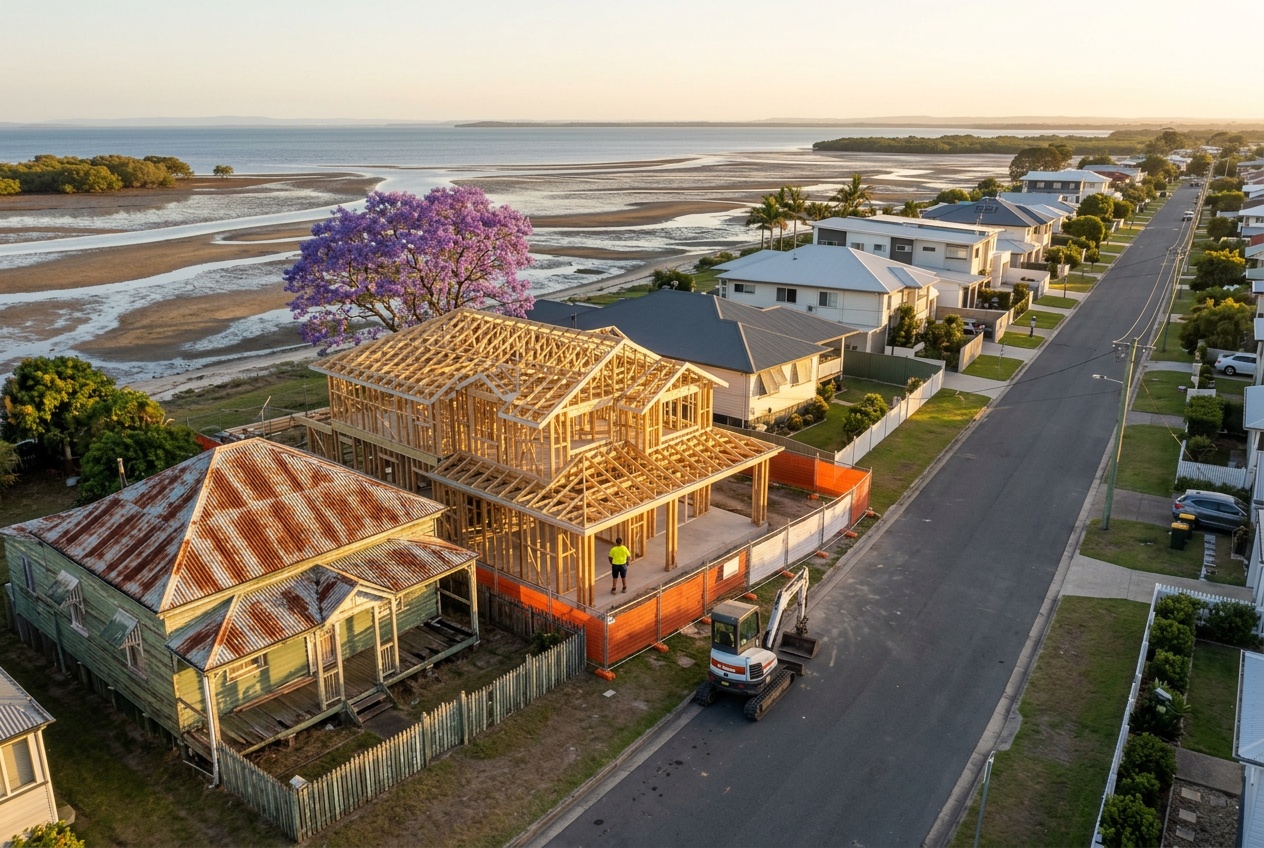 The whole guideKnockdown rebuild
Is a knockdown rebuild the right move for your family?
Start with the reason you're asking. On the Bayside it's nearly always the same one: the family has outgrown the house but not the street. The school is right, the neighbours are right, the water is at the end of the road. The house is the problem.
That's worth saying out loud, because it means a rebuild is one answer among several. The honest list has six: extend, raise and build under, renovate inside the walls you've got, knock down and rebuild, add a secondary dwelling, or move. All six, and what decides between them, are here.
Between the two big ones, renovating and rebuilding, six checks do most of the work: the structure, the year the house was built, what you want it to become, the block, the ground under it, and what each path would cost you in money and in the house you end up with. A pre-1947 house in the character overlay can tip the answer toward renovating on its own. A post-war lowset with a cracked slab and rooms too small for the family usually tips the other way. How to tell which one your house is.
Then there's the comparison nobody can do for you: rebuilding against selling up and buying something newer. Moving has a list of costs that never arrive in one bill: selling costs, buying costs, stamp duty, the move, and the gap between what you'd sell for and what a new house in a street this good would cost. Rebuilding has its own list. The honest sum is the total cost of ending up in a house that works, in a street you're happy with, on both sides. How to do that sum with your own figures.
Why are so many of your neighbours doing it?
Because four things arrived at once. The post-war houses that fill the Bayside were built fast and small during a national housing shortage, and they're now around seventy years old. A great many are clad in fibro from the asbestos era. The blocks under them are some of the best in Brisbane. And the families in them want to stay. The whole story is here, and what the houses are actually made of explains why the year of your house matters so much for what happens next.
Can your house legally come down?
This is the check that can end the conversation, so it goes first. Brisbane City Council draws a line at 1946.
- Built after 1946? The character rules almost certainly don't stop you knocking it down. Other approvals still apply.
- Built in 1946 or earlier, and your street is in the Traditional building character overlay? Demolition needs a development application, and council decides. It isn't automatically no. It isn't automatically yes.
- Built before 1911? Council's position is that the house is to be kept.
The overlay applies to “some areas and streets of older suburbs that have a distinct identity based on building character, materials, layouts and setbacks.” Its purpose is “to maintain the traditional, pre-1947 streetscape.”
Brisbane City Council, Heritage and character properties, Brisbane City Plan 2014. Council's own words. The line it draws is 1946, which is why the year of your house matters as much as the map.
You need two answers, and both are free. Whether your street is in the overlay is on council's City Plan online mapping. The year your house was built is in Brisbane City Archives' building records. The fifteen-minute method for both is here, and the rules themselves, in council's own words, are here.
Every knockdown rebuild also needs building approval, for the new house and for the demolition, issued by a licensed building certifier. That's not the same thing as a development application. A DA is only needed when something on your lot triggers one: a code-assessable overlay for the new house, or a protected old house for the demolition. Which overlays trigger what. If you're in Wynnum or Manly specifically, the five things to know first are here.
What if the answer is no?
Then the street is still there and so are the other five options. A protected pre-1947 house can often be raised and built under, extended at the back, or renovated inside the walls you've got. A secondary dwelling for a parent or a teenager is part of the definition of a house in Brisbane's City Plan, not an exception to it. A “no” on demolition is the start of a different design conversation, not the end of staying. The six options, again.
What does the block decide?
More than the house does. Two families can pick the same floor plan and end up with very different jobs, because the block underneath is different. These are the things a builder reads off it.
The flood level
A flood overlay on a Bayside block usually doesn't stop a rebuild. It sets rules for the new house, mainly how high the habitable floor has to sit. Council's free FloodWise Property Report gives the levels for your lot, including the minimum habitable floor level. Near the water, storm tide and overland flow are the ones that matter. What changes on a flood overlay block.
Highset or lowset
That floor level is what most often decides whether the new house goes up or stays on the ground. The slope and the breeze off the bay are the other two reasons. What “highset” means, and when a new house is designed that way.
The trees
Some trees on your block may be protected under council's Natural Assets Local Law, and penalties apply for interfering with them without a permit, including lopping, on your own land. You can ask council for a protected vegetation report on your property. What happens to the trees.
The size and the shape
Under Brisbane City Plan 2014, a lot under 450 square metres is a small lot, and the house is assessed against its own code. Small and narrow blocks get built on all the time; the code shapes the house rather than ruling it out. Rebuilding on a small or narrow block. Two storeys is the ordinary outcome in the low density residential zone, not an exception. Going up on a Manly block, as an example.
The ground
A soil test classifies your site under AS 2870, from A for stable sand or rock to E for extremely reactive clay and P for problem sites. The higher the class, the stiffer and deeper the footings, and the more they cost. A quote written without the test has an allowance where the footings should be. What a soil test is and why it moves the price.
Buying a house to knock down?
If you don't own the block yet, the checks are the same, only earlier, and the order matters more because the first two can end the purchase. Check the block, not the house: the year and the overlay, the FloodWise report, protected trees, the slope and access, the ground, the boundaries and any easements, and what the contract lets you do if a check fails. The full checklist before you sign.
And think about what a standard building and pest inspection is for. It's written for a buyer who'll live in the house. If the house is coming down, the bathroom leak is a fact you'll bulldoze. Keep the inspection condition in the contract, but tell the inspector what you're really buying. What a building and pest inspection is worth on a knockdown.
What decides the cost?
This is the question most families search first, and it's the one we answer differently from most builders. We don't publish a price. Here's why.
Nine things decide the cost of a knockdown rebuild. Only two are the ones people expect: the size of the new house and the level of finish. The other seven belong to the old house and the block. What the old house is made of, and whether there's asbestos in it. How it comes down. The slope and access of the block. Which overlays apply. What the soil test says. How the new house meets the ground. And where you live while it happens. All nine, one at a time.
Anyone who gives you a figure before they've checked those seven is pricing the house, not the job. That's also why the quote matters more than the number at the bottom of it.
“Allowances (items or services for which the price is not fixed when the contract is signed) should be kept to a minimum as the final cost often exceeds the estimate in the contract.”
Queensland Building and Construction Commission, Consumer Building Guide, version 3, effective July 2023. The regulator's own warning: a price with a lot of allowances in it isn't a price yet.
- Read the quote line by line. A complete one covers before the house, the site, the structure, the inside, and the outside and paperwork, with every allowance listed separately. What should be in a builder's quote.
- Know which kind of contract it is. Fixed price puts the risk on the builder; cost-plus puts it on you, and the QBCC is blunt about which it prefers. Fixed price or cost-plus.
- Talk to a lender or broker early. Construction loans are usually paid in stages as the house goes up. We're builders, so we describe the shape and leave the decision to them. Construction loans for a knockdown rebuild.
Who draws it, and who builds it?
There are two broad ways to build. A package starts with a builder's existing plan and fits it to your block, usually at an advertised price. A custom build starts with the block and the family and draws the house to them. Neither is right for everybody. What matters is knowing which one you're being offered, and what the advertised number assumes about your block. What a knockdown rebuild package is.
Whoever you talk to, check them the same way. Their QBCC licence number goes into the public register, and you check three things: that it's current, that its class covers your job, and that the name on it is the entity you're signing with. How to check a builder's licence. Then ask the questions the QBCC's own guide suggests, plus the two that aren't in any guide: who you'll be talking to when something goes wrong, and who's on the phone in month four. The questions to ask before you sign.
On the Bayside you'll also find small independent builders: locally owned, usually a family, building a handful of homes at a time. Sabre is one of them. Who they are and how to compare them, us included.
The whole process of choosing a builder, from licence to contract to handover, has its own guide: how to choose a builder in Queensland, the whole checklist.
What happens before demolition?
More than people expect, and in a fixed order. The family moves out before anyone touches the house. Then:
- The asbestos comes out. Asbestos was used in Australian building materials from the 1940s to the late 1980s, so most Bayside houses from that era have it somewhere. In Queensland removing it is licensed work: class B for bonded asbestos, class A for the crumbly kind. What asbestos removal means for your rebuild.
- The services are disconnected. Electricity, gas, water and sewer, phone and internet, each with its own process. The electricity is the one that holds everything up. Moving out and cutting the services.
- Decide what stays. A pool, a shed or a front fence can sometimes stay, if it's sound, it isn't in the way, and the design is drawn around it. Keeping things isn't free. What you can keep.
- Salvage what's worth saving. Very little of the old house goes into the new one's structure, but hardwood floors, VJ boards, doors and windows can go to salvage or come back as a feature. How much of the old house can be reused.
“Building demolition or removal cannot, under any circumstances, start until Energex has confirmed in writing that the work to remove the connection has been completed.”
Energex, Remove your connection. The request goes through your electricity retailer, not Energex, and it takes time. Start it early.
What happens during the build?
Once the old house is gone, the job becomes an ordinary Queensland house build, with the protections that come with one. Four things are worth understanding before you sign, because they decide how the next stretch feels.
- You pay in stages. The deposit is capped at 5% on a contract of $20,000 or more, and every progress claim after it has to match work done on site. Progress payments, and what you pay when.
- A certifier inspects the key stages. For a new house: excavation, footings, slab, frame and final. How inspections and certifiers work.
- Changes go in writing first. A variation must be agreed in writing before the work starts. Variations, and when the price shouldn't have changed.
- The work is warranted after handover. Six years for structural defects and one year for everything else, whether the contract mentions it or not. Defects, warranties and the clocks that run after handover.
How long the whole thing takes is the question we get asked most after cost, and it's the one we won't answer on a web page. Builders' published figures contradict each other, because the block, the approvals and the demolition decide most of it. Ask any builder for a sequence for your job, in writing, once they've seen the block.
Where do you actually start?
With the two free checks, tonight, from the couch.
- First: put your address into council's City Plan online mapping and turn on the overlays. Note whether you're in the character overlay and whether a flood overlay applies.
- Second: find the year your house was built. Brisbane City Archives hold the records.
- Third: pull the FloodWise Property Report for your address. It's free and it takes a minute.
If none of those stops you, the next step is someone walking the house and the block with you. That's where the other seven cost drivers get answered, and where the honest answer is sometimes “renovate” or “stay as you are.”
And if the question underneath all this is really whether to stay on the Bayside at all, the honest guide to living here is the place to start.
Common questions
What is a knockdown rebuild?
Demolishing the house you own and building a new one on the same block. You keep the land, the street and the school, and replace the house. It needs building approval for the demolition and the new house, and sometimes a development application.
Can any house on the Bayside be knocked down?
Most post-war houses can. A house built in 1946 or earlier in Brisbane's Traditional building character overlay needs a development application to be demolished, and council may refuse it. A pre-1911 house is to be kept. Check your address on council's mapping first.
How much does a knockdown rebuild cost in Brisbane?
It depends on nine things, and seven of them are about the old house and the block: asbestos, demolition, slope and access, overlays, soil, how the house meets the ground, and where you live meanwhile. We don't publish a figure; any honest number needs someone to have looked at the block.
Do we need a development application?
Every knockdown rebuild needs building approval from a certifier. A DA is only needed if something on your lot triggers it, such as certain overlays for the new house, or a pre-1947 house in the character overlay for the demolition.
What's the first thing we should do?
Check your address on council's City Plan mapping for the character and flood overlays, find the year your house was built, and pull the free FloodWise report. Those three take about fifteen minutes and tell you whether the rest of the path is open.
Sources: Brisbane City Council, Heritage and character properties, Building a new house: approvals and requirements, FloodWise Property Reports, Protected vegetation and Brisbane City Plan 2014; Queensland Building and Construction Commission, Consumer Building Guide, version 3 (July 2023); Queensland Government, asbestos.qld.gov.au; Energex, Remove your connection; Standards Australia, AS 2870. Each linked post lists its own sources and the date they were read. Plain-English guidance from a builder; not legal, financial or planning advice.
Keep reading
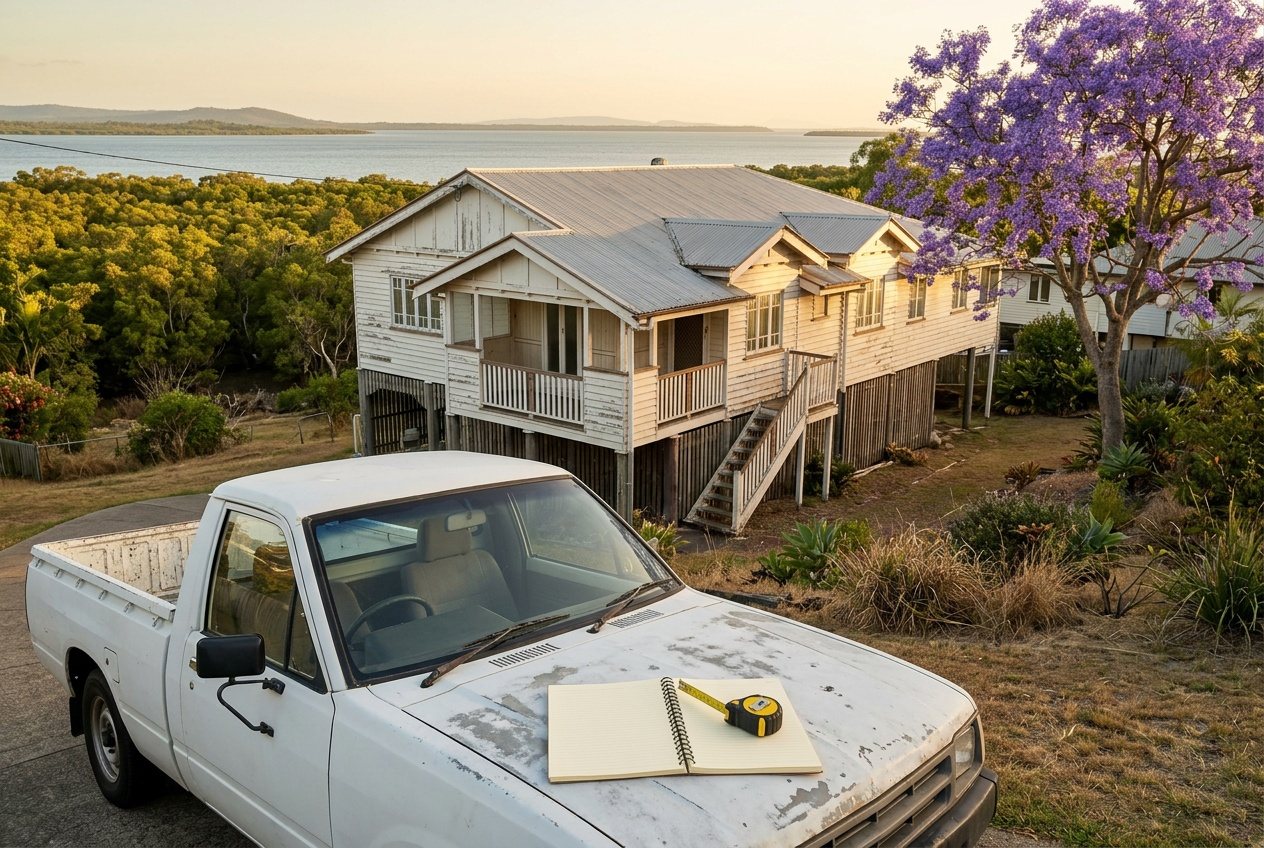 The nine things that move itWhat decides the cost
What decides the cost of a knockdown rebuild in Brisbane?
Not a price. The nine things that move it: the old house and what's in it, the block, the overlays, the ground, the size, the finish, the access and where you live meanwhile.
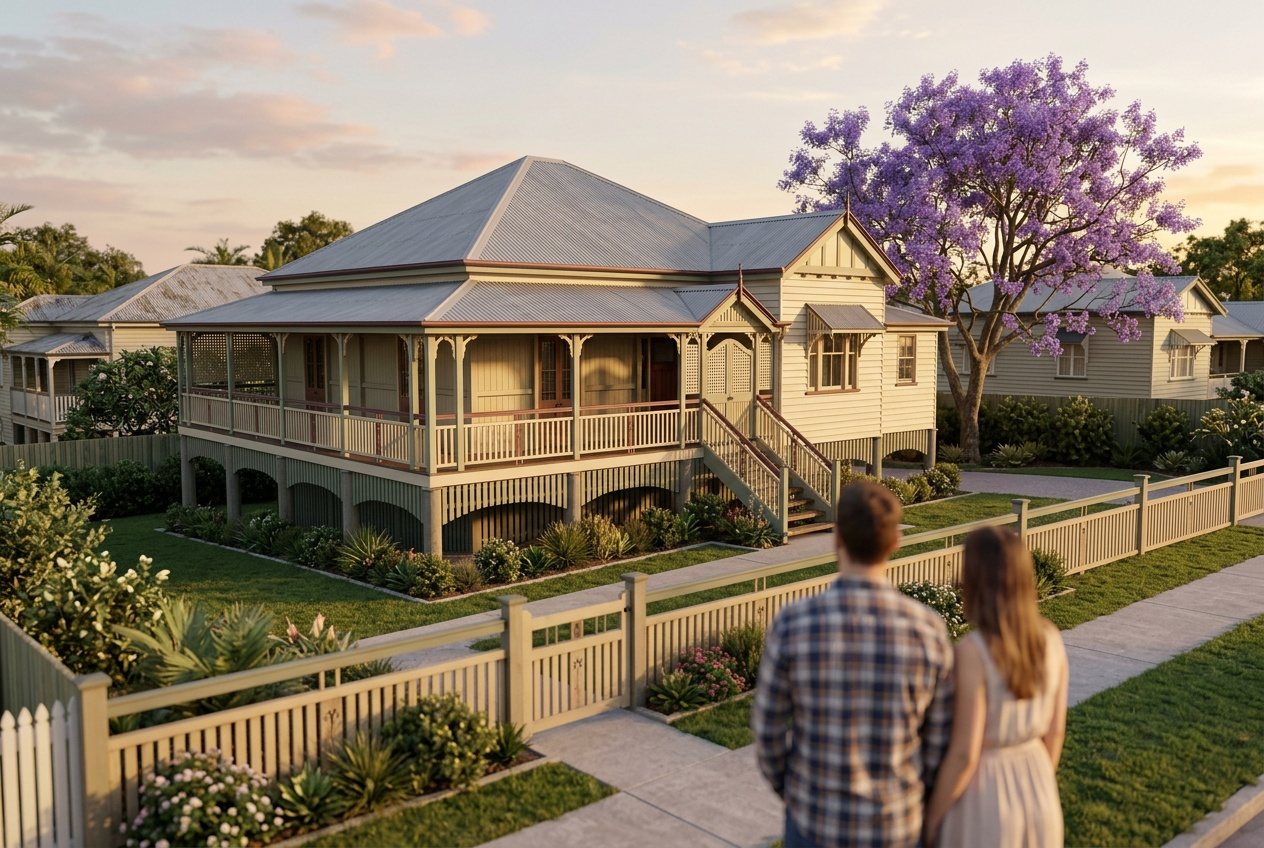 Brisbane's rules, in plain wordsCan we knock it down?
Can we knock down our house? Brisbane's rules in plain words
The pre-1947 rule, straight from council's own page, and when a protected house can still come down.
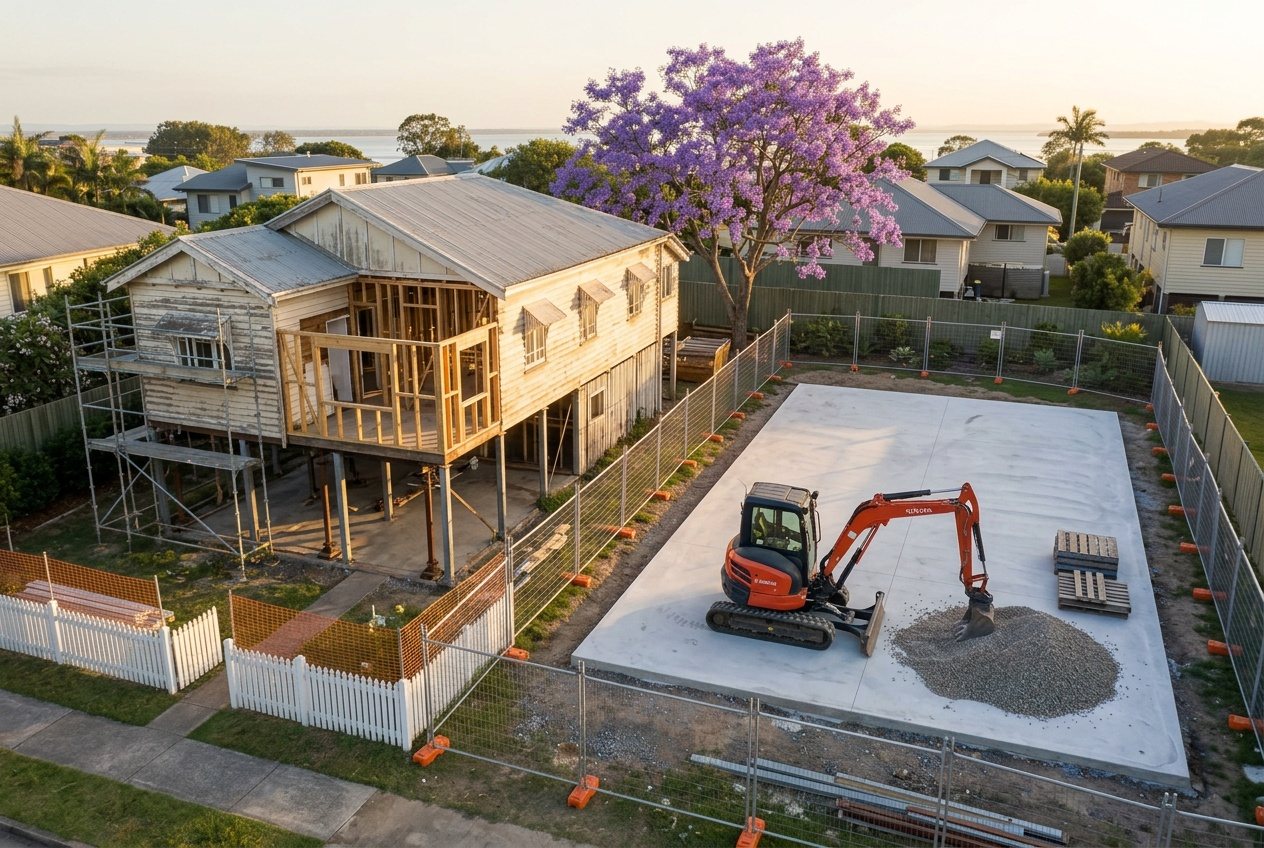 The six checksRebuild or renovate?
Knockdown rebuild or renovate: how to tell which one your house is
The six checks a builder runs on an old Bayside house before saying keep it or start again. Sometimes the honest answer is the one you didn't want.
Where most families start
A walk through your house with Nathan.
Every step on this page gets easier once someone has stood on your block. Nathan will walk the house and the block with you and tell you which of these questions matter for yours.
Book your walk-through with Nathan Call 0422 831 306
Already thinking about a rebuild? The free block check is on the same page.