

Your questions answered · Knockdown rebuild
What happens to the trees on the
block in a knockdown rebuild?
The big gum in the backyard is either the best thing about your block or the reason the design has to bend. In Brisbane, that isn't always your call. Here's how council protects trees on private land, how to check yours in a few minutes, and what it does to a rebuild.
 Nathan Brain, carpenter and builder at Sabre
17 September 2026
5 min read
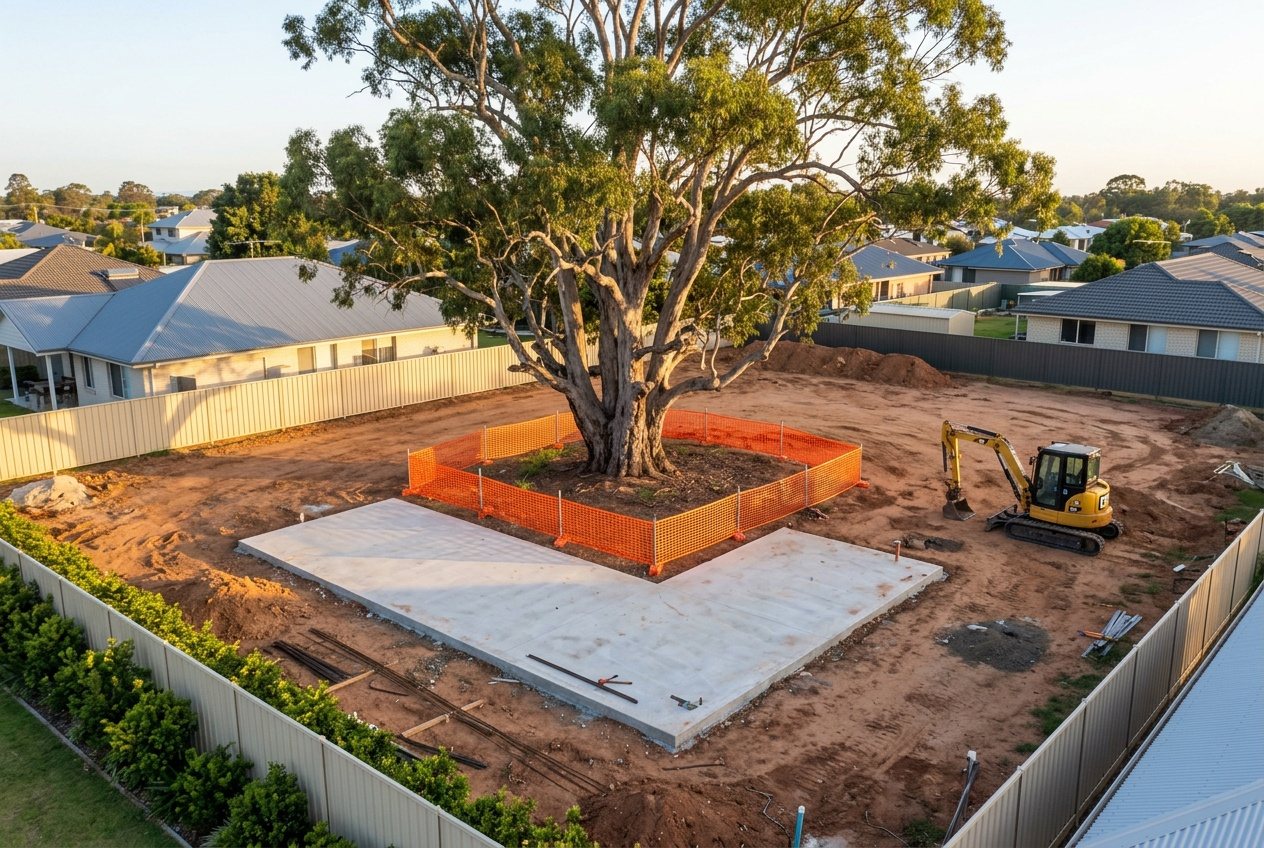 Council's local lawThe trees
Part of a bigger picture: the whole knockdown rebuild path, step by step.
Which trees are protected?
Council's local law names four categories, and two of them sit on private land.
- Council vegetation. Street trees, park trees, vegetation in natural areas. The tree on the verge in front of your house is council's, not yours.
- Waterway and wetland vegetation. Along the creeks and the foreshore, fresh or salt, natural or man-made. Lota Creek, the Wynnum creeks and the mangrove edges all count.
- Significant urban vegetation. Council's words: native and exotic vegetation on private property that is mature and/or prominent in the landscape. The big fig, the old camphor laurel, the gum everyone can see from the street.
- Significant native vegetation. All native vegetation on properties in council's mapping, from ground covers to large trees.
Council also lets residents nominate a tree or a group of trees for a vegetation protection order. Old Bayside streets have a few.
“Penalties apply if you interfere with protected vegetation without a permit.” A property may have protections if it is near or in a waterway corridor, in a bushland area, contains large significant trees even in an urban area, or has heritage values.
Brisbane City Council, Protected vegetation (Natural Assets Local Law 2003). It's the owner's job to know, and the map is free.
How do you check your block?
Two ways, both from council.
- Open council's community maps (the land and environmental map) and look up your address. The protected vegetation layers show on the lot.
- Make a protected vegetation enquiry about your property. Council sends back a map of protected vegetation on the lot and a report as a PDF.
Do the second one. The report is what a designer and a certifier want to see, and it's what you'd need to apply for a permit anyway.
What if a protected tree is where the house goes?
Then you apply to council for a permit, and the design might change first.
Council's guidance is to talk to them about your plans before lodging a development application, and to apply for the vegetation permit after the DA is finalised. In practice that means the tree is part of the design conversation from the start, not a surprise at demolition. A permit isn't automatic. Council can refuse, or condition it, or ask for the design to move.
There's also the City Plan side: a lot under the significant landscape tree overlay is code assessable, which means a new house needs a development application. That post explains the two approvals.
What about the trees that aren't protected?
Most trees on most suburban blocks aren't in any of the four categories, and those are yours to keep or remove. Check the report before you assume, and check the verge: the street tree is council's even when it's your problem.
Removal before demolition is a job for an arborist or the demolition contractor, and the stumps and roots come out before anyone digs footings.
What does a builder do with a kept tree?
Designs around it, then protects it.
A big tree decides where the house can sit, where the driveway goes, and what the footings near it have to do. Roots don't stop at the drip line. The arborist's advice about the protection zone becomes part of the site plan, the tree gets fenced before the excavator arrives, and nothing is stored or parked under it for the length of the job.
It's more work. It's also usually why the block was worth staying on.
Common questions
Can we remove a tree on the footpath that's in the way of the driveway?
Not without council. Street trees are council vegetation under the local law. Talk to council about the crossover and the tree together; sometimes the driveway moves instead.
The tree is dangerous. Do we still need a permit?
Ask council before you act. There are processes for dangerous or dead trees, and an arborist's report is usually the first step. Cutting first and explaining later is exactly what the penalties are for.
Does a protected tree stop the rebuild?
Rarely. It moves the house, the driveway or the footings. Houses get built around big trees all over the Bayside, and often the tree is the reason the family stayed.
Who fences the tree during the build?
The builder, before demolition starts, to the protection zone an arborist sets. It stays fenced until handover.
Sources: Brisbane City Council, Protected vegetation and Protected vegetation permits (Natural Assets Local Law 2003); Brisbane City Plan 2014, Significant landscape tree overlay. Read 17 September 2026. Council's mapping is updated from time to time; get the current report for your lot. This is a plain-English guide, not legal or arboricultural advice.
Keep reading
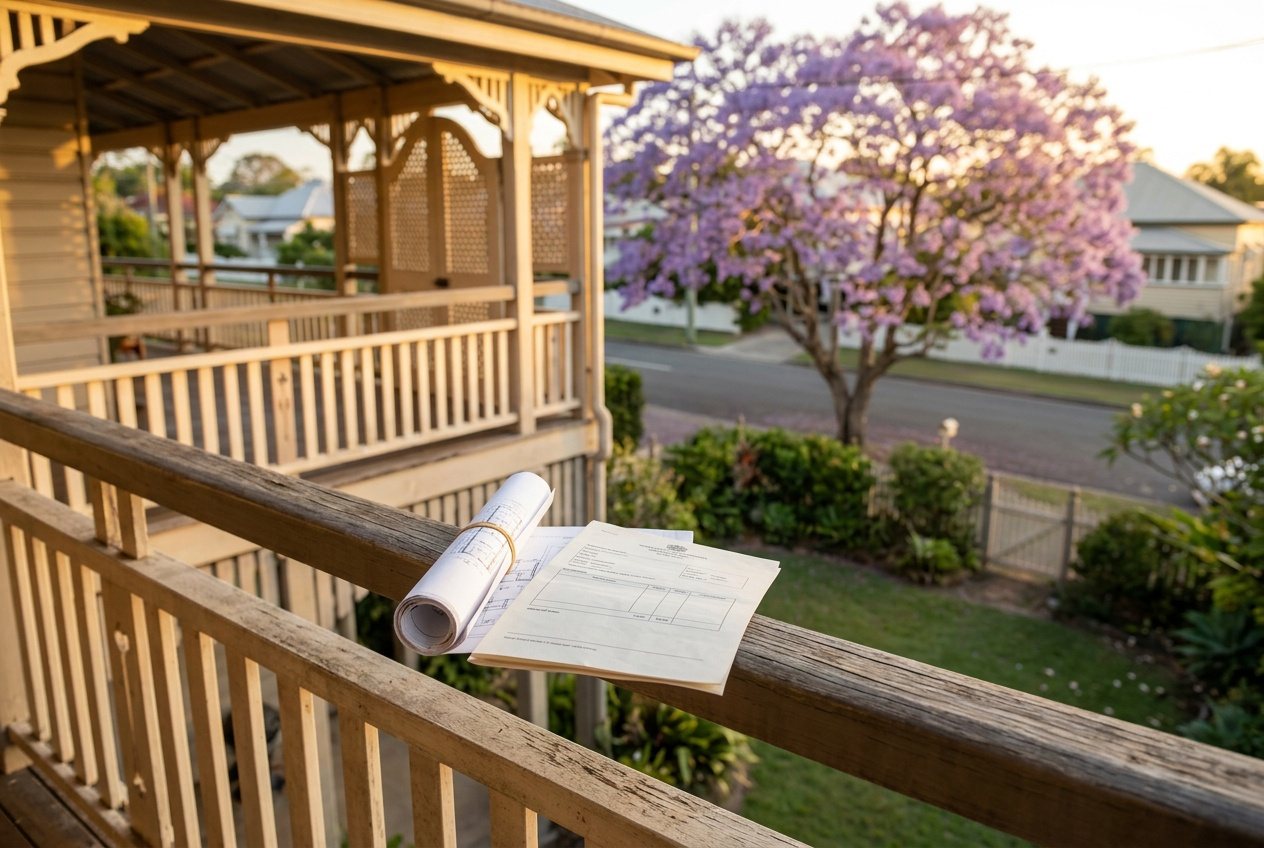 Two approvals, not oneDo we need a DA?
Does a knockdown rebuild need a development application?
Two approvals, not one. Every new house needs a certifier's building approval. A DA is only needed when an overlay or the old house triggers it — council's own list, in plain words.
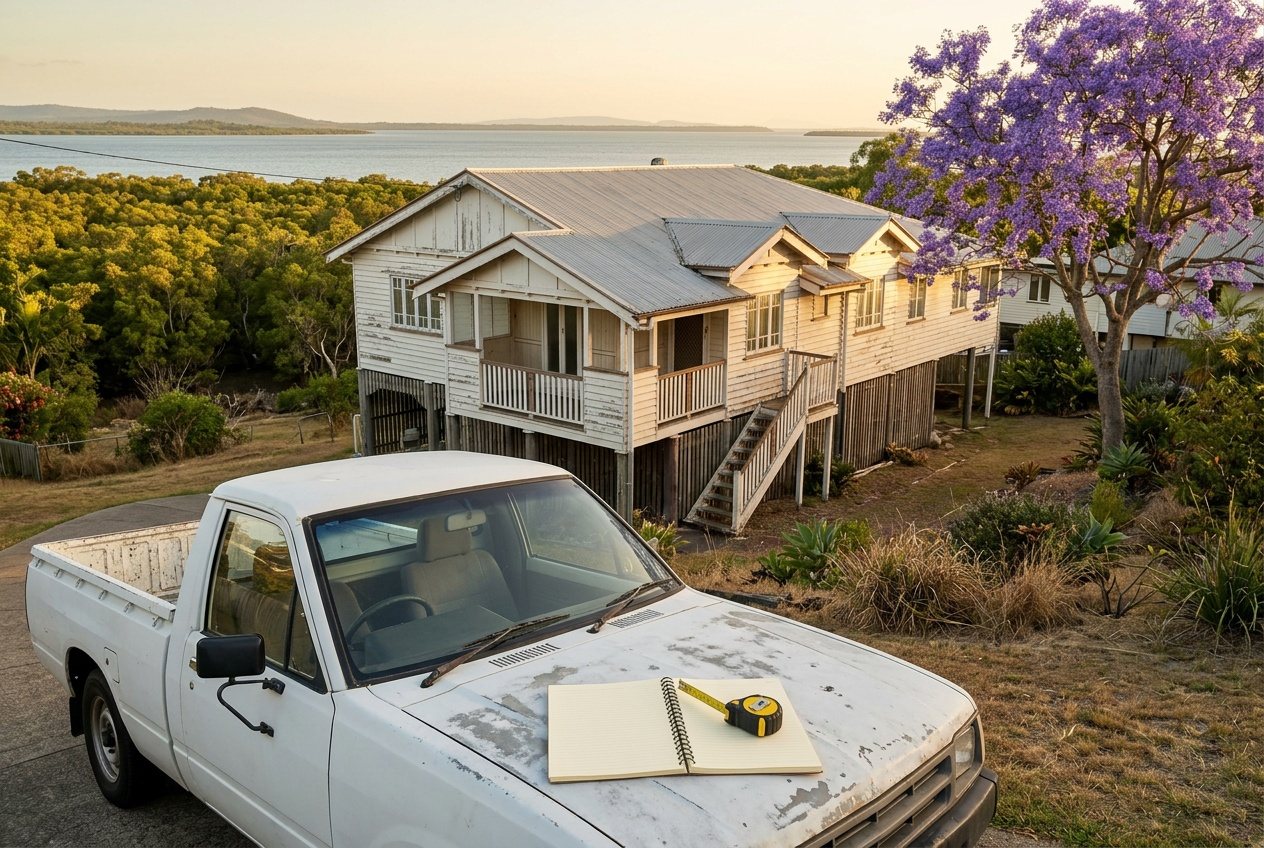 The nine things that move itWhat decides the cost
What decides the cost of a knockdown rebuild in Brisbane?
Not a price. The nine things that move it: the old house and what's in it, the block, the overlays, the ground, the size, the finish, the access and where you live meanwhile.
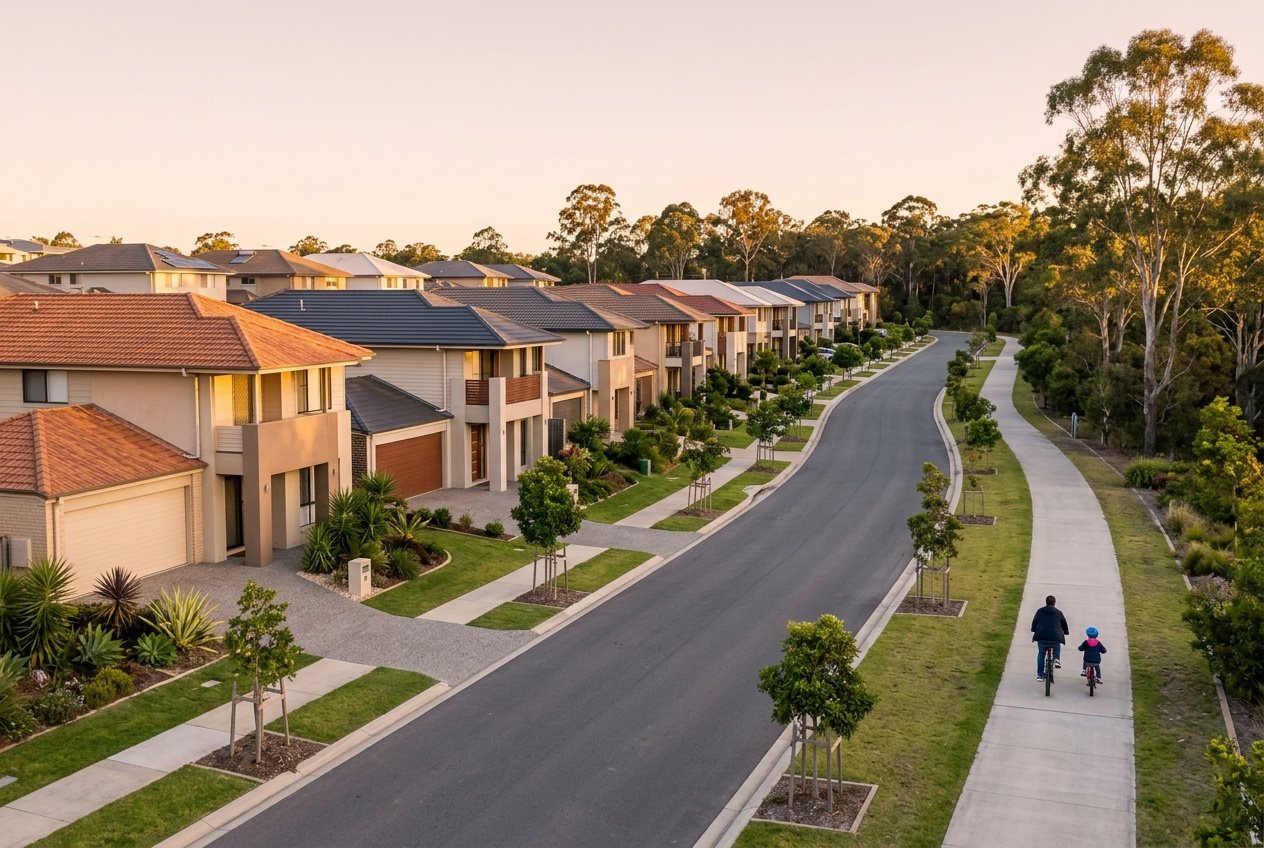 The newer BaysideWakerley & Gumdale
Wakerley and Gumdale: the newer Bayside, and what you give up for it
Wakerley is the estate suburb, Gumdale the acreage one. Newer houses, bigger blocks, no state school in Wakerley, no train, no water at the end of the street. The honest trade.
Where most families start
A walk through your house with Nathan.
Bring council's protected vegetation report to the walk-through, or let Nathan pull it. He'll tell you what the tree does to the design before anyone's attached to a plan.
Book your walk-through with Nathan Call 0422 831 306
Already thinking about a rebuild? The free block check is on the same page.