

Your questions answered · Dealing with a builder
What is a building and pest inspection
worth on a house you plan to knock down?
You're buying a house to knock it down, and the contract has the usual building and pest condition in it. Do you bother? Yes, but not for the reason the inspector thinks. Here's what a standard report is for, what it tells you when the house is coming down regardless, and what to spend the money on instead.
 Nathan Brain, carpenter and builder at Sabre
17 September 2026
5 min read
 The house or the block?Building and pest
Part of a bigger picture: the whole checklist for choosing a builder in Queensland.
What is a standard inspection for?
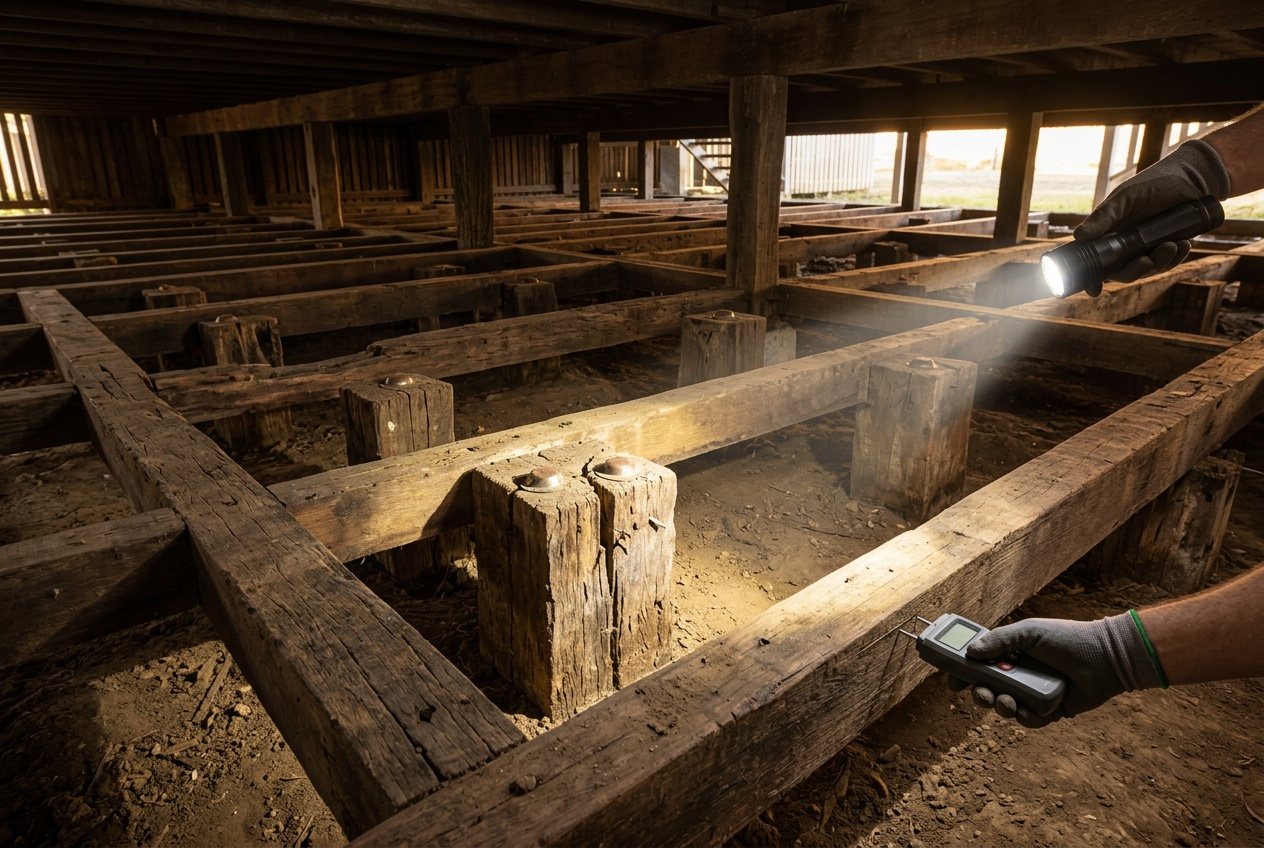
Two reports, usually done on the same visit. The building inspection is a visual assessment of the accessible parts of the house: roof, exterior, interior, subfloor, wet areas, with defects graded and safety hazards flagged. The pest inspection looks for evidence of termites and other timber pests, active or past, and the conditions that invite them.
Both are written for someone who's going to own and live in the building. They tell you what it would cost to keep it. That's a different question from what it will cost to remove it.
What does it still tell a knockdown buyer?
A few useful things, if you read it for the block rather than the house:
- Cracking, movement and moisture in the subfloor. Cracked slabs, stumps that have moved, doors out of square. Hints of reactive clay or fill under the house, which the soil test will later confirm. Why that matters is here.
- Termite activity in the ground. Active nests on the block are a fact for the new house's termite management, not just the old one's.
- Drainage and where the water goes. Damp under the house tells you about the block.
- The built-in-under and the sheds. Sometimes an inspector notes suspected asbestos materials. That's not an asbestos audit, but it's a flag.
The four checks that matter more
- The year and the character overlay. If the house is pre-1947 and the street is in the overlay, demolition needs a development application and council may refuse it. Nothing an inspector writes changes that. The rules are here.
- The flood report. Council's FloodWise report on the lot sets the minimum floor level for the new house. Free, and it decides what you can build. Here.
- Asbestos. Any Bayside house built before 1990 likely has it somewhere. A licensed asbestos assessor can do an audit if you want the scope before you sign; otherwise, budget for licensed removal as a certainty. Here.
- The trees and the ground. Council's protected vegetation report for the trees; a walk under the house and around the block for the ground, with the soil test after settlement.
The full eight-point list for buying to knock down is here.
Should the contract still have the inspection condition?
Yes, and that's a conversation with your solicitor rather than us. The condition gives you a way out if the inspection turns up something you can't live with, and there's no reason to give that up. What you can do is tell the inspector what you're buying and ask them to spend their time on the subfloor, the ground, the trees and the outbuildings, and to note suspected asbestos materials. A good inspector will adjust.
What if you might keep the house after all?
Then the standard report earns its money, because now you're deciding between renovating and rebuilding and you need to know what the house is worth keeping. A pre-1947 house in the overlay is exactly this case: the inspection tells you what the bones are like, and the bones decide the path. How to decide is here.
Common questions
Can we skip the inspection and save the fee?
You can, and your solicitor will tell you what it does to the contract condition. Our view: keep the condition, and point the inspector at the things that matter for a rebuild. The fee is small against the block.
Is an asbestos audit worth doing before we buy?
If you want the removal scope before you commit, a licensed assessor can do one. If you're happy to treat removal as a certainty on a pre-1990 house, it can wait until you own it.
Will the inspector tell us if we can knock it down?
No. That's a planning question, answered by the year of the house and council's overlay map. Check both yourself; it takes minutes.
Can a builder do the walk instead?
Nathan walks blocks that are on the market and tells you what he sees: the slope, the access, the ground, what the house would cost to remove and what the block would let you build. It's not a building and pest report, and it's the one that answers the rebuild question.
Sources: Brisbane City Council, Demolition or removal, FloodWise Property Reports, Protected vegetation; Queensland Government, asbestos.qld.gov.au; Standards Australia AS 4349.1 (pre-purchase building inspections) for what a standard report covers. Read 17 September 2026. This is a plain-English guide from a builder, not legal or conveyancing advice. Talk to your solicitor about contract conditions.
Keep reading
 Eight checks before you signBuying to knock down
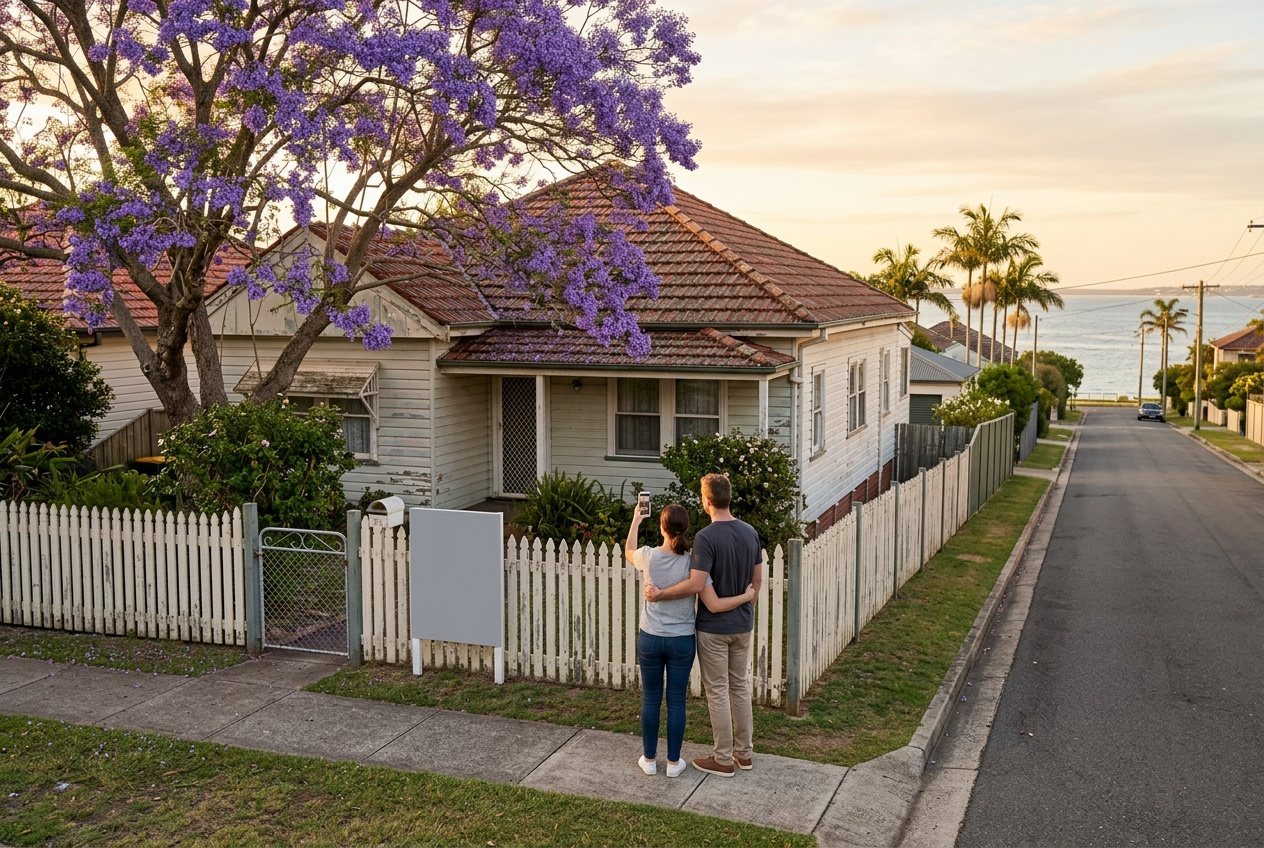
Buying an old house in Wynnum or Manly to knock down: what to check before you sign
Eight checks on the block, not the house: the year, the character overlay, the flood report, the trees, the slope, the ground, the boundaries and the contract. In the order to run them.
 Knockdown rebuildAsbestos
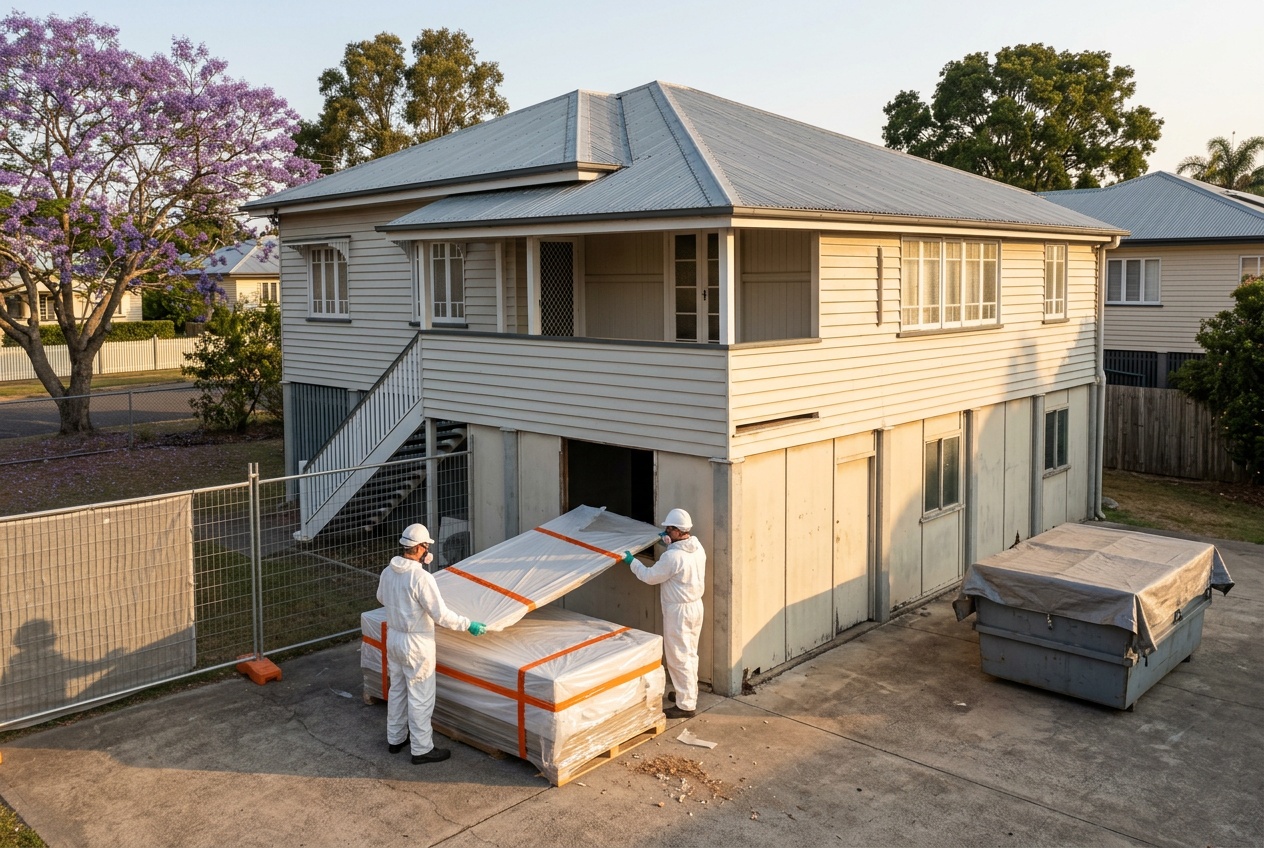
What is asbestos removal going to mean for our rebuild?
Most Bayside houses from before 1990 have it somewhere. Who's allowed to remove it, what happens before the demolisher arrives, and why it moves the price.
 The letter on the reportThe soil test
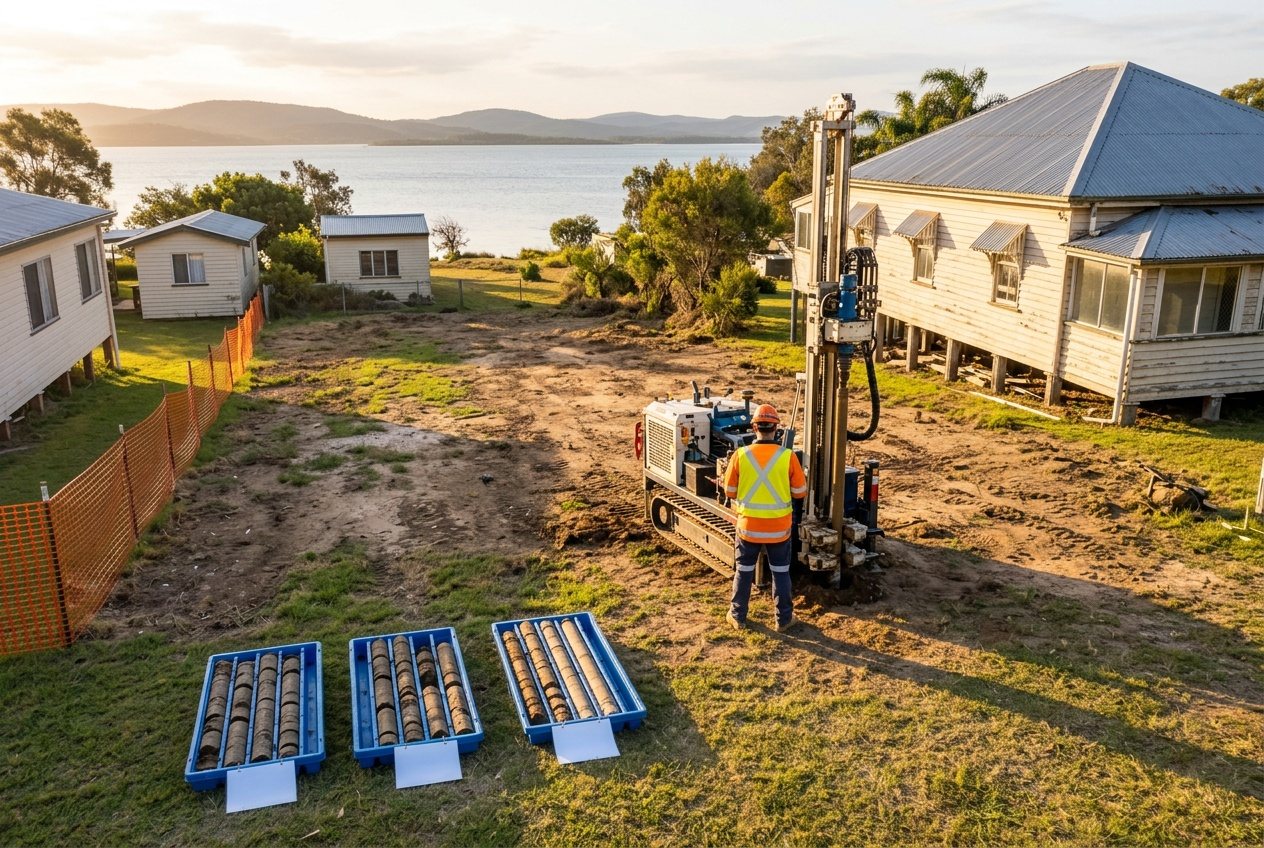
What is a soil test, and why does it change the price?
A geotechnical report gives your ground a class, from A (sand and rock) to E and P. The letter decides the footings, and the footings are a real part of the price.
Where most families start
A walk through your house with Nathan.
If you're buying to knock down, tell Nathan before the inspection is booked. He'll tell you what to ask the inspector to look at, and what to skip.
Book your walk-through with Nathan Call 0422 831 306
Already thinking about a rebuild? The free block check is on the same page.