

Your questions answered · Knockdown rebuild
Can we keep the pool, the shed or the
front fence in a knockdown rebuild?
Nobody wants to pay to demolish a pool they like. Whether it can stay is a real question with a real answer, and the answer is different for the pool, the shed, the fence and the driveway. Here's what decides each one.
 Nathan Brain, carpenter and builder at Sabre
17 September 2026
5 min read
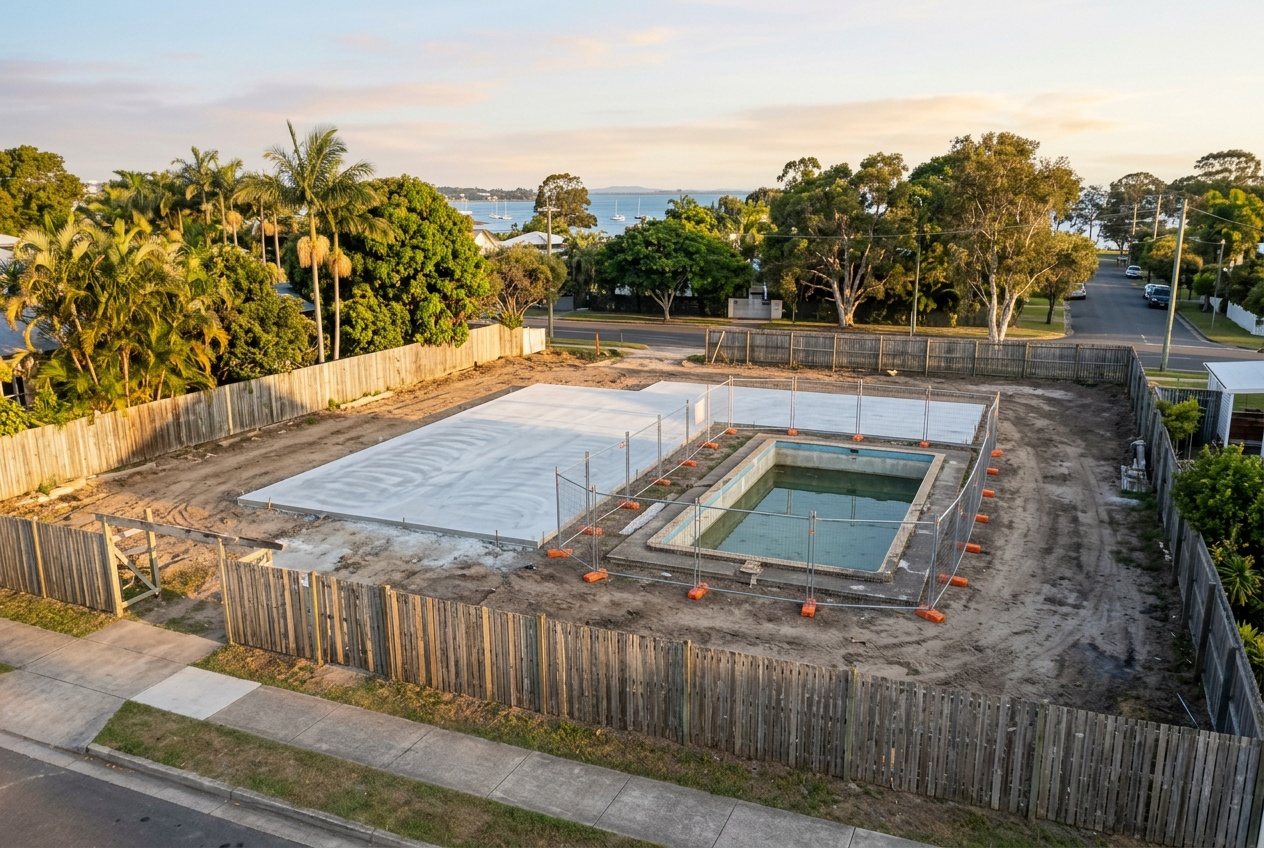 What stays and what goesThe pool, the shed, the fence
Part of a bigger picture: the whole knockdown rebuild path, step by step.
Can the pool stay?
This is the one people care about most, and the one with the most conditions.
- Position. If the pool sits where the new house goes, or where the excavator has to pass to get to the back, it goes. If it's in a corner the design can leave alone, it can stay.
- Condition. A concrete pool with a sound shell and working plumbing is worth keeping. A fibreglass shell that's lifted, or a pool with old pipework you can't trace, is a liability under a new house.
- The work around it. Demolition next to a pool means protecting the shell from machinery, keeping rubble out of it, and dealing with a big hole full of water on a construction site for months. It's done; it's planned for.
- The rules. Pool safety barriers are law in Queensland and the new fence and the new house have to meet them. A kept pool is a design input like the floor level: the barrier, the doors and the windows facing it all have to comply.
Can the shed stay?
Usually the easiest yes, if two things are true: it's out of the way, and it was approved.
A shed at the back corner, clear of the house footprint and the machinery path, can be left alone and worked around. A shed that was never approved, or that sits inside a setback, can become a problem when the certifier looks at the whole site for the new house. Council's demolition page notes you don't need planning approval to demolish a free-standing outbuilding built after 1946, which is often the simpler path if the shed is marginal.
Can the front fence stay?
Often, and it depends on the crossover.
The trucks, the excavator and the frame delivery come through the front. If the existing crossover and gate are wide enough and in the right place for the new driveway, the fence can stay and be protected. If the new house moves the driveway, a section comes out and goes back later. A heritage-style timber fence on an old Wynnum street is worth the trouble; a tired paling fence usually isn't.
What about the driveway and retaining walls?
The driveway almost always goes. The new house rarely sits exactly where the old one did, and the garage rarely lands where the carport was. The old slab is broken up with the rest.
Retaining walls are different. A sound engineered wall holding a sloped Bayside block can be the most valuable thing on the site, and the design keeps it. A stack of sleepers leaning outward is not a retaining wall for a new house's purposes, and the engineer will say so.
What does keeping something cost?
Ask for it as a comparison, not a yes or no. Keeping a pool means protection, slower machinery access, and design constraints. Keeping a fence can mean a section removed and reinstated. Sometimes the honest answer is that demolishing and replacing is cheaper than protecting, and sometimes it isn't. A builder should be able to tell you which before the design is finished.
Common questions
Does a kept pool need a new fence?
Whatever is around it at the end has to meet Queensland's pool safety laws, and the new house's doors and windows facing the pool are part of that. Usually the barrier is redone as part of the landscaping. The pool safety certificate is checked at the end.
Can we keep the old carport?
Only if it's clear of the new house, structurally sound and legally there. Most aren't all three. It's often the first thing to go, because it's where the site sheds and the deliveries end up.
What about the old mango tree by the pool?
Trees are a different rule. If it's mature and prominent it may be protected under council's local law regardless of what you'd like. That post is here.
Who decides what stays?
You do, with the facts. The builder tells you what's possible and what it costs; the designer draws around it; the certifier and the engineer check that what stays meets the rules.
Sources: Brisbane City Council, Demolition or removal (free-standing outbuildings built after 1946); Queensland Government, pool safety laws (barriers and pool safety certificates); Brisbane City Plan 2014, Dwelling house code. Read 17 September 2026. This is a plain-English guide from a builder, not legal or engineering advice.
Keep reading
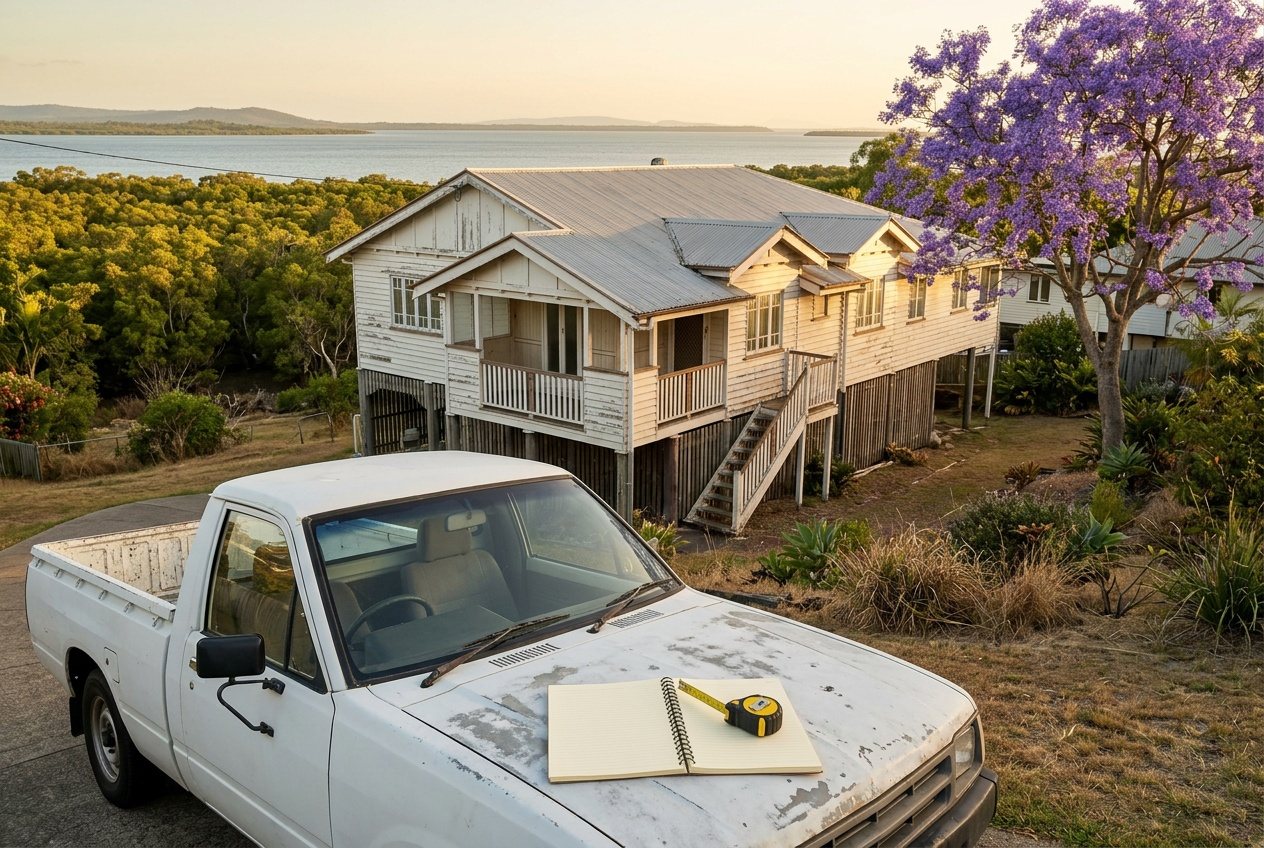 The nine things that move itWhat decides the cost
What decides the cost of a knockdown rebuild in Brisbane?
Not a price. The nine things that move it: the old house and what's in it, the block, the overlays, the ground, the size, the finish, the access and where you live meanwhile.
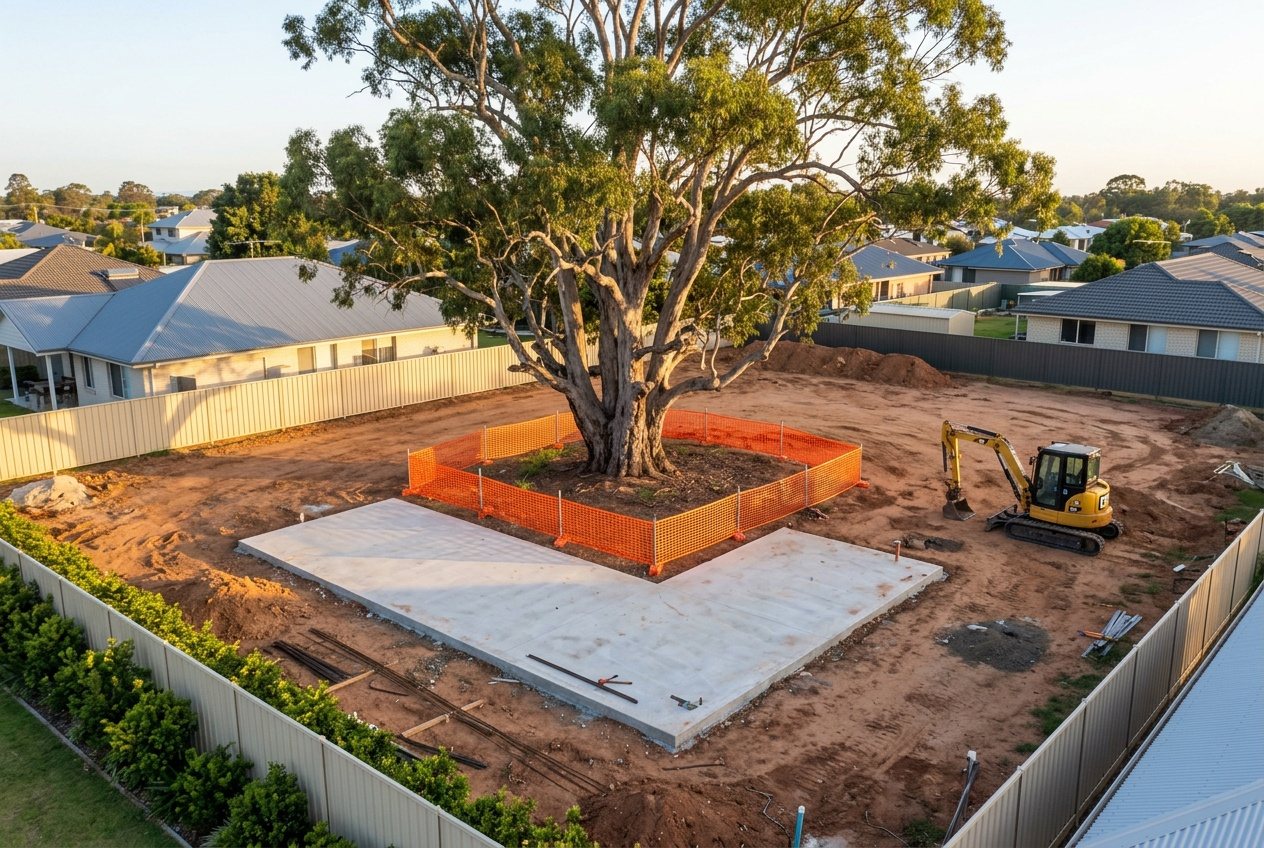 Council's local lawThe trees
What happens to the trees on the block in a knockdown rebuild?
Brisbane protects trees on private land under its Natural Assets Local Law. How to check which of yours are protected, and what a builder does about it.
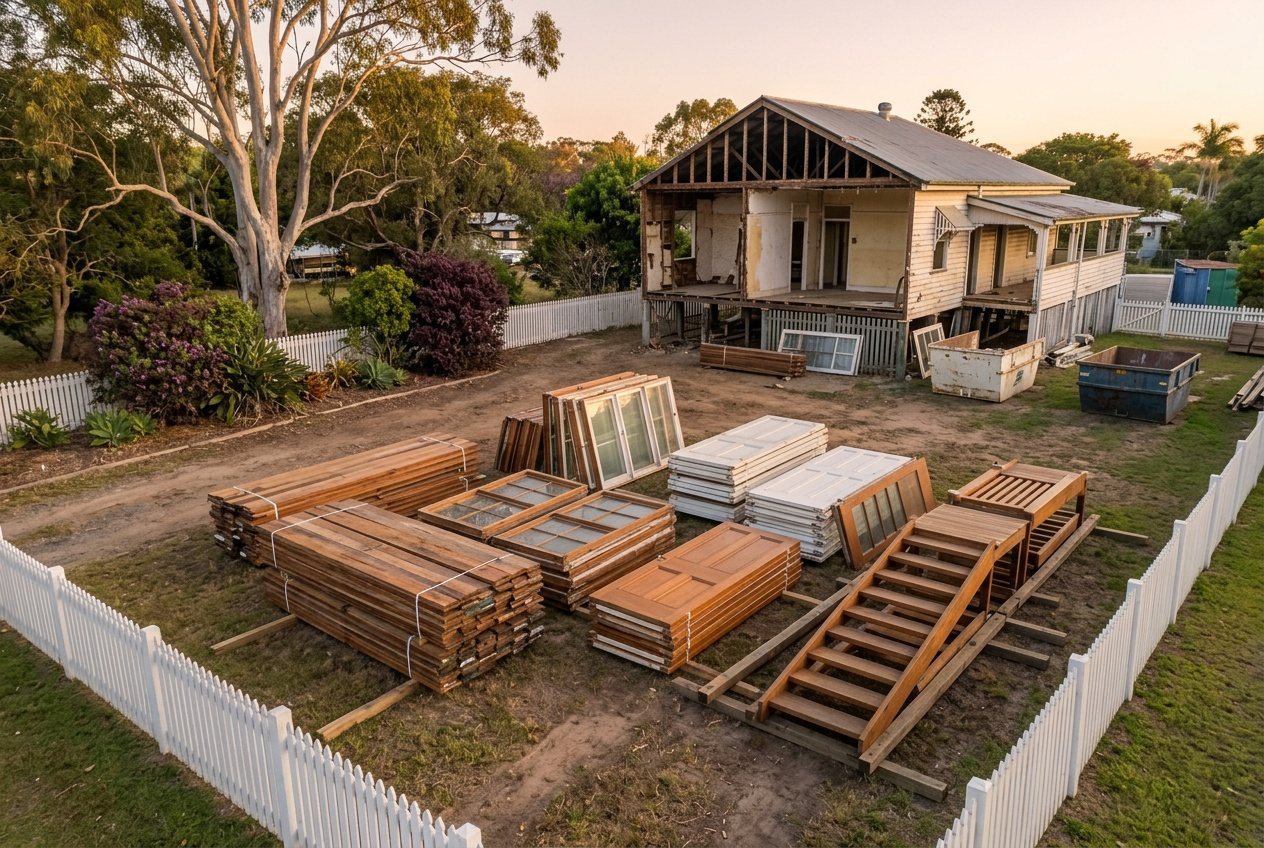 The honest listWhat can be reused
How much of the old house can be reused?
Honestly: very little in the new house, and a fair bit elsewhere. What comes out of an old Bayside house and gets used again, what can't and why, and where the rest goes.
Where most families start
A walk through your house with Nathan.
Walk Nathan around the yard and point at what you'd like to keep. He'll tell you what can stay, what it costs to keep it, and what it does to the design.
Book your walk-through with Nathan Call 0422 831 306
Already thinking about a rebuild? The free block check is on the same page.