

Your questions answered · Knockdown rebuild
Does a knockdown rebuild need a
development application in Brisbane?
People hear “DA” and picture a year of council. On most Bayside blocks it doesn't work like that. There are two different approvals, one you always need and one you sometimes need, and council publishes exactly what tips you into the second. Here it is, in plain words.
 Nathan Brain, carpenter and builder at Sabre
17 September 2026
5 min read
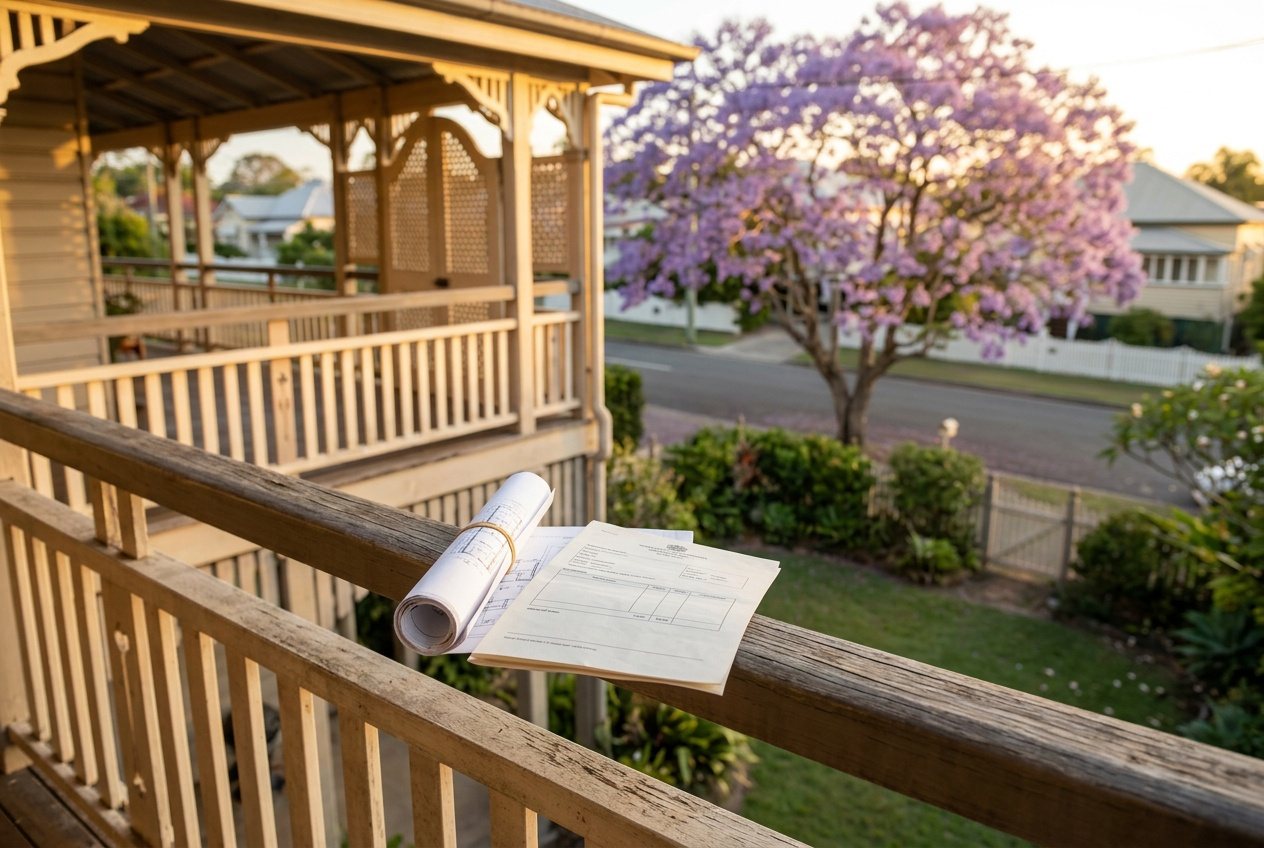 Two approvals, not oneDo we need a DA?
Part of a bigger picture: the whole knockdown rebuild path, step by step.
What are the two approvals?
They come from different people and answer different questions.
- Building approval asks: is this building safe and built to the code? A private building certifier, licensed by the QBCC, checks the plans against the Building Code of Australia and the Queensland Development Code, issues the approval, inspects at the mandatory stages and signs off at the end. You always need it. So does the demolition.
- Planning approval asks: is this the right thing for this piece of land under Brisbane City Plan 2014? It comes from council, through a development application. You need it only when City Plan says a house on your lot is code assessable rather than accepted.
“All houses are Class 1a buildings under the Building Code of Australia and need building approval.” Council directs you to contact a licensed building certifier and provide scaled, detailed plans from a draftsperson or architect.
Brisbane City Council, Building a new house: approvals and requirements. Building approval is not optional and it is not the DA.
When does the new house need planning approval?
When a code-assessable overlay covers the lot. Council lists them. The ones that turn up on the Bayside:
- Flood overlay — common one street back from the bay and along the creeks.
- Traditional building character overlay and the pre-1911 overlay — the older streets of Wynnum and Manly.
- Coastal hazard overlay — the esplanade side.
- Waterway corridors and wetlands — Lota Creek, the Wynnum creeks, the Ransome and Tingalpa edges.
- Significant landscape tree overlay — a block with a mapped tree on it.
- Heritage overlay — rare, but real.
Council's full list also includes airport environs, biodiversity, bushfire, landslide and commercial character. If none apply and the house meets the Dwelling house code, no DA is needed for the house.
When does the demolition need planning approval?
Council's demolition page is specific. Planning approval is needed if the site is on the Queensland Heritage Register, is a local heritage place, is in the pre-1911 overlay, is in the traditional building character overlay and the whole building was built before 1947, or is in certain zones and neighbourhood plans.
Outside those, demolition of a house still needs building approval from a certifier, and a plumbing approval if the sewer drain has to be capped on the property. Council also says you don't need planning approval to demolish a free-standing outbuilding built after 1946.
The pre-1947 case is the one that matters on the Bayside, and it's the one this post walks through.
What is “accepted development”?
It's council's term for work that doesn't need a planning application, provided it meets the relevant code. For a house that means the Dwelling house code — or, on a lot under 450 square metres, the Dwelling house (small lot) code — and any other code that applies.
The designer self-assesses against the code: height, setbacks, site cover, car parking, the way the house addresses the street. If it complies, it's accepted, and the certifier can approve it. If it doesn't, you're back to a DA, which is often why a design on a tricky block is adjusted rather than lodged.
Who does all this?
Not you, mostly. The designer draws to the codes and flags the overlays. The certifier issues the building approvals and does the inspections. If a DA is needed, the designer or a town planner prepares and lodges it. The builder coordinates the lot and reads the conditions before pricing.
What you do is find out early. Council's City Plan online tool shows every overlay on your lot by address, and the year the house was built is in council's archives. Between them they tell you which path you're on before you've spent anything.
Common questions
Does a flood overlay always mean a DA?
Council lists the flood overlay among the code-assessable overlays for a new house, so a lot under it generally goes through a development application. The design shows it meets the flood planning requirements, and the FloodWise report gives the levels. It is paperwork, not a fight.
Can the certifier just approve everything?
Only the building side. A certifier can't grant planning approval, and can't approve a building that needs a DA it doesn't have. What a certifier can do is seek relaxations of some Queensland Development Code or City Plan requirements through a referral to council.
Who lodges the DA?
Usually the designer or a town planner on your behalf. The builder isn't normally the applicant, but a good one reads every condition on the approval before the price is finalised.
Do we need a DA to demolish a 1960s house?
Not for its age. A post-1946 house outside the heritage overlays needs a certifier's building approval to come down, not a planning approval. Other overlays on the lot still apply to what you build next.
Sources: Brisbane City Council, Building a new house: approvals and requirements and Demolition or removal; Brisbane City Plan 2014, Dwelling house code and Dwelling house (small lot) code. Read 17 September 2026. The overlays and codes change; check City Plan online for your lot. This is a plain-English guide, not planning advice.
Keep reading
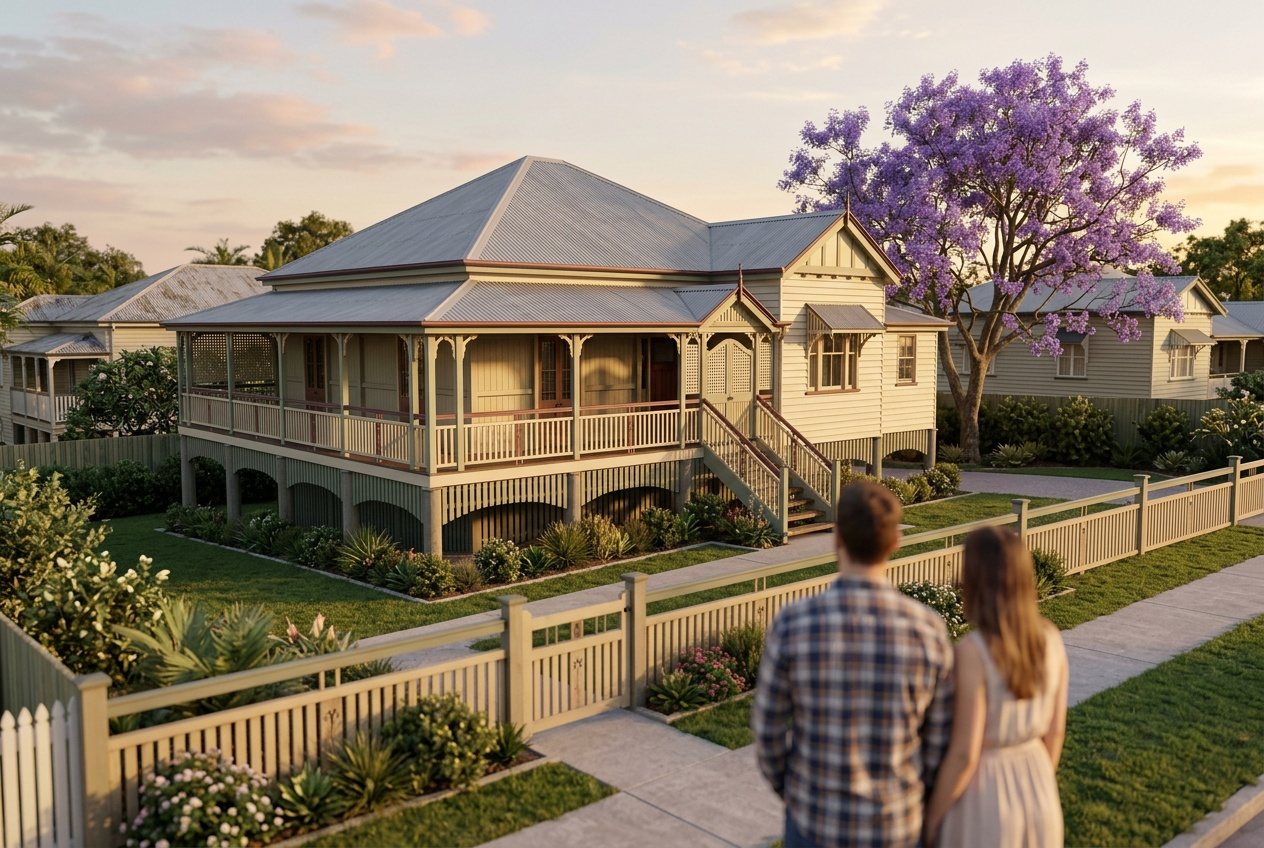 Brisbane's rules, in plain wordsCan we knock it down?
Can we knock down our house? Brisbane's rules in plain words
The pre-1947 rule, straight from council's own page, and when a protected house can still come down.
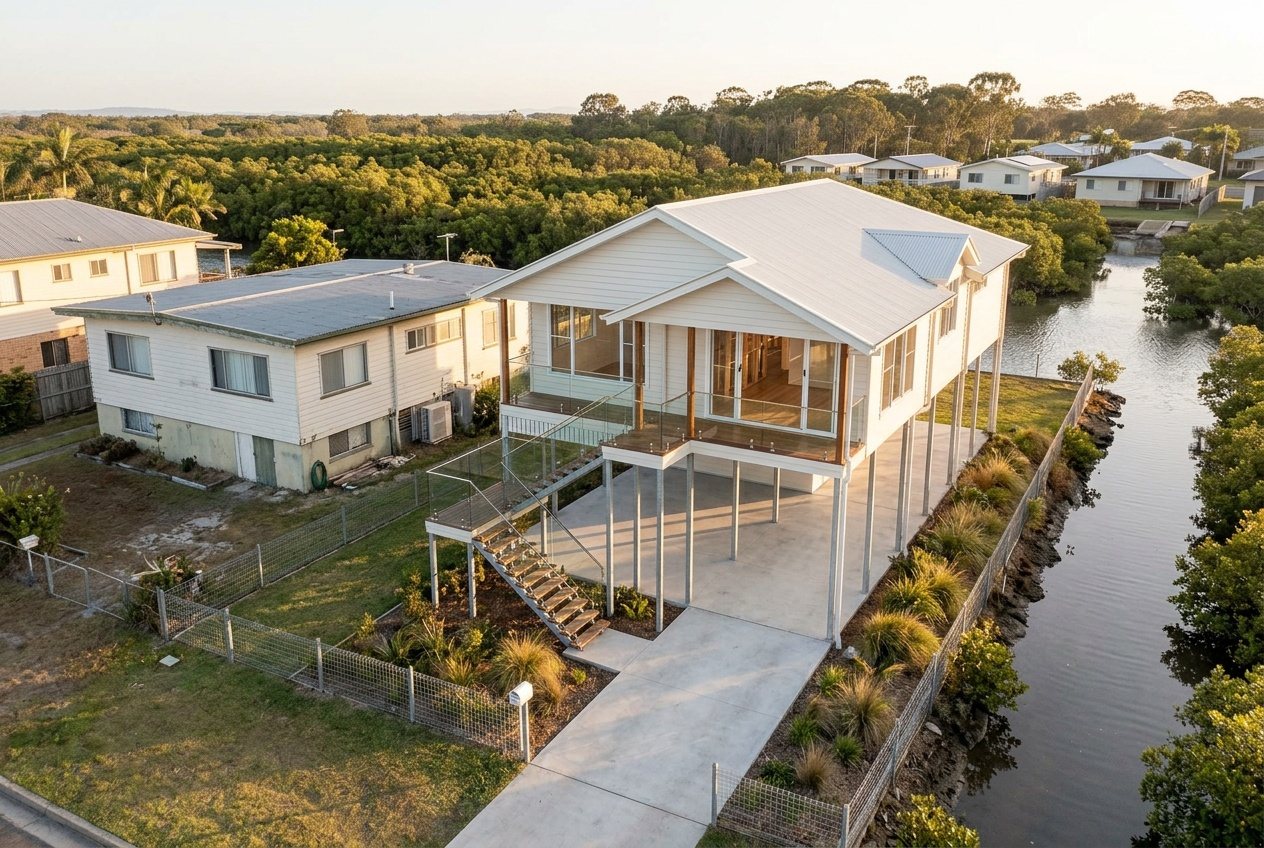 What changes for a rebuildFlood overlay
Rebuilding on a flood overlay block on the Bayside: what changes?
How to pull council's FloodWise report on your lot, what the four kinds of flooding mean near the water, and what an overlay does to the design of a new house.
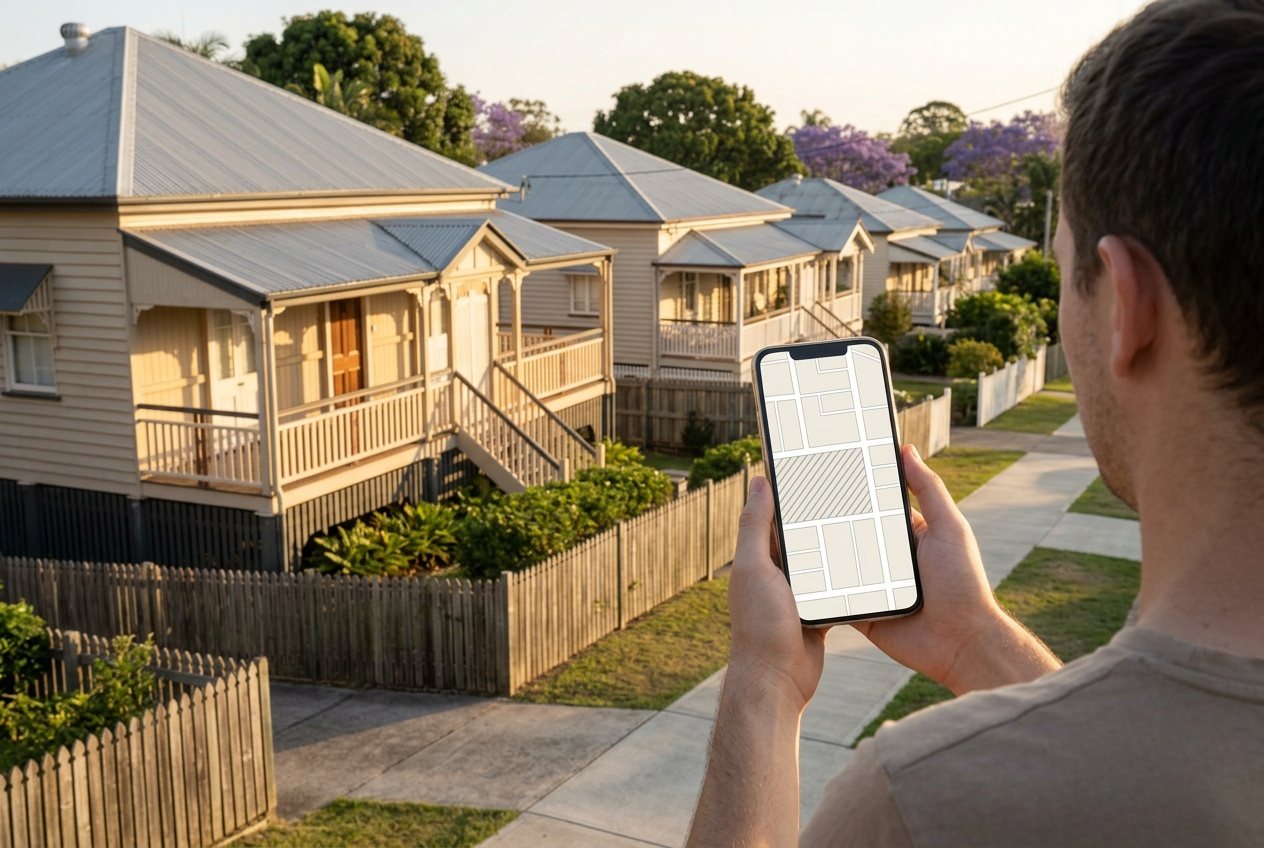 Two free checksCharacter overlay
How to check if your house is in the character overlay
Two free checks and about fifteen minutes. One tells you about your street, the other the year your house went up.
Where most families start
A walk through your house with Nathan.
Nathan checks the overlays on your lot at the walk-through and tells you which approvals your rebuild will need before anything is drawn.
Book your walk-through with Nathan Call 0422 831 306
Already thinking about a rebuild? The free block check is on the same page.