

Your questions answered · Knockdown rebuild
Knockdown rebuild or renovate:
how to tell which one your house is.
Some houses want a renovation. Some want to be replaced. Most families ask us this question already leaning one way, and the honest answer sometimes sends them the other. Here are the six checks we run before we say either word.
 Nathan Brain, carpenter and builder at Sabre
17 September 2026
6 min read
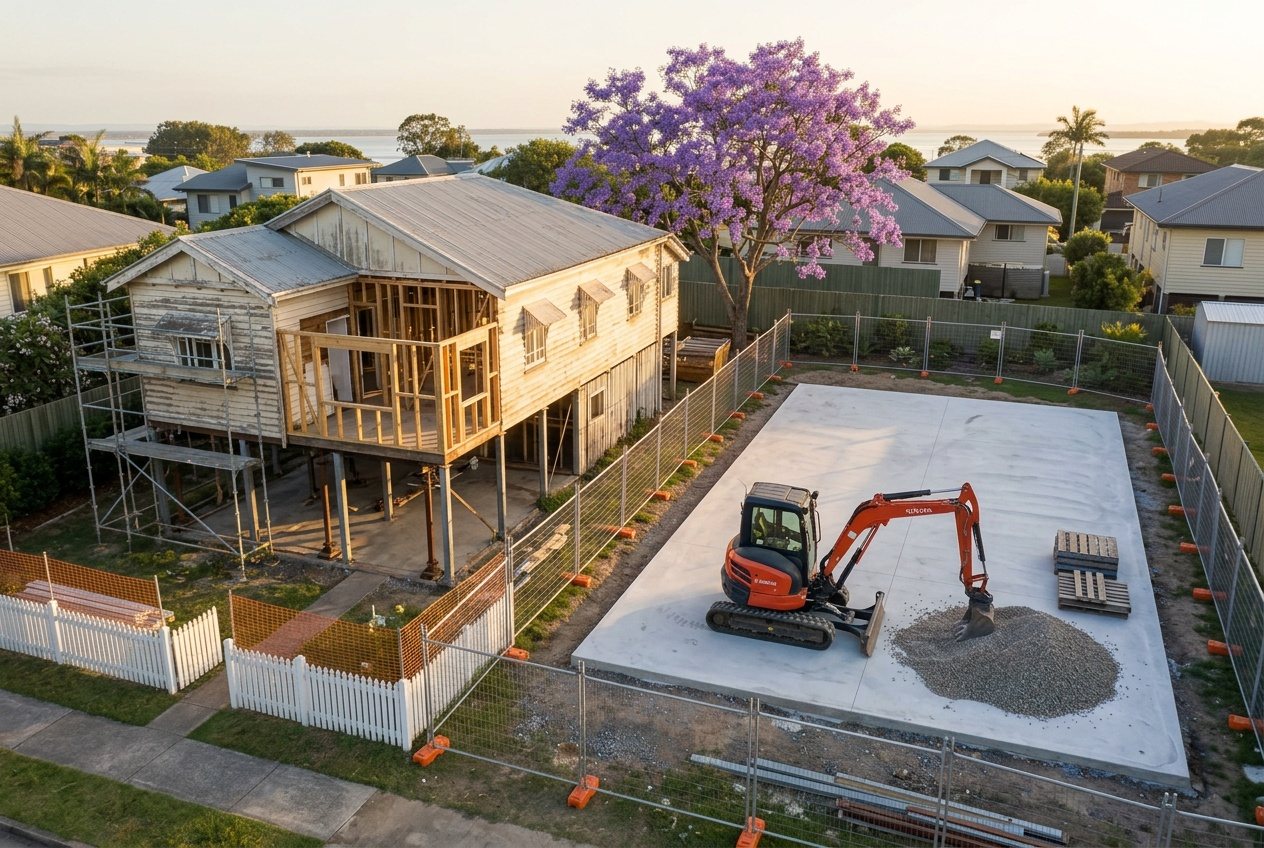 The six checksRebuild or renovate?
Part of a bigger picture: the whole knockdown rebuild path, step by step.
Check one: what are the bones like?
Start with what holds the house up.
A hardwood-framed Queenslander on sound stumps, with a straight roofline and dry subfloor, has bones worth keeping. Termite damage, rotten bearers, a roof that has sagged, stumps that have moved, or a slab that has cracked and lifted are a different story.
A builder can tell most of this from under the house and in the roof space in under an hour. If the frame is going, you're not renovating, you're rebuilding in stages and paying twice.
Check two: what year was it built?
The year decides two things at once.
- Whether council will let it come down. A house built in 1946 or earlier, in a street inside Brisbane's traditional building character overlay, needs a development application to demolish and council may say no. The rules are here, and how to check your street is here.
- What's in the walls. Anything before 1990 probably has asbestos somewhere, and both paths have to deal with it — a renovation that disturbs it, or a demolition that removes it.
Check three: what do you need it to become?
This is the check families skip, and it's the one that decides most cases.
Write down what the house has to do in ten years. Bedrooms, a second living area, a bathroom the kids can use without going through your room, somewhere for a parent to stay. Then hold that against the plan you've got.
If the old house can get there by opening a wall and adding a room, renovate. If getting there means moving the kitchen, lifting the house, building in underneath, replacing the roof and rewiring the lot, you've described a new house with an old one in the way.
Check four: what does the block want?
Old houses were put where they were put. The block might want something else.
A house sitting at the front of a deep block, facing the wrong way for the sun and the breeze off the bay, with the backyard nobody uses, is a common Bayside shape. A renovation keeps that arrangement. A rebuild can turn the house around. On a sloping block, a rebuild can also put the living areas where the view is instead of where the 1960s put them.
Check five: what's under it?
Two things: the flood level and the soil.
If council's FloodWise report puts a minimum habitable floor level above your current floor, a renovation that keeps the floor where it is keeps the problem. A new house is designed to the level from the start. What that changes is here.
And if you're going to add weight to an old house — a second storey, a slab under it — the ground has to carry it. A soil test tells you whether it can, and what the footings need to be. On a house that's already moved, that answer can settle the question.
Check six: what does each path really cost?
Not the number — nobody has that yet. The shape.
- A renovation is priced on what you find. Every old wall opened is a small unknown, and the QBCC's guidance on allowances applies: the more of the price that's an estimate, the less of a price it is.
- A rebuild is priced on the block. Once the old house is gone and the soil test is in, most of the unknowns are gone with it.
- Both paths mean living somewhere else for part of the time. A big renovation is rarely done around a family.
- The house you end up with is different. A renovated house is a better old house. A rebuilt one is a new house, with new footings, new wiring, new plumbing, and the statutory warranties that come with new work.
Schedule 1B of the QBCC Act “sets out statutory warranties which are deemed to be part of all regulated domestic building contracts, even if not stated in the contract. The warranty period is 6 years from completion, termination or cessation of the work for breaches resulting in structural defects; 1 year for all other breaches.”
Queensland Building and Construction Commission, Consumer Building Guide, version 3, effective July 2023. That applies to the new work either way — but on a rebuild, all of the house is new work.
Common questions
Will a builder who does rebuilds always say rebuild?
Some will. The walk-through is free precisely so the answer can be honest, whichever way it goes — and a builder who only ever says rebuild is telling you something about the builder, not the house.
Can we renovate a pre-1947 house in the character overlay?
Usually yes, and often that's the path the overlay is steering you toward. Work that changes the front or the character elements may need council's approval; work at the back and underneath is generally easier. A designer who knows the overlay code will tell you which is which.
What about raising the house and building in underneath?
It's a real option on a highset with good bones and a level block, and a lot of Bayside houses have had it done. It's still a major job with a soil test, engineering and a period living elsewhere. Run the same six checks on it.
How fast can we get an answer?
One walk-through. Nathan goes under the house, into the roof and around the block, and you'll have his honest view before he leaves.
Sources: Queensland Building and Construction Commission, Consumer Building Guide (version 3, effective July 2023); Brisbane City Council, Demolition or removal and Traditional building character overlay, Brisbane City Plan 2014; FloodWise Property Reports. Read 17 September 2026. Plain-English guidance from a builder, not structural, planning or financial advice.
Keep reading
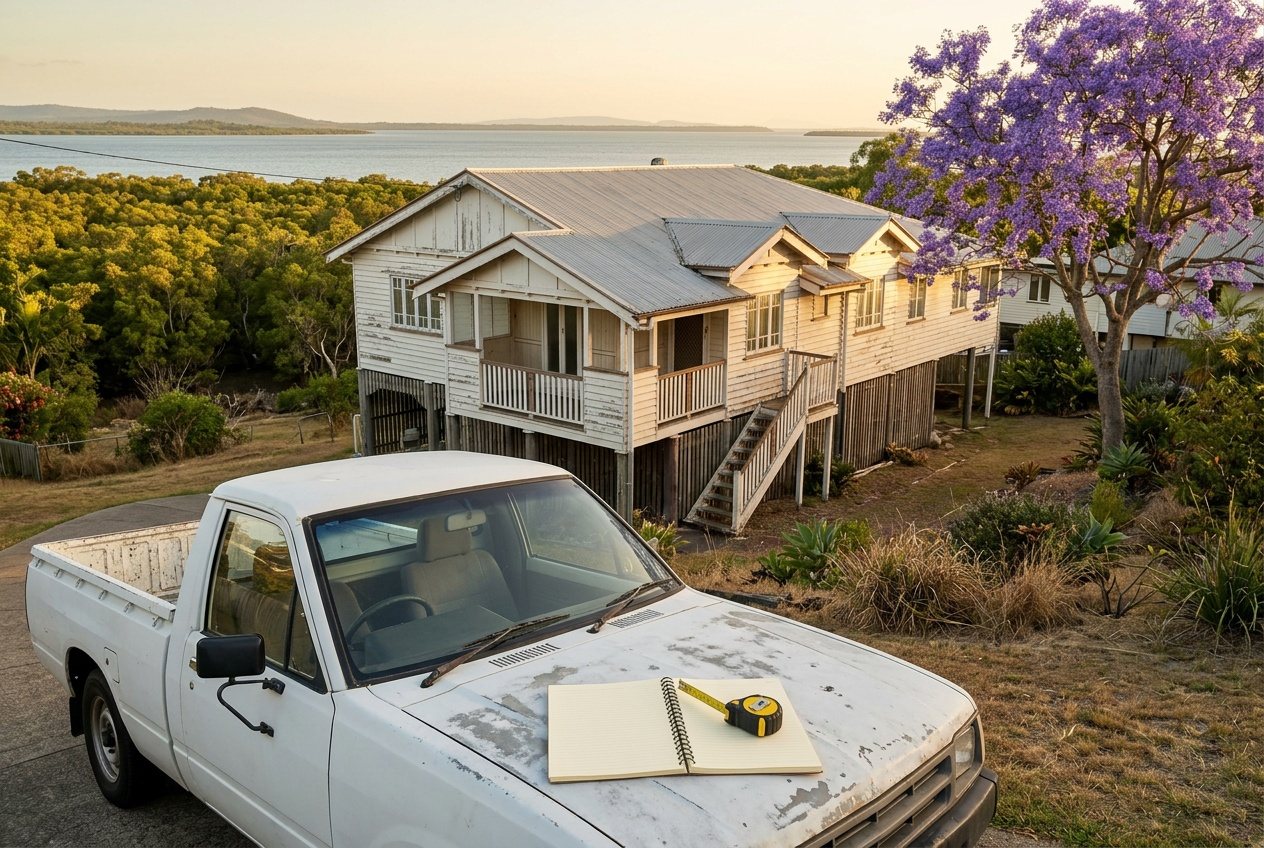 The nine things that move itWhat decides the cost
What decides the cost of a knockdown rebuild in Brisbane?
Not a price. The nine things that move it: the old house and what's in it, the block, the overlays, the ground, the size, the finish, the access and where you live meanwhile.
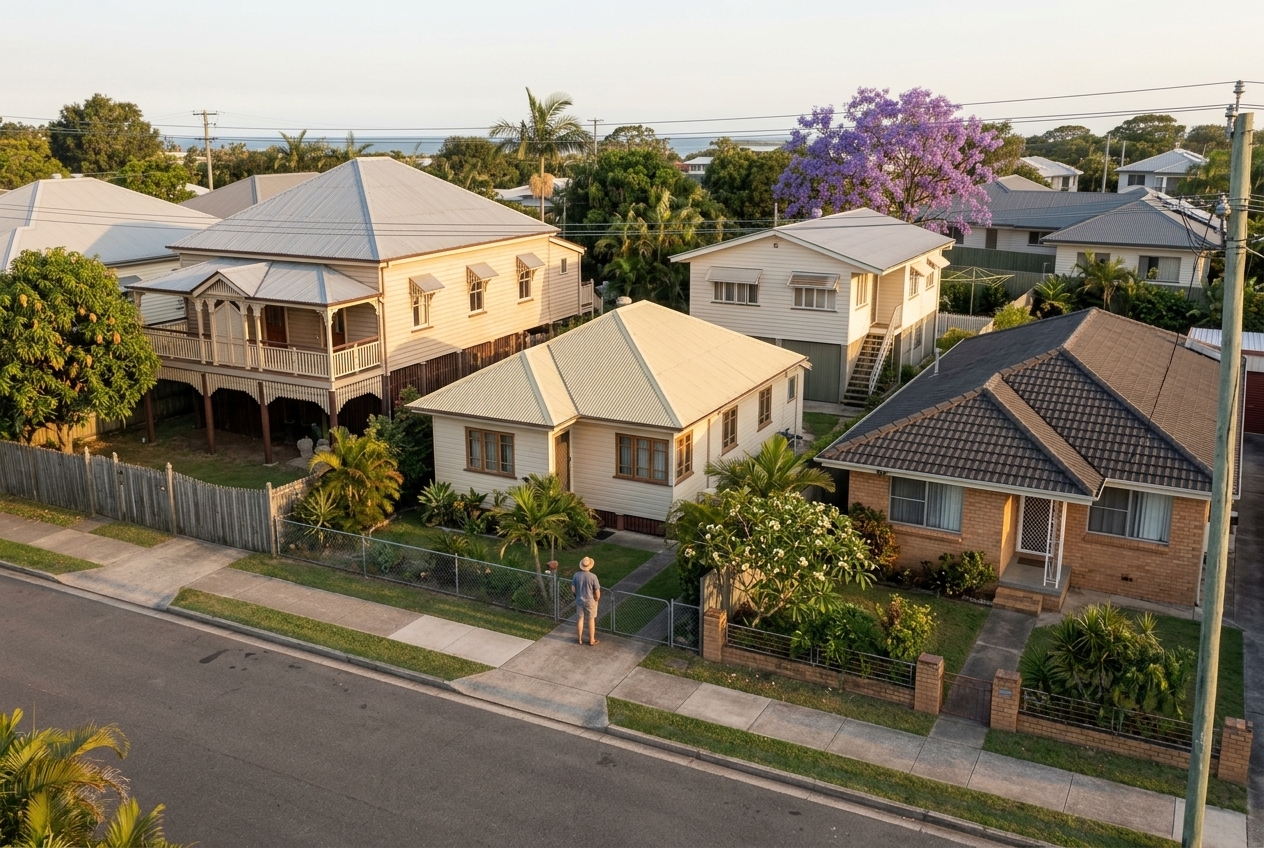 Four eras, one streetWhat they're made of
What are the houses on the Bayside actually made of?
Pre-war timber, post-war fibro, the 1960s highset, 1970s brick. What each one is like to live in, to change, and to knock down — from a builder who's opened up all of them.
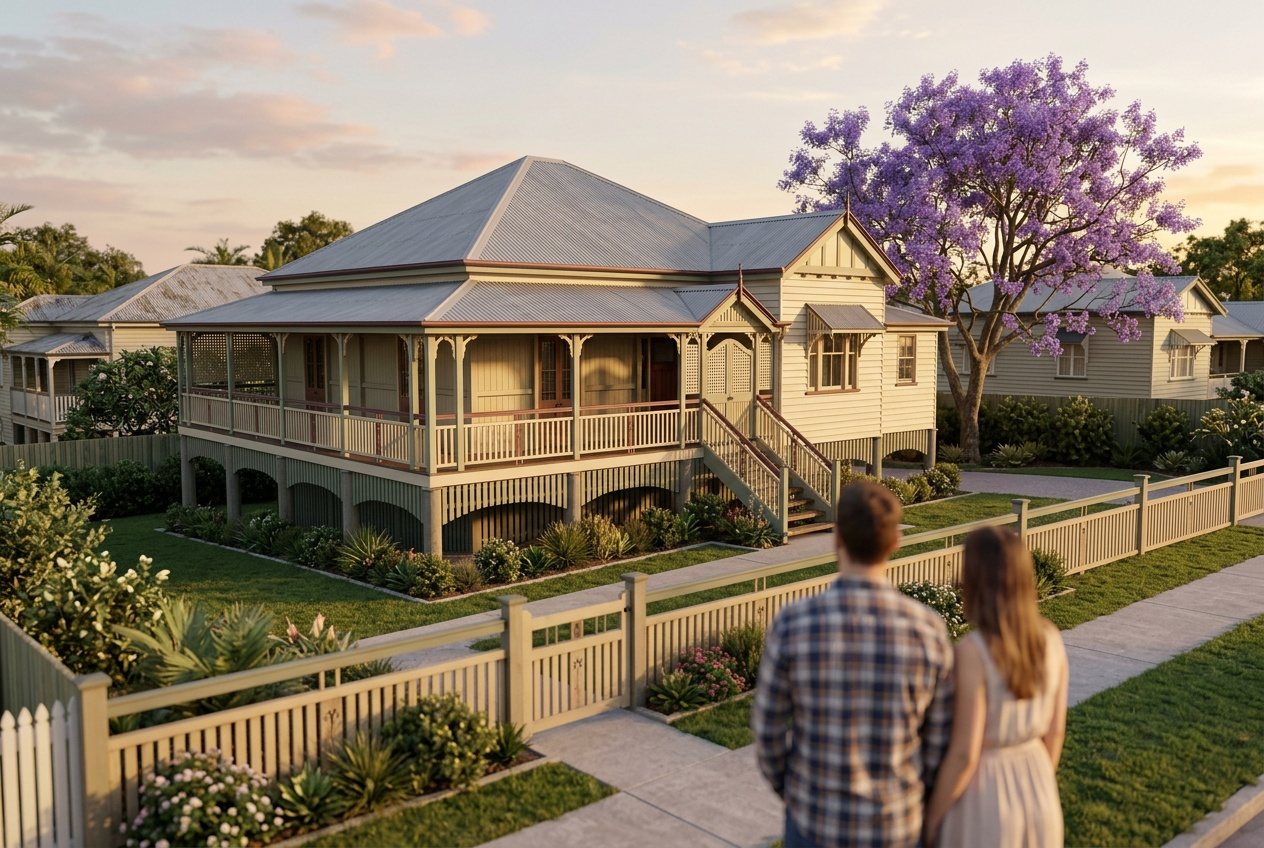 Brisbane's rules, in plain wordsCan we knock it down?
Can we knock down our house? Brisbane's rules in plain words
The pre-1947 rule, straight from council's own page, and when a protected house can still come down.
Where most families start
A walk through your house with Nathan.
This is the exact question the walk-through answers. Nathan goes through the house room by room and tells you which one it is, and why.
Book your walk-through with Nathan Call 0422 831 306
Already thinking about a rebuild? The free block check is on the same page.