

Your questions answered · Dealing with a builder
Can you get a construction loan
for a knockdown rebuild?
We're builders, not lenders, and this post is careful about that. What we can tell you is the shape of the thing: how a construction loan pays for a house differently from a mortgage on one that already exists, what that means for the contract you sign with us, and the three things lenders will ask you for that a builder can help with. The rest is a conversation with a broker or a bank.
 Nathan Brain, carpenter and builder at Sabre
17 September 2026
5 min read
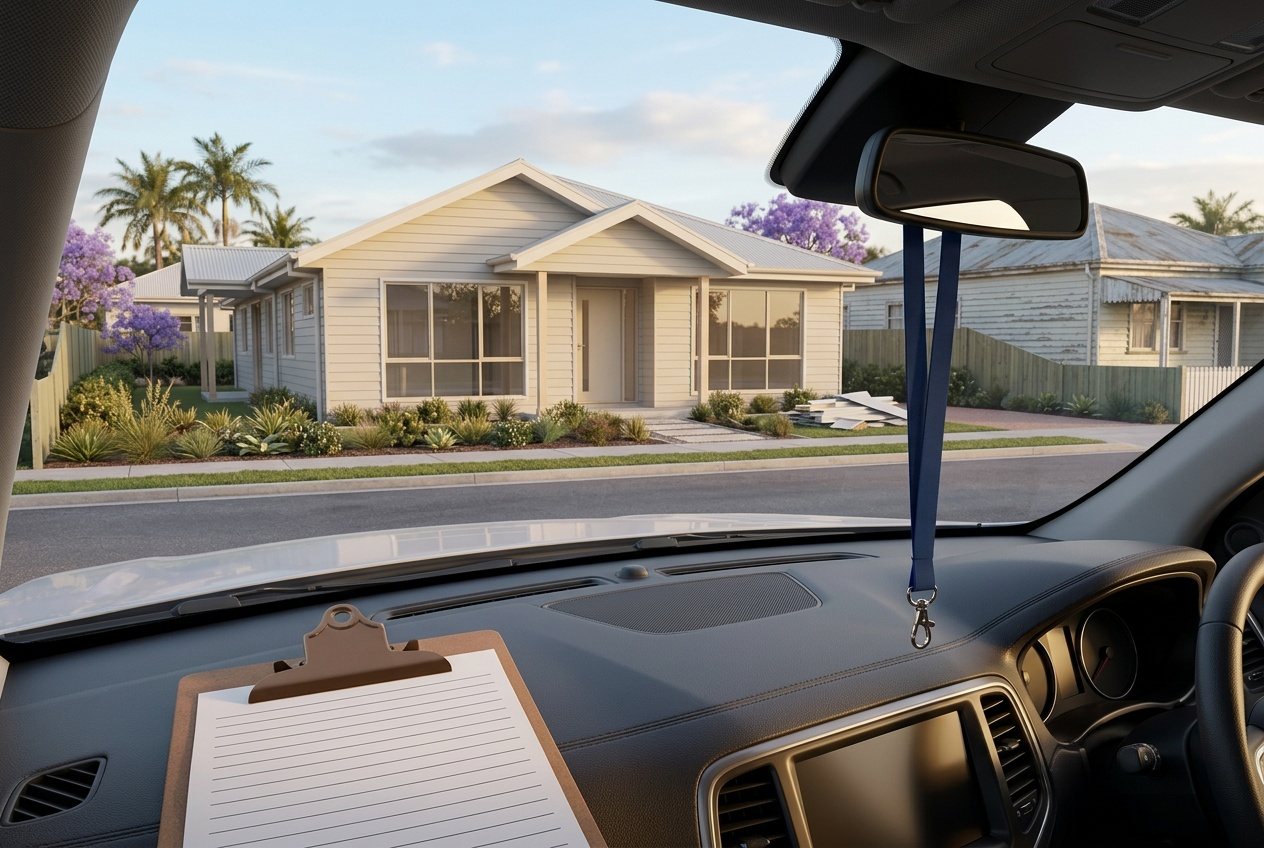 The shape of it, not adviceThe construction loan
Part of a bigger picture: the whole checklist for choosing a builder in Queensland.
What does a construction loan look like?
In general terms, and every lender is different:
- Staged drawdowns. The loan is released in parts that match the builder's stage claims — base, frame, lock-up, fixing, completion, or whatever the contract names.
- The lender's valuer. Before each stage is paid, the lender typically sends a valuer to confirm the work is done. That's a second check, alongside the certifier, that a claim matches the house.
- Valuation on completion. The lender usually values the project as if complete — land plus finished house — and lends against that.
- Paperwork up front. A signed fixed-price building contract, council-approved plans and specifications, and the stage schedule are commonly required before approval.
What's different about a knockdown rebuild?
Three things a lender tends to notice.
The house that's there now goes away. If there's a mortgage on the existing house, the security changes when it's demolished. Lenders have processes for this; it's a conversation to have before demolition, not after.
There's a demolition and site stage before the build. Asbestos removal, demolition and disconnections are real costs before the first stage of the new house. Some lenders treat them as a stage; some expect them to be funded another way. Ask.
You're living somewhere else. Rent during the build isn't in the building contract and lenders know it's there. Have your plan for it.
What will a lender ask the builder for?
- A fixed-price building contract, signed, with the price on the front page as Schedule 1B requires.
- Plans and specifications, and the building approval once issued.
- The stage payment schedule from the contract.
- The builder's QBCC licence details and, often, evidence of the Home Warranty cover.
- Sometimes a builder's questionnaire or the lender's own form.
Every one of those is a normal thing for a builder to produce, and a builder who can't is telling you something.
Progress claims under a Queensland domestic building contract must be “directly related to work progress on site and proportionate to (or less than) the value of the work that relates to the claim.”
Queensland Building and Construction Commission, Consumer Building Guide, version 3, effective July 2023. The lender's valuer and the QBCC's rule are asking the same question of every claim.
What does it mean for the contract?
That a fixed price with few allowances isn't just the safer contract for you; it's usually the one a lender will fund. Cost-plus contracts, with no fixed total, are harder to lend against as well as riskier to sign. And the stage schedule in the contract should be one a valuer can walk up and verify: a frame stage means a frame you can see.
It also means the timeline has a second audience. Variations that move the price, and extensions that move the date, may need to be communicated to the lender too.
Who decides, and when to talk to them
A mortgage broker or your lender, and early — before the design is finished, ideally before the walk-through. Knowing what you can borrow shapes what gets drawn. Bring them the block, the rough brief and the fact that it's a knockdown; bring us their questions about the contract and the stages. We'll answer the building ones. We won't answer the lending ones, because we'd be guessing.
Common questions
Can Sabre recommend a broker or a bank?
We'd rather not steer you. Ask people you trust, and ask any broker how they're paid. What we'll do is give whoever you choose the building paperwork quickly and completely.
Does the lender pay the deposit?
Ask them. The deposit under the contract is capped by law at 5% for contracts of $20,000 or more, and how it's funded is between you and your lender.
What if the valuer disagrees with a stage claim?
Then the stage isn't paid until it's resolved, which is the system working. The certifier's inspection certificate for the stage usually settles it.
Will you talk to our broker directly?
Yes, with your say-so, about the contract, the stages and the timeline. Not about your finances, which we don't need to know.
Sources: Queensland Building and Construction Commission, Consumer Building Guide (version 3, effective July 2023), on contract price, deposits and progress payments. Read 17 September 2026. This post describes the general shape of construction lending only. It is not financial, credit or lending advice, it names no product, lender or rate, and Sabre Constructions is not a credit provider or adviser. Talk to a licensed mortgage broker or your lender.
Keep reading
 The rules, in plain wordsProgress payments
Progress payments: what you pay, and when, on a Queensland house build
Deposit limits, claims that must match work on site, the commencement notice, practical completion, and the QBCC's warning that paying early cuts your Home Warranty protection.
 The nine things that move itWhat decides the cost
What decides the cost of a knockdown rebuild in Brisbane?
Not a price. The nine things that move it: the old house and what's in it, the block, the overlays, the ground, the size, the finish, the access and where you live meanwhile.
 The skeleton every form sharesThe contract
What's in a Queensland building contract, in plain English?
QBCC, HIA and Master Builders forms all share one skeleton because the law requires it: schedule, general conditions, plans and specs, and the clauses on price, dates, payments, variations, completion and defects.
Where most families start
A walk through your house with Nathan.
Nathan can give your lender or broker what they usually ask a builder for: a fixed-price contract, plans and specifications, and a stage schedule. The lending decision is theirs.
Book your walk-through with Nathan Call 0422 831 306
Already thinking about a rebuild? The free block check is on the same page.