

Your questions answered · Living on the Bayside
Why are so many Bayside houses
being knocked down?
Drive Wynnum or Manly on a weekday and you'll pass a fence with a demolition sign on it. Then another. It isn't a fashion. It's four things arriving at once, and most of them are about the block, not the house.
 Nathan Brain, carpenter and builder at Sabre
17 September 2026
6 min read
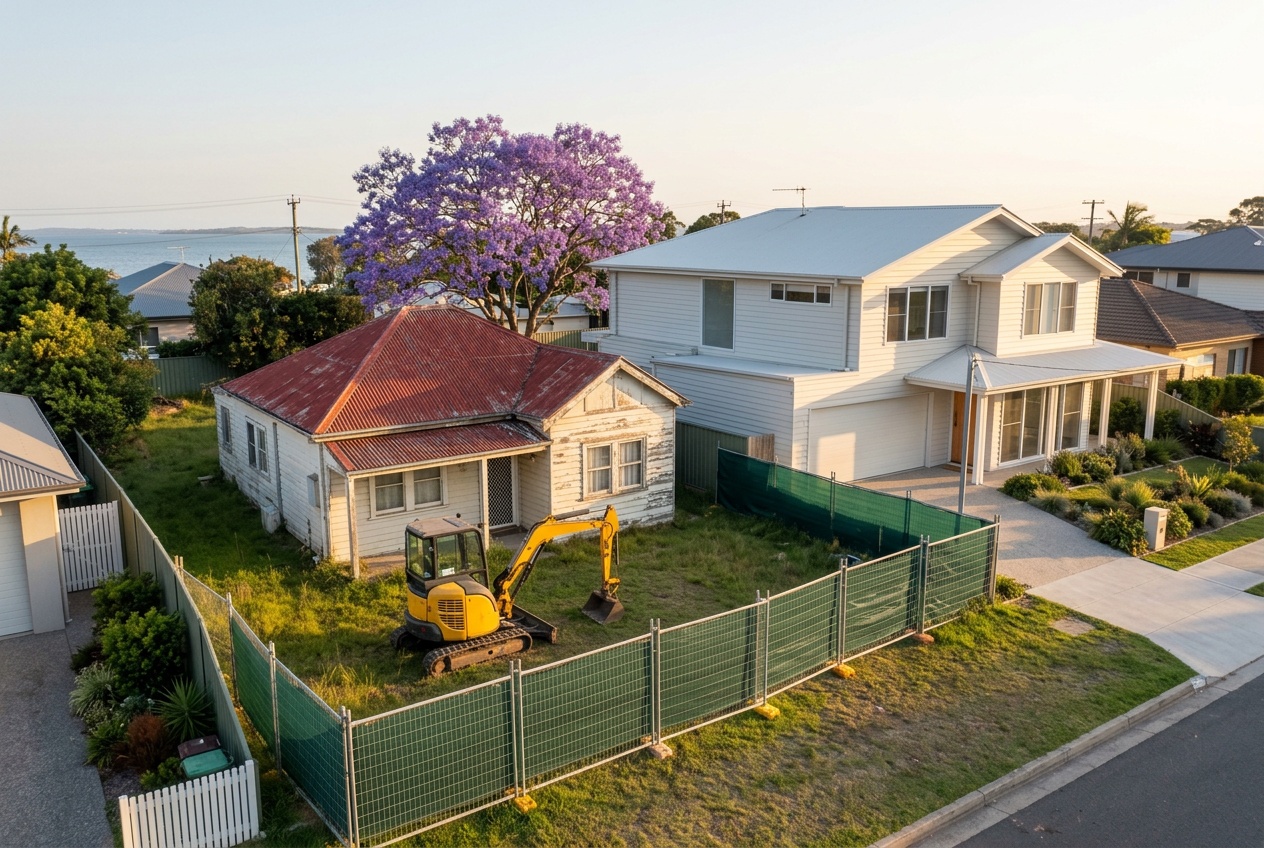 Knockdown rebuildWhy so many come down
Part of a bigger picture: the whole knockdown rebuild path, step by step.
Reason one: the houses are at the end of their working life
Most of the Bayside's housing went up in a hurry after the war.
“In 1946, Brisbane architect Robert Cummings estimated that there was a shortfall of 300,000 houses nationwide.” Brisbane's suburbs “became populated with low-set timber houses on quarter acre blocks.”
State Library of Queensland, Housing a growing state, 2014. Houses built to end a shortage were built for the shortage, not for the family of 2026.
A house from that era is now sixty to seventy-five years old. Light frames, small rooms, one bathroom, stumps that have been replaced at least once, wiring and plumbing that have been added to rather than redone. None of that is a fault. It's what seventy years does.
The question every owner eventually hits is whether the next round of work — restumping, rewiring, a new roof, a second bathroom — is money into a house that will still be small and old when it's finished.
Reason two: the fibro era is ending
A lot of Bayside houses, and most of the built-in-under rooms beneath the highsets, are clad in asbestos cement sheeting.
“Asbestos cement sheeting was commonly used in building materials from 1940s to the late 1980s in both domestic residences and other structures.”
Queensland Government, asbestos.qld.gov.au, How was asbestos used? On a house from that era, a big renovation starts as a licensed asbestos removal job before a single new wall goes up.
That changes the renovation sums. If the walls are coming off to be replaced anyway, and the removal is licensed work either way, the gap between “renovate heavily” and “start again” gets narrower than people expect. What asbestos removal means for a rebuild is here.
Reason three: the blocks were always the point
When these houses were built, the Bayside was a long way from anywhere. The blocks were big and cheap and flat, and the house was whatever could be put on them.
Now they're some of the best residential land in Brisbane: near the water, near the train, near schools, on ground that doesn't need retaining walls. The land carries the value. The house, in many cases, doesn't.
When that's true, every dollar spent on the old house is a dollar that doesn't move the block's value much. A new house designed for the block does. That's the maths behind a lot of the signs on a lot of the fences, and it's not sentimental. It's arithmetic.
Reason four: the family wants the street, not the house
This is the one we hear most, and it's the reason we're in this business.
The kids are in the school. The neighbours are friends. The walk to the water is the walk you moved here for. The house has two bedrooms and one bathroom and nowhere to work from home, and the alternative is a bigger house in a suburb you don't want to live in.
So the family stays and the house goes. The decision is about the street. The demolition is just what it costs to keep it.
Which houses don't get knocked down?
Plenty, and for good reasons.
- Pre-1947 houses in the character overlay. Council decides those, and the answer is often no. The rules are here.
- Sound hardwood houses on good stumps. A pre-war timber house in good order can be raised, opened up and extended, and often should be.
- Houses where the family fits. If the house works and the problem is a tired kitchen, that's a renovation.
- Blocks where the numbers don't work. Awkward access, a steep fall, an overlay that pushes the design somewhere expensive. Sometimes the honest answer is stay, or sell.
Anyone who tells you every old house should come down is selling something. So is anyone who tells you none of them should.
Is this you?
You don't need to decide from an article. You need three facts about your own place:
- The year and the overlay. Fifteen minutes, two free checks.
- What the house is made of, and whether the frame and stumps are sound. The field guide is here.
- What you actually want from the next ten years in this street.
The first two a builder can tell you in a walk-through. The third is yours.
Common questions
Isn't it wasteful to knock down a house that still stands?
Sometimes. A sound house that fits the family should be kept. A small, tired house on a block that could carry the home a family needs for the next thirty years is a different case, and the honest comparison is the life of the new house against the money the old one would keep absorbing.
Are the character rules stopping it?
In the streets they cover, yes, deliberately. The Traditional building character overlay exists to keep the pre-1947 streetscape, and demolishing a pre-1947 house inside it needs council's approval. Most post-war houses aren't covered.
How do I know if my house is worth renovating instead?
Get someone to look at the frame, the stumps and what's behind the cladding, and be honest about whether the layout can ever be the house you need. A builder who does both renovations and rebuilds will tell you which yours is. We do both.
What happens to the old house?
Asbestos comes out first, by a licensed removalist. Then the demolition. Salvageable hardwood, windows and fittings are sometimes worth taking; the honest answer is usually that very little of an old house goes into the new one.
Sources: State Library of Queensland, Housing a growing state, 30 September 2014; Queensland Government, asbestos.qld.gov.au, How was asbestos used?; Brisbane City Council, Heritage and character properties, Brisbane City Plan 2014. The reasons above are a builder's observations from working on the Bayside, not a survey. Read 17 September 2026. Not planning or financial advice.
Keep reading
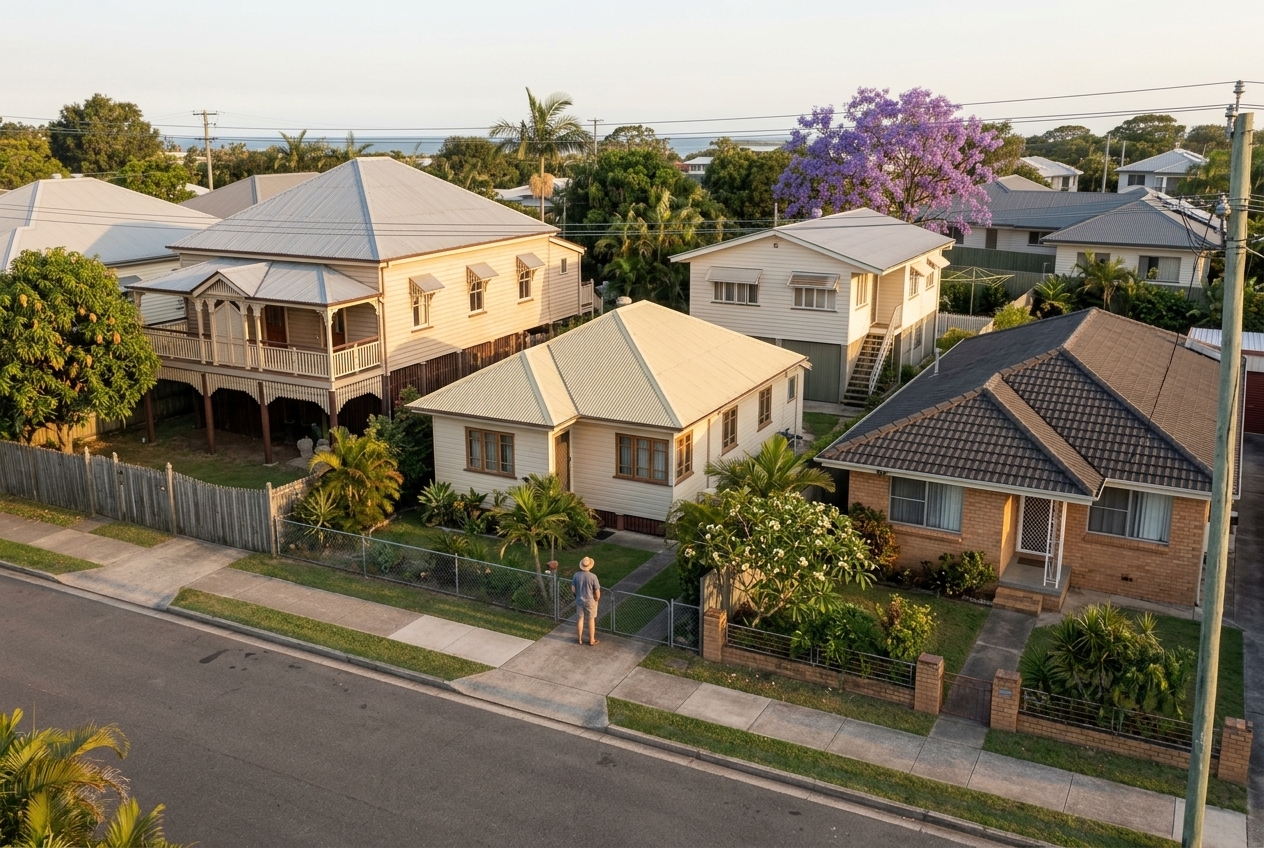 Four eras, one streetWhat they're made of
What are the houses on the Bayside actually made of?
Pre-war timber, post-war fibro, the 1960s highset, 1970s brick. What each one is like to live in, to change, and to knock down — from a builder who's opened up all of them.
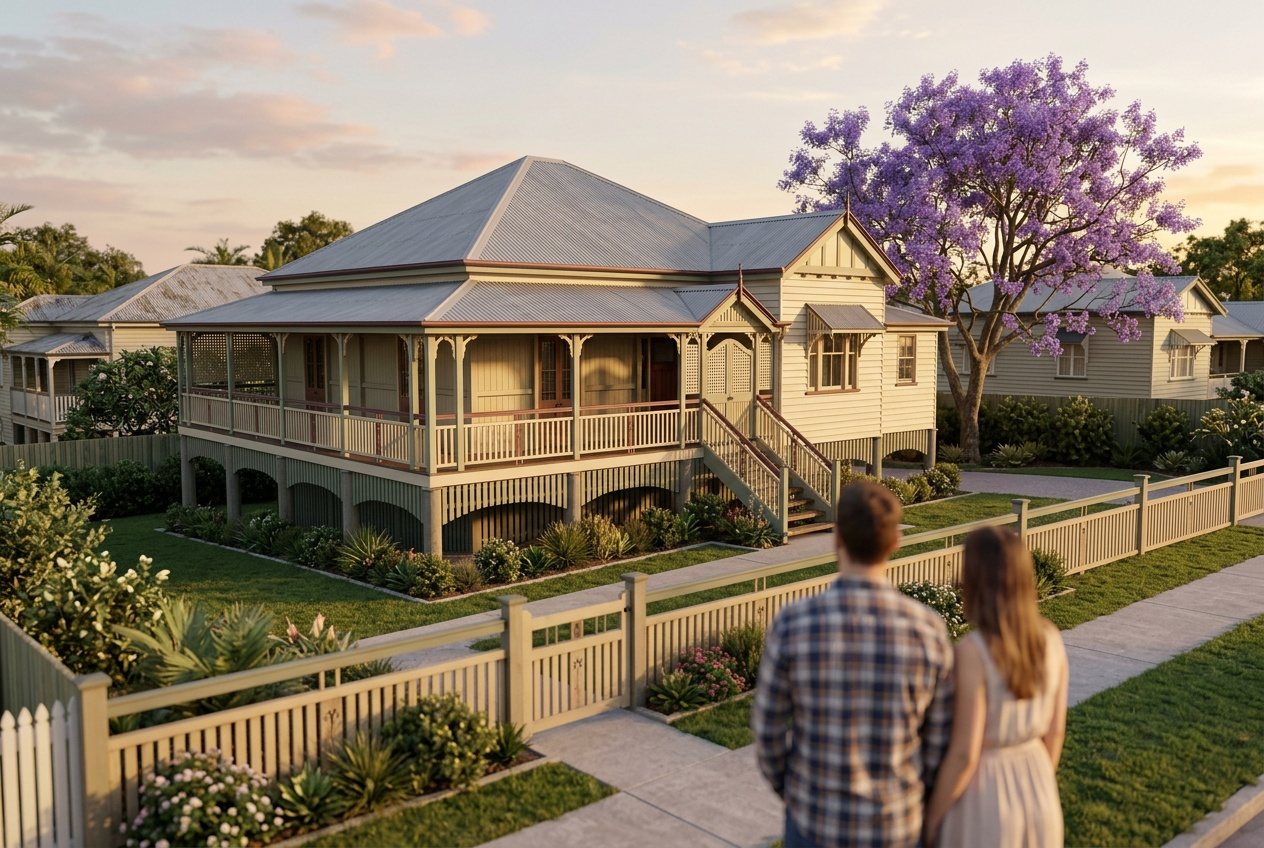 Brisbane's rules, in plain wordsCan we knock it down?
Can we knock down our house? Brisbane's rules in plain words
The pre-1947 rule, straight from council's own page, and when a protected house can still come down.
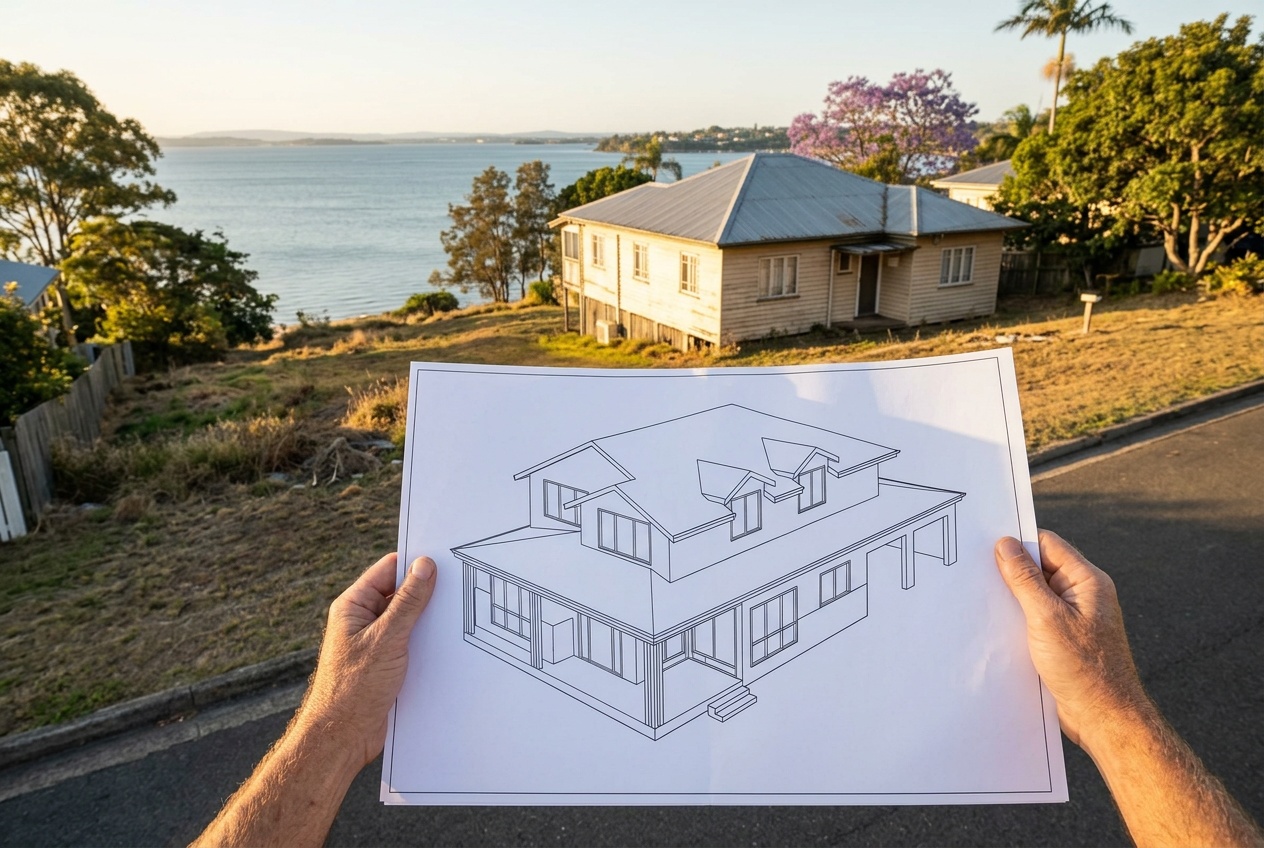 Knockdown rebuildThe package
What is a knockdown rebuild package, and is it the right way to build?
What an advertised package bundles, who it suits, and six questions worth asking any builder.
Where most families start
A walk through your house with Nathan.
If you're at the fork between moving and staying, he'll walk the house with you and tell you honestly which side of it your block is on.
Book your walk-through with Nathan Call 0422 831 306
Already thinking about a rebuild? The free block check is on the same page.