

Your questions answered · Living on the Bayside
Living on Brisbane's Bayside:
an honest guide to Wynnum, Manly, Lota and the suburbs around them.
Most guides to the Bayside are written by someone selling a house here. This one is written by a family that builds them. It covers the suburbs, the schools, the train, the water, the weather and the storms, honestly, including the annoying parts. Then it turns to the houses, because that's usually where the real decision is.
 Nathan Brain, carpenter and builder at Sabre
23 September 2026
15 min read
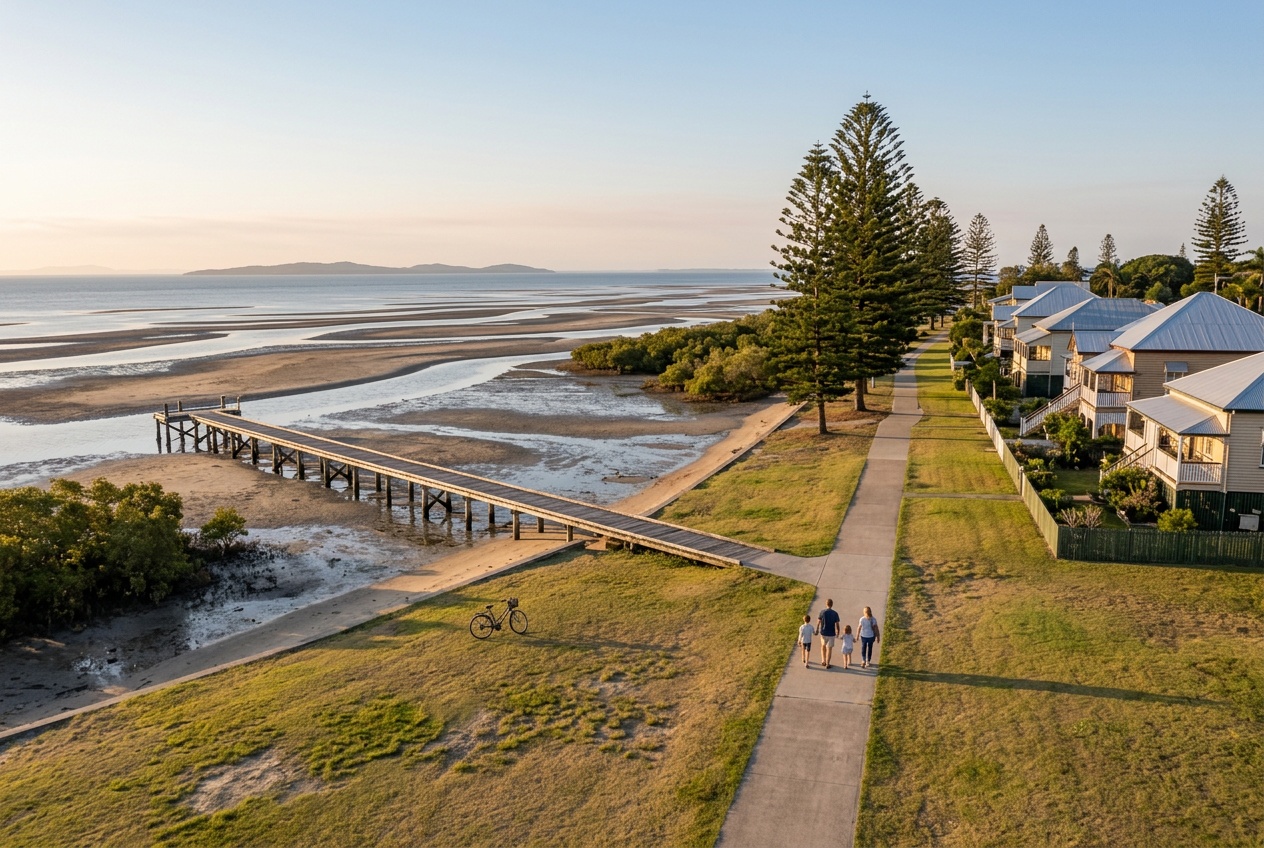 The honest guideLiving on the Bayside
What is “the Bayside”?
In Brisbane, “the Bayside” means the suburbs on the western shore of Moreton Bay, east of the city: Wynnum, Manly, Lota and the suburbs around them. People stretch it to include Manly West, Wakerley, Gumdale, Tingalpa and Ransome inland, and the Redlands to the south.
What ties them together is the bay and the housing. The old bayside suburbs grew up along the Cleveland railway line and filled in after the Second World War, when Brisbane's suburbs “became populated with low-set timber houses on quarter acre blocks.” The newer ones behind them grew up much later, on bigger lots and curved streets.
We've built across these suburbs since 1990, and Sabre is now based at Ransome. That's why this guide spends as long on the houses as it does on the cafes.
Which suburb is which?
They're close together and they feel very different. Here's the short version of each, with the long version linked.
Wynnum: the town
The biggest and most complete of the bayside suburbs: a town centre, three stations, the wading pool, the high school, and the widest mix of houses and flats. At the 2021 Census it had 14,036 people, and seven in ten dwellings were still separate houses. Is Wynnum a good place to live? The good and the annoying.
Manly: the harbour
Smaller and older in median age, built around the boat harbour and the esplanade, with a village on Cambridge Parade. Its blocks climb the hill away from the water, which is why people want to build up there. Manly and Manly West get confused constantly. They're different suburbs with different housing and different rules on the block. The difference between Manly and Manly West.
Manly West is the much larger suburb inland of Manly: 12,436 people at the 2021 Census against Manly's 4,273, a median age of 41 against 46, more families with children and more separate houses. It was part of Manly until it was gazetted as its own suburb in 1975. Same postcode, same train line, and a flatter, later and more often brick housing stock.
Lota: the quiet one
The smallest of the three bayside suburbs, and the most purely residential: 95.3% of dwellings are separate houses, and it has the highest share of couple families with children. It has a station, one state primary, and some of the flattest blocks on the Bayside. It was a pastoral estate in the 1860s, got its railway in 1889, was the end of the line from 1960 until the 1980s, and filled in during the post-war decades with small timber and fibro houses. Lota, the quiet one between Wynnum and Manly.
Lota: 95.3% separate houses, 0.7% flats or apartments, 48.8% couple families with children. Wynnum and Manly: about seven in ten separate houses and one in six flats.
Australian Bureau of Statistics, 2021 Census QuickStats: Wynnum, Manly (Qld) and Lota. One table explains most of the difference in how the three feel.
If you're choosing between those three, the side-by-side comparison is here: Wynnum if you want to walk to everything, Manly for the harbour and the cafes, Lota for a quiet street where the kids ride bikes.
Wakerley and Gumdale: the newer Bayside
The inland, newer half. Wakerley is the estate suburb, with houses mostly from the last thirty years on curved streets. Gumdale is the acreage next door, with blocks measured in acres. Wakerley had 8,718 people at the 2021 Census and has grown by close to a thousand in a decade; Gumdale had 2,298 and has its own state primary. You get space and newer houses. You give up the water at the end of the street, the train and the walkable village. What you get and what you give up.
Ransome, Tingalpa and the acreage edge
Ransome is tiny, 429 people at the last census, much of it reserve along the bay, and it's where Sabre is based. Tingalpa is a proper post-war suburb, closer to the city than any of the bayside suburbs. It had 8,461 people at the 2021 Census and nearly tripled in size between 1954 and 1980, which tells you what most of its houses are. What they share with Gumdale is the edge: big blocks, older subdivisions, creeks and bushland. Ransome, Tingalpa and Gumdale.
How do schools work here?
For most families this is the question that decides the street. In Queensland, every state school has a catchment, and if your home is inside it, your child is entitled to a place. Outside it, you're applying, and a school with an enrolment management plan can say no.
It's the address that counts, not the suburb. A street can sit in one catchment and the next street in another. You check yours on the Department of Education's EdMap by typing in the address.
“A school catchment area is the geographical location where a state school's core intake of students must live.” “Catchment areas ensure every Queensland student from Prep to Year 12 is able to enrol at their local state school.”
Queensland Government, School catchment areas, qld.gov.au. The entitlement is to your local school. Anywhere else is an application.
On the Bayside the state primaries are Wynnum State School, Manly State School, Lota State School, Manly West, Wondall Heights and Wynnum West. For secondary there's Wynnum State High and Brisbane Bayside State College, with Iona College and the Moreton Bay colleges as the independent options.
The catchment is also the single biggest reason families stay in a house they've outgrown, because it ties the school to the block. The Bayside's schools, the catchments, and what “in catchment” is worth.
How do you get to the city?
By train, mostly. Wynnum, Manly and Lota are on the Cleveland line. On a midday all-stops service we read on the timetable, Central to Wynnum Central took forty minutes, and Lota forty-six. Peak services stop at fewer stations and can be quicker.
By car there's no honest fixed number. Wynnum is 19.6 kilometres by road from the Brisbane GPO, and the rest depends entirely on the time you leave. The only reliable figure is your own trial run at the hour you'd actually drive. How far Wynnum really is from the CBD.
The newer suburbs inland, Wakerley and Gumdale, have no station of their own. That's part of the trade.
What's it like living near the water?
Wonderful, mostly, and it asks things of you. Four things come off the bay and into your life.
- The tide. Moreton Bay is shallow, and at low tide the water goes out a long way from the Wynnum and Manly foreshore, leaving sand and mudflats, twice a day. People who expected a beach are surprised. People who stay love it.
- The salt. Salt air works on steel, fixings, roofing and paint faster than anywhere inland.
- The wind. The afternoon breeze that makes summer bearable becomes a real wind in a storm.
- The weather. Council puts storm season at October to March. Heavy rain, strong winds and hail are part of a Brisbane summer, not a rare event.
What the foreshore is really like to live near covers all four, and what storm season means for an old house's roof, trees and insurance covers the part that costs money.
Before each storm season, the state's Get Ready Queensland checklist is short: check the roof and repair it, keep gutters and downpipes clear, trim trees near the buildings, fix rust and rotting or termite-affected timber, secure loose items, and check the insurance. On an old Bayside house, the roof and the timber are the lines that cost money, because salt air rusts roofing screws and gutters, and timber rots where the paint has failed.
Does it flood?
Parts of the Bayside are mapped for flooding, and the source isn't the Brisbane River. The water council models here comes from storm tide off the bay, from the creeks that drain into it, and from overland flow, which is rain running across the land before it reaches a drain. Many lots aren't affected at all. The ones that are usually still get built on, just higher.
Council publishes the answer for every address. The Flood Awareness Map shows the likelihood of each type of flooding, and the free FloodWise Property Report gives the levels. Does Wynnum flood? What council's maps show. Read the map for your address before you believe anyone, including us.
What do families do on weekends?
Mostly the water, and mostly for free. The Wynnum Wading Pool on the esplanade, with a playground and water park beside it. Pandanus Beach by the jetty. The boat harbour at Manly and the esplanade to walk or ride. The Bayside Parklands, which run sixteen kilometres along the shore through mangroves and wetlands where migratory birds land every year. What there is to do in Wynnum and Manly with kids.
Moreton Bay is a Ramsar site, listed under the international treaty that protects important wetlands, which is why the shorebirds come every year and why the mangroves along the parklands are left as they are. It's an unusual thing to have at the end of a suburban street, and most families here stop noticing it within a year. Try not to.
The families who do this every Saturday are the ones who don't leave. When the house stops fitting, they change the house.
Is it a place to stay for life?
For a lot of people, yes, and the census agrees. Manly's median age is 46 and Wynnum's 43, older than the newer suburbs behind them.
- Moving here from interstate? The humidity, the tide, the storm season, the catchments, the word “highset”, and what a seventy-year-old timber house is really like to live in. What nobody tells you.
- Thinking about retiring here? The flat esplanade path, the train and the village are the reasons to stay. The stairs are the reason people leave. Since 1 October 2023, every new home in Queensland has had to meet the Livable Housing Design Standard, with a step-free entry and wider doors on the entry level. Retiring on the Bayside, and whether to stay in the house.
What should you check before you buy here?
Six checks, all free or close to it, and all about the address rather than the suburb. Do them before you fall for a kitchen.
- The school. Type the address into EdMap. The catchment line can run down the middle of a street.
- The flood report. Pull council's FloodWise Property Report. It tells you which kinds of flooding apply and the floor level anything new would need.
- The year and the overlay. If the house was built in 1946 or earlier and the street is in the character overlay, you may not be allowed to knock it down later. The fifteen-minute check.
- The commute. Drive it at the hour you'd leave, once, before you sign. Nothing else tells you the truth about the car.
- The roof and the timber. On a house near the water, these are the parts the salt and the storms have been working on.
- The house's era. Pre-1990 fibro almost always contains asbestos, which matters the day you want to change anything.
If you're buying the house for the block and planning to knock it down, the list is longer and the order matters more. What to check before you sign.
What are the houses actually like?
This is the part the other guides skip, and it's the part that matters for the next ten years. You can date most Bayside houses from the footpath. There are four kinds.
- Pre-1947: timber on stumps, tin roof, vertical-joint walls inside. The Queenslander and its cousins. Some are protected by council's character overlay.
- Late 1940s to 1950s: the post-war cottage. Lowset timber or fibro, small and simple, built fast during a national housing shortage.
- 1960s to 1970s: the highset, chamferboard or brick upstairs, often with rooms built in underneath later.
- 1970s onward: brick veneer on a concrete slab.
What they're made of decides what can happen to them next. Timber on stumps can be raised, moved and opened up. Fibro from before 1990 almost always contains asbestos. Brick on a slab can't be lifted. What the Bayside's houses are made of, and what each is like to change. If you keep hearing the word, here's what “highset” means.
“In 1946, Brisbane architect Robert Cummings estimated that there was a shortfall of 300,000 houses nationwide.” Brisbane suburbs “became populated with low-set timber houses on quarter acre blocks.”
State Library of Queensland, Housing a growing state, 2014. The shortage is why the post-war cottage is small, plain and built from whatever could be had, and why so many of them sit on good blocks.
What does a house built for the Bayside do differently?
The old houses got a lot right: up off the ground for air, wide eaves, verandahs, windows on opposite walls for the afternoon breeze off the bay. A new house here keeps those instincts and adds what seventy years of salt, storms and flood mapping have taught.
- Materials rated for the coast. Roofing, gutters, fixings and hardware specified for a marine environment, especially in the streets nearest the water.
- A wind design to suit the exposure. Tie-downs, roof fixings and openings engineered for the site.
- The floor level from council's report. Living areas up where the FloodWise report says they need to be.
- Facing the breeze, shading the west. Openings toward the bay breeze, protection from the afternoon sun.
- Built for the next thirty years. Since 1 October 2023, a step-free entry, wider doors and corridors on the entry level, and bathroom walls ready for grabrails are the law for new homes in Queensland.
Building near the foreshore goes into the first four in more detail.
So do you stay or go?
Put all of that together and you see the Bayside's particular problem. The suburbs are some of the best places in Brisbane to raise a family. The blocks are flat, near the water, near the train and the schools. And the houses on them were built for the families of the 1950s, and they're now around seventy years old.
That's why so many of them are coming down. When the house is worth little, the land is worth a lot and the family wants to stay, starting again on the same block becomes the honest option. Not always, but often enough that you'll see it in your own street. Why so many Bayside houses are being knocked down.
If you're at that fork, there are six options, and a rebuild is only one of them. We've outgrown the house but we love the street: all six options. If you're leaning toward starting again, the whole knockdown rebuild path is here, step by step. And if you're about to buy an old house to knock down, check the block before you sign.
Common questions
Which suburbs are on Brisbane's Bayside?
The core is Wynnum, Manly and Lota on the bay, with Manly West, Wakerley, Gumdale, Tingalpa and Ransome inland and around them. The Redlands continue to the south.
Is the Bayside a good place to raise a family?
For most families, yes: the bay, the train, walkable villages and family-sized blocks. Lota has the highest share of couple families with children of the three bayside suburbs. The catch is usually the house, not the suburb.
Does the Bayside flood?
Some lots are mapped for storm tide, creek or overland flow flooding; many aren't. Council's free FloodWise Property Report gives the answer and the levels for any address.
How long is the train to the city?
On an all-stops midday service we read, Central to Wynnum Central took forty minutes. Peak services can be quicker. Check Translink for the one you'd catch.
Why are so many old houses being knocked down?
The post-war houses are small, around seventy years old and often contain asbestos, while the blocks under them are some of the best in Brisbane. Families who want to stay in the street often end up rebuilding.
Sources: Australian Bureau of Statistics, 2021 Census QuickStats (Wynnum, Manly, Lota, Manly West, Wakerley, Gumdale, Ransome, Tingalpa); State Library of Queensland, Housing a growing state, 2014; Queensland Government, School catchment areas (EdMap); Translink, Cleveland line timetable (one midday service read 17 September 2026); Brisbane City Council, FloodWise Property Reports, Brisbane Severe Weather Alert. Each linked post lists its own sources and the date they were read. Plain-English guidance from a builder; not property, financial or planning advice.
Keep reading
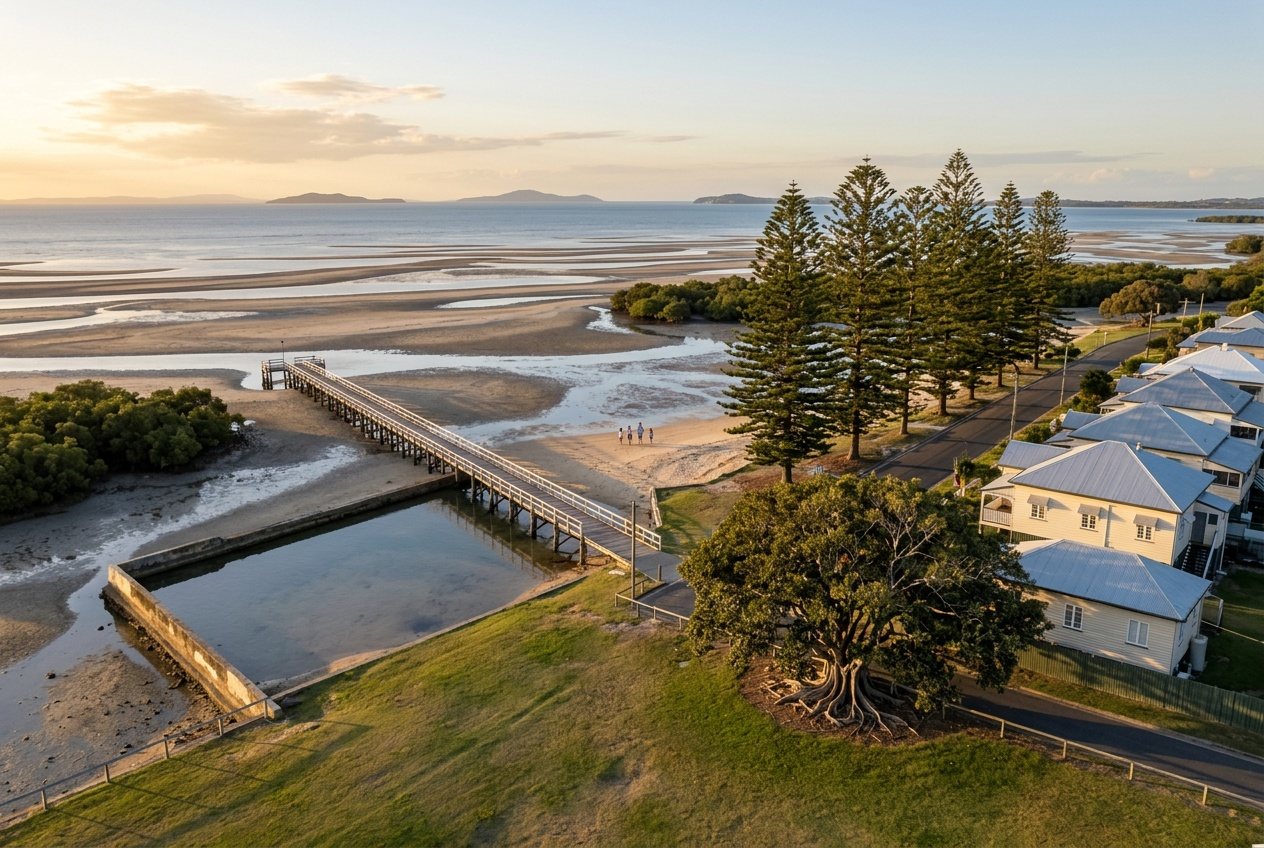 The Bayside suburbsWynnum
Is Wynnum a good place to live? An honest look at the good and the annoying
The water, the train, the village and the schools; the tide, the salt, the storms and the seventy-year-old houses. Written by a builder, not an agent.
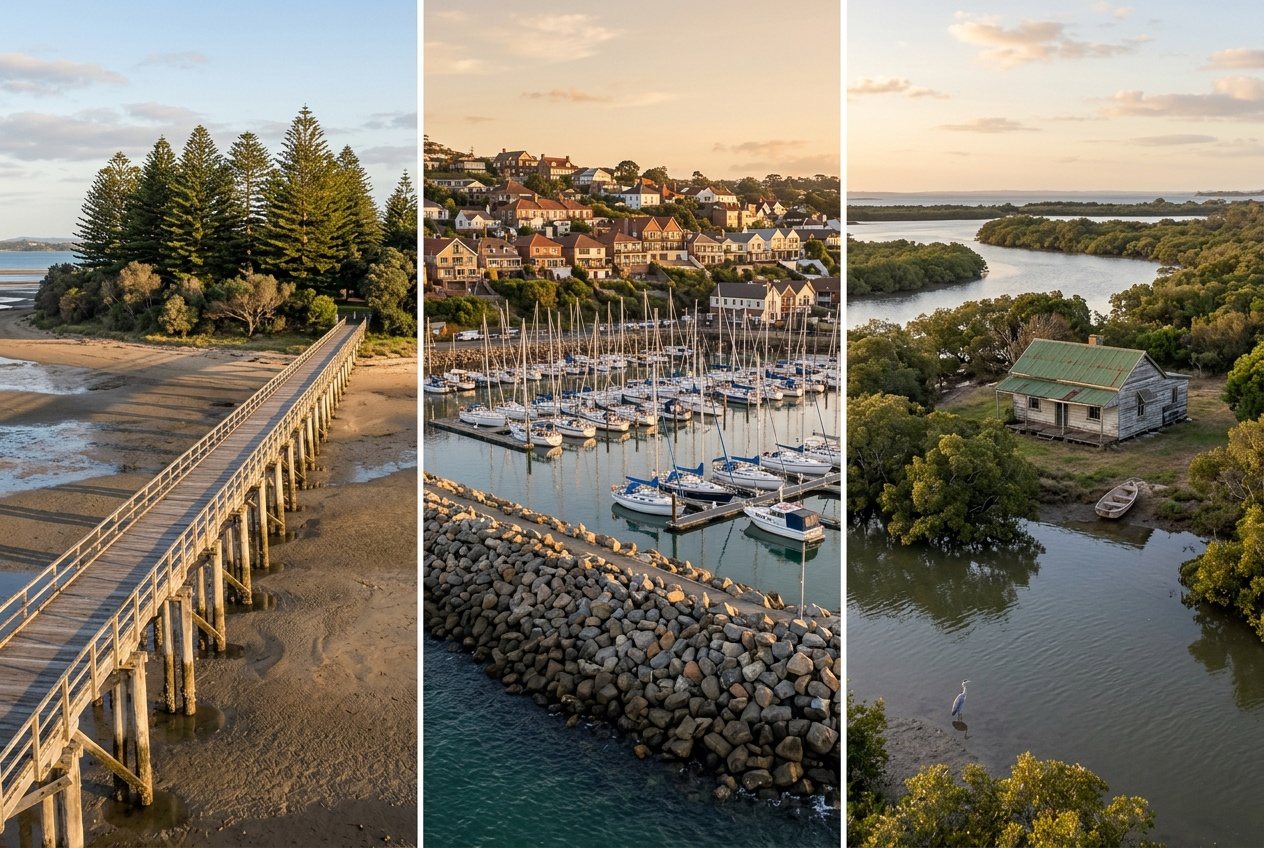 Which suits which familyWynnum · Manly · Lota
Wynnum vs Manly vs Lota: which Bayside suburb suits which family?
Three suburbs, one bay, three different feels. The census numbers side by side, the train, the harbour, the schools, and what the houses are like in each.
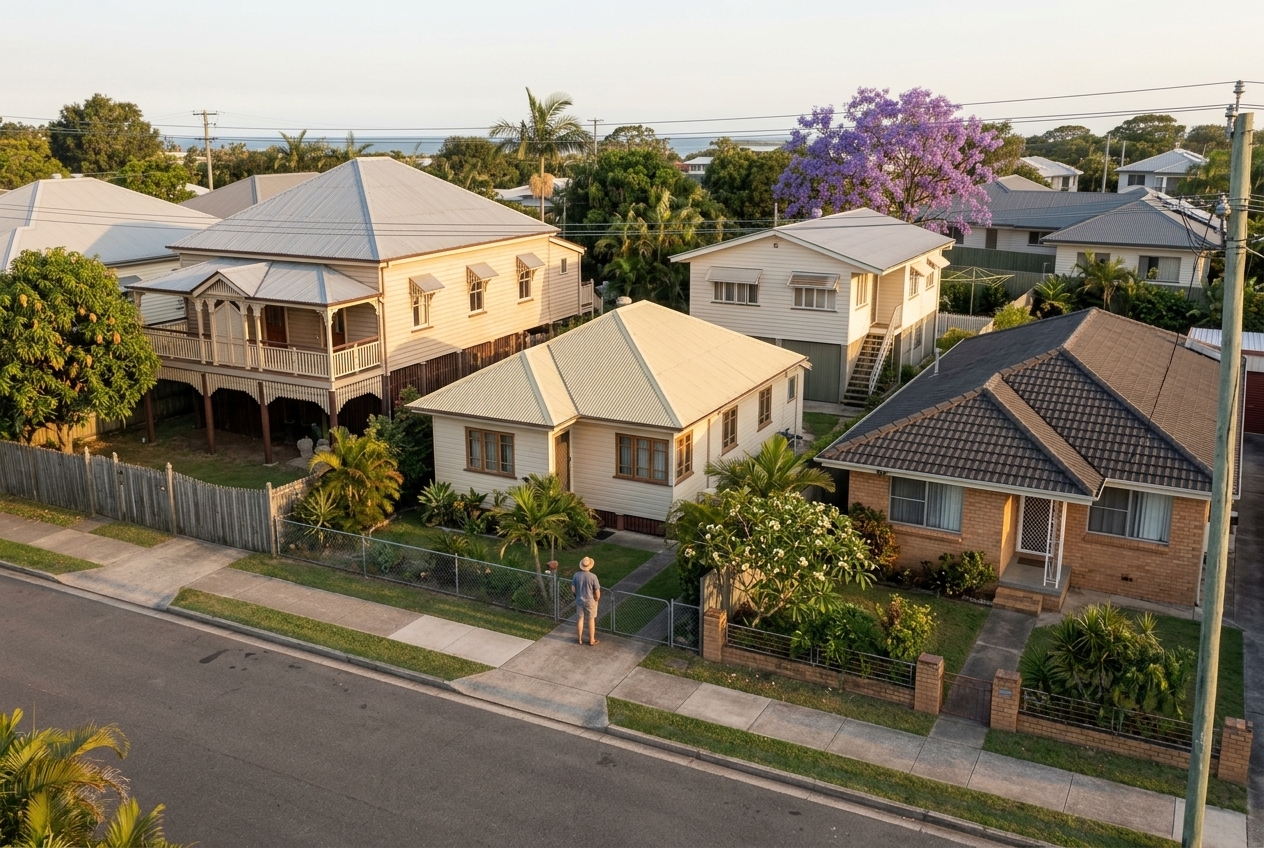 Four eras, one streetWhat they're made of
What are the houses on the Bayside actually made of?
Pre-war timber, post-war fibro, the 1960s highset, 1970s brick. What each one is like to live in, to change, and to knock down — from a builder who's opened up all of them.
Where most families start
A walk through your house with Nathan.
If you love the street and it's the house that isn't working, that's the conversation Nathan has most. He'll walk it with you and tell you honestly what your options are.
Book your walk-through with Nathan Call 0422 831 306
Already thinking about a rebuild? The free block check is on the same page.