

Your questions answered · Knockdown rebuild
What is asbestos removal
going to mean for our rebuild?
If your house went up between the 1940s and the late 1980s, assume there's asbestos in it somewhere. That's not a reason to panic and it's not a reason to keep the house. It's a job with rules, and this is what the rules mean for you.
 Nathan Brain, carpenter and builder at Sabre
17 September 2026
6 min read
 Knockdown rebuildAsbestos
Part of a bigger picture: the whole knockdown rebuild path, step by step.
Is there asbestos in our house?
If the house was built or renovated between the 1940s and the late 1980s, the honest answer is probably.
“Asbestos is a type of building material used in the building industry between the 1940s and late 1980s. The manufacture and use of asbestos products was banned nationally from 31 December 2003.”
Queensland Government, asbestos.qld.gov.au, What is asbestos? That window covers most of the post-war housing on the Bayside, which is why we assume it's there until a test says otherwise.
The only way to be sure is a sample sent to a laboratory. Looking at it isn't enough — fibro with asbestos in it and fibro without look the same from the driveway.
For a knockdown, the practical position is simpler than for a renovation. You're not deciding whether to disturb it. Everything is coming out, so the question is just how much, and what kind.
Where is it usually hiding?
The common one is bonded asbestos cement, the stuff everyone calls fibro. It's solid and rigid, and the fibres are locked into the cement. In a Bayside house of that era you'd look for it in:
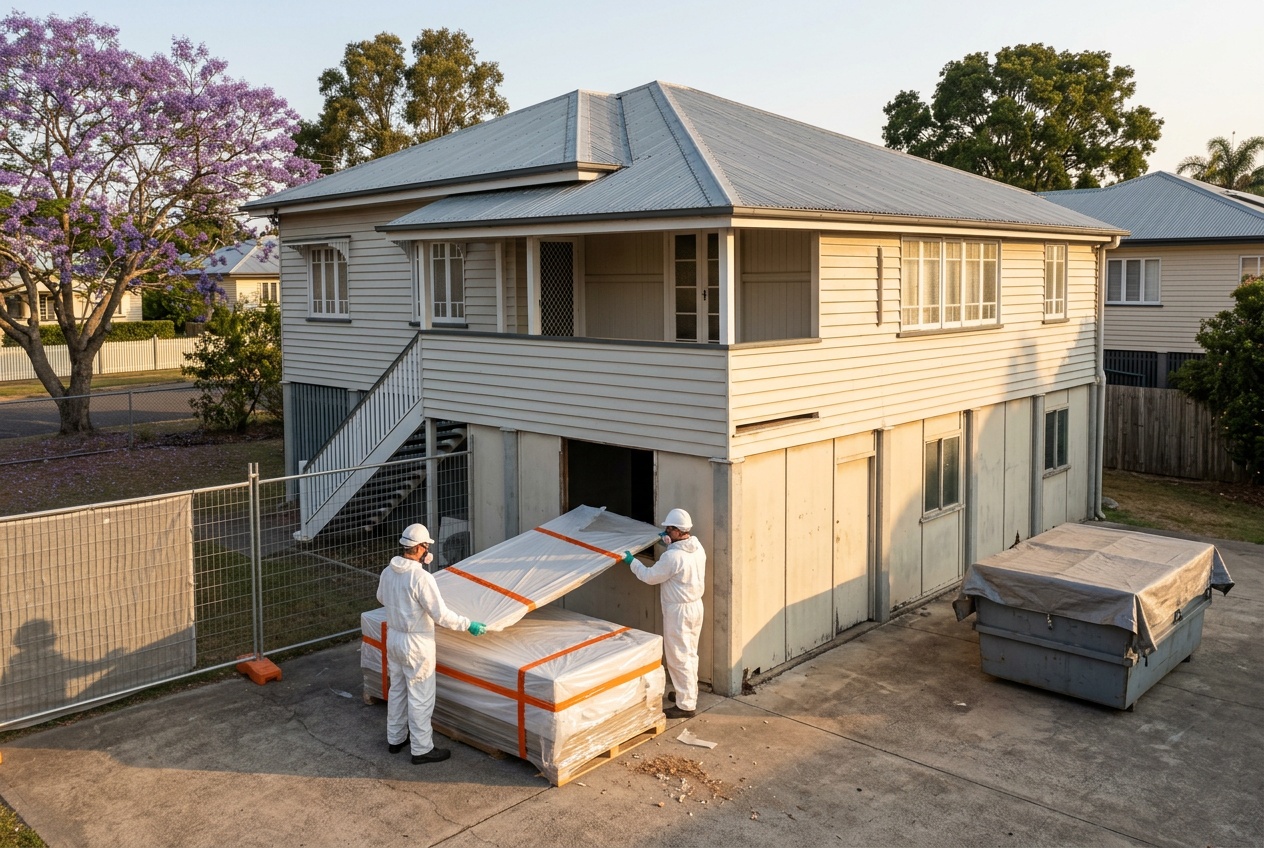
- Flat and corrugated wall and eave sheeting, especially on the built-in-under rooms of a highset house.
- Bathroom, laundry and kitchen walls behind the tiles.
- Guttering, downpipes and drainage pipes.
- Corrugated roofing sheets and roofing shingles.
- Backing boards behind old electrical switchboards, and some vinyl floor coverings.
The one people don't expect is the friable kind, where the fibres aren't bound in anything. Some felt carpet underlay is treated as friable asbestos, and so is low-density board, which looks like ordinary sheeting and isn't. The Queensland Government publishes a diagram of the common locations in a 1970s house, and it's worth twenty minutes of your time.
Who is allowed to remove it?
In Queensland there are two licences, and the difference matters for your demolition.
“There are two types of asbestos removal licences, friable asbestos (class A) and non-friable asbestos (class B).” A business needs a class B licence to remove 10 square metres or more of bonded asbestos. Friable asbestos can only be removed by a class A licence holder.
Queensland Government, asbestos.qld.gov.au, Removing or disturbing asbestos, and Workplace Health and Safety Queensland. Ask your demolisher which licence they hold, and check it.
Homeowners can remove 10 square metres or less of bonded asbestos themselves if they follow the safe work procedures, and more than that only with a certificate from a Queensland Health-approved course. For a whole-house knockdown that's not the conversation. The quantities are far beyond it, and the friable material can't be touched by anyone but a class A removalist.
So on a rebuild, asbestos removal is a licensed contractor's job, done before the demolition crew starts. It's either part of the demolition contract or a separate trade. Ask which.
What happens before the demolisher arrives?
The order is set by the rules, and it's the same on every job.
- Identify. Someone competent inspects the house and samples anything suspect. You end up with a list of what's there and where.
- Plan. A licensed removalist has to prepare an asbestos removal control plan for licensed work, and it must be available to the people living in the house.
- Notify. Certain asbestos work has to be notified to Workplace Health and Safety Queensland before it starts.
- Remove. The licensed crew strips the asbestos, wrapped and labelled, before anything else comes down.
- Clear. After licensed removal, a clearance inspection confirms the area is safe for normal use. For friable removal, that's a licensed asbestos assessor.
- Dispose. Asbestos waste can only be transported and disposed of the way the law says. It doesn't go in a skip with the rest of the house.
Only after step five does the demolition proper begin. If a quote for demolition doesn't mention any of this, that's the first question to ask.
Why does it move the price?
Because none of the steps above are optional, and every one of them scales with how much asbestos there is.
A lowset fibro cottage is a different removal job from a highset house where only the eaves and a bathroom are affected. A house with friable material somewhere is a different job again. That's why the honest answer to “how much does demolition cost?” is “after we've looked at the house.” We don't publish a number, because a number that doesn't know what's in your walls is a guess.
What we can tell you at the walk-through is where the asbestos is likely to be, what kind, and roughly what that means for the order of the job. That's usually enough to take the fear out of it.
Common questions
Can we just leave it and demolish around it?
No. Demolishing a house with asbestos still in it is exactly what the rules exist to stop. It comes out first, by a licensed removalist, and the site is cleared before demolition starts.
Is it dangerous to live in the house until then?
Bonded asbestos in good condition, left alone, is generally considered low risk. The danger is in disturbing it — drilling, cutting, sanding, water-blasting. If you're living there before the rebuild, don't start pulling things apart yourself.
Does asbestos affect whether we can knock the house down at all?
No. That's decided by the year the house was built and whether your street is in council's character overlay. Asbestos affects how the demolition is done and what it costs, not whether it's allowed.
Who organises the removal, us or the builder?
Ask. Sometimes it's inside the demolition contract, sometimes it's a separate trade. At Sabre it's part of the conversation at the walk-through, before anyone signs anything.
Sources: Queensland Government, asbestos.qld.gov.au — What is asbestos?, How was asbestos used?, Removing or disturbing asbestos, Asbestos removal work, Homeowner's certificate to remove asbestos, Clearance inspections and Transport and disposal of asbestos waste; Workplace Health and Safety Queensland, asbestos licences. Read 17 September 2026. This is a plain-English guide, not health, legal or planning advice. Rules change; check the current position before you decide anything.
Keep reading
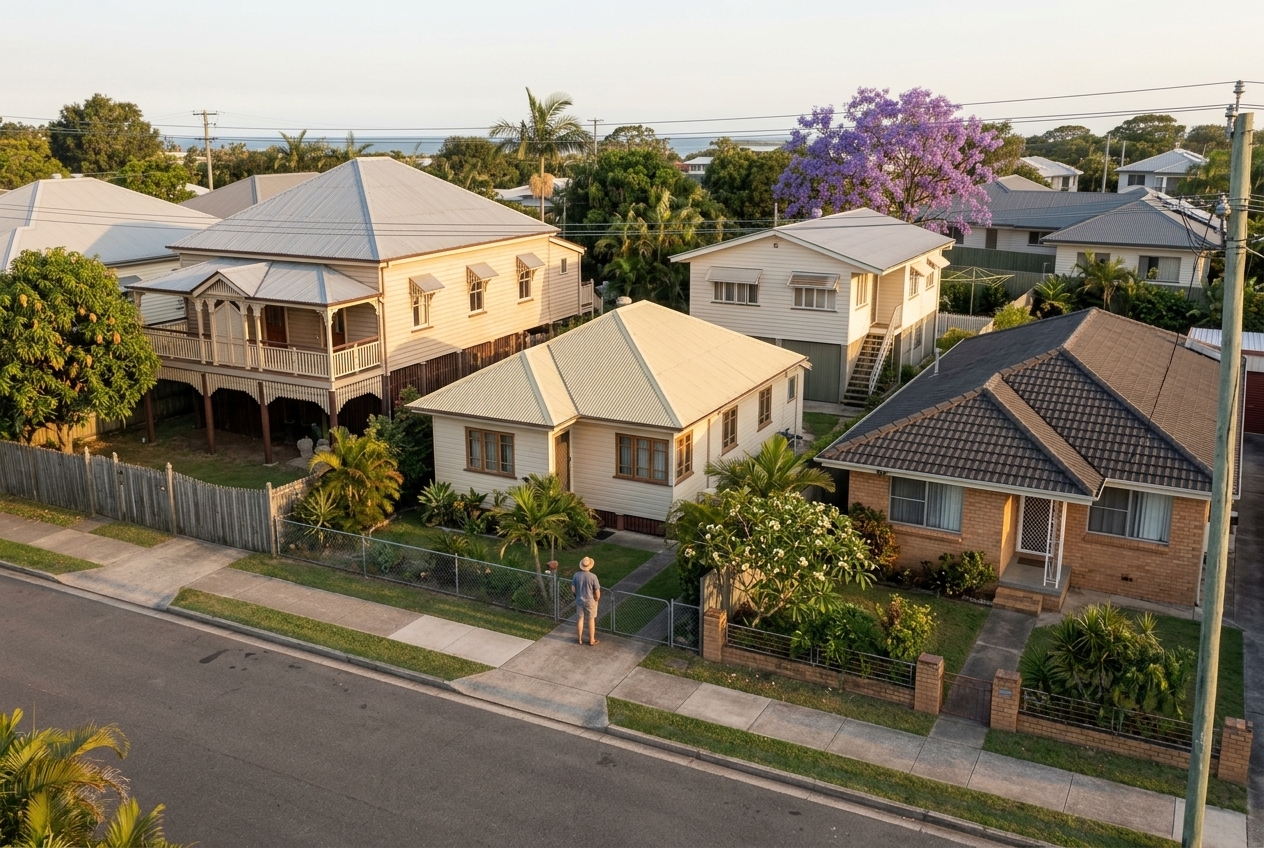 Four eras, one streetWhat they're made of
What are the houses on the Bayside actually made of?
Pre-war timber, post-war fibro, the 1960s highset, 1970s brick. What each one is like to live in, to change, and to knock down — from a builder who's opened up all of them.
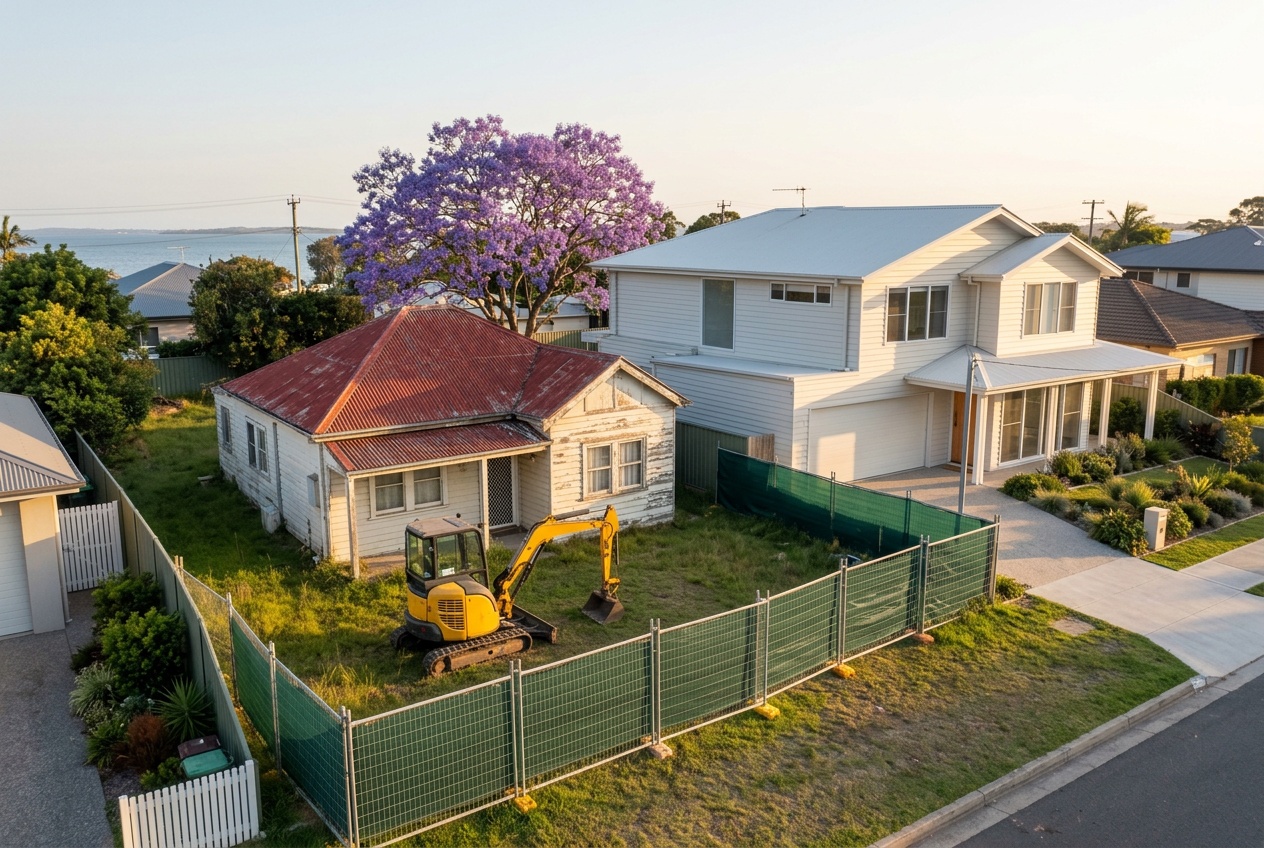 Knockdown rebuildWhy so many come down
Why are so many Bayside houses being knocked down?
Four things arriving at once: the post-war houses are seventy years old, the fibro era is ending, the blocks are the best in Brisbane, and families want the street more than the house.
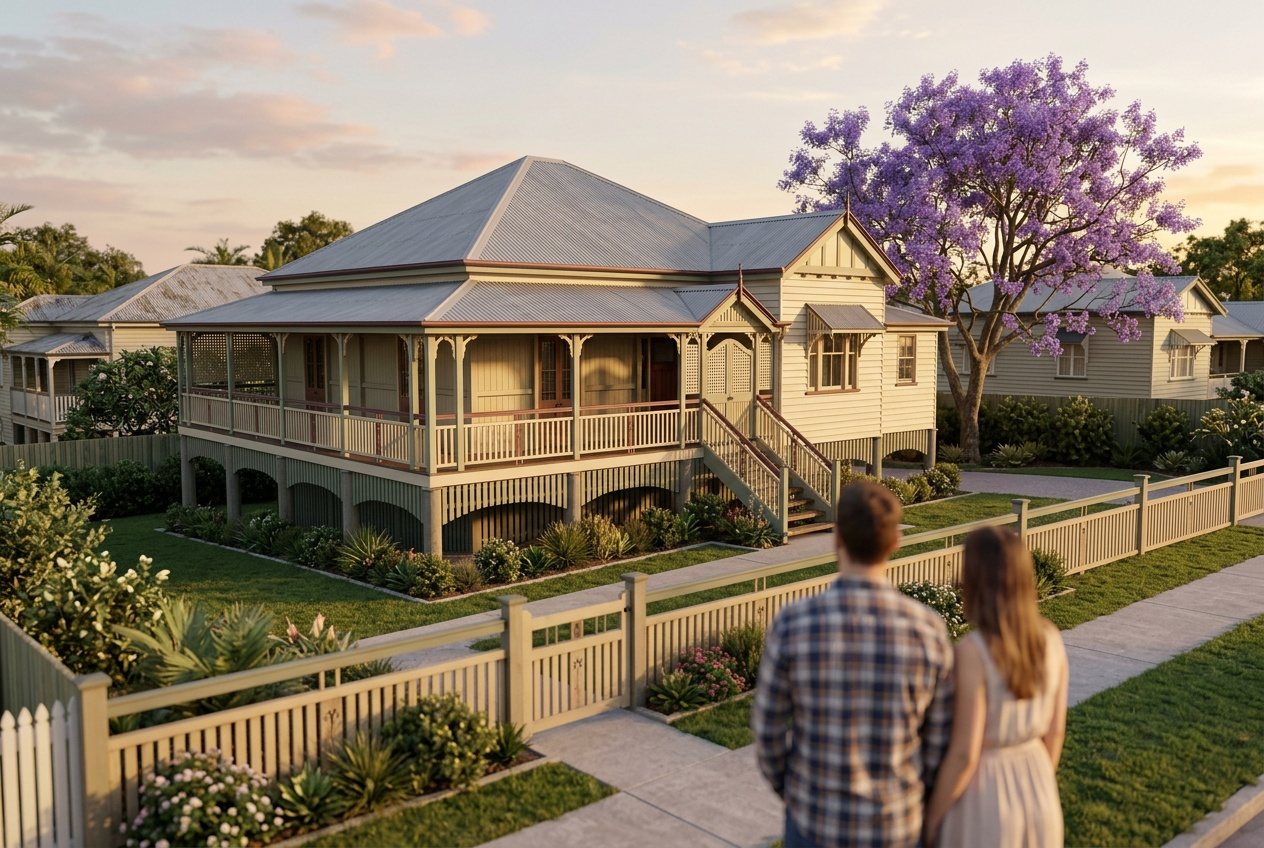 Brisbane's rules, in plain wordsCan we knock it down?
Can we knock down our house? Brisbane's rules in plain words
The pre-1947 rule, straight from council's own page, and when a protected house can still come down.
Where most families start
A walk through your house with Nathan.
He'll tell you where the asbestos is likely to be in your house, and what that means for the demolition, before anyone quotes anything.
Book your walk-through with Nathan Call 0422 831 306
Already thinking about a rebuild? The free block check is on the same page.