

Your questions answered · Dealing with a builder
What is a defects liability period,
and what protects you after it?
The builder hands over the keys and, somewhere in the contract, a clock starts. Most families think there's one clock. There are three, they run for different lengths, and the longest of them isn't in the contract at all. Here's how the protection actually stacks up, in the regulator's words.
 Nathan Brain, carpenter and builder at Sabre
17 September 2026
5 min read
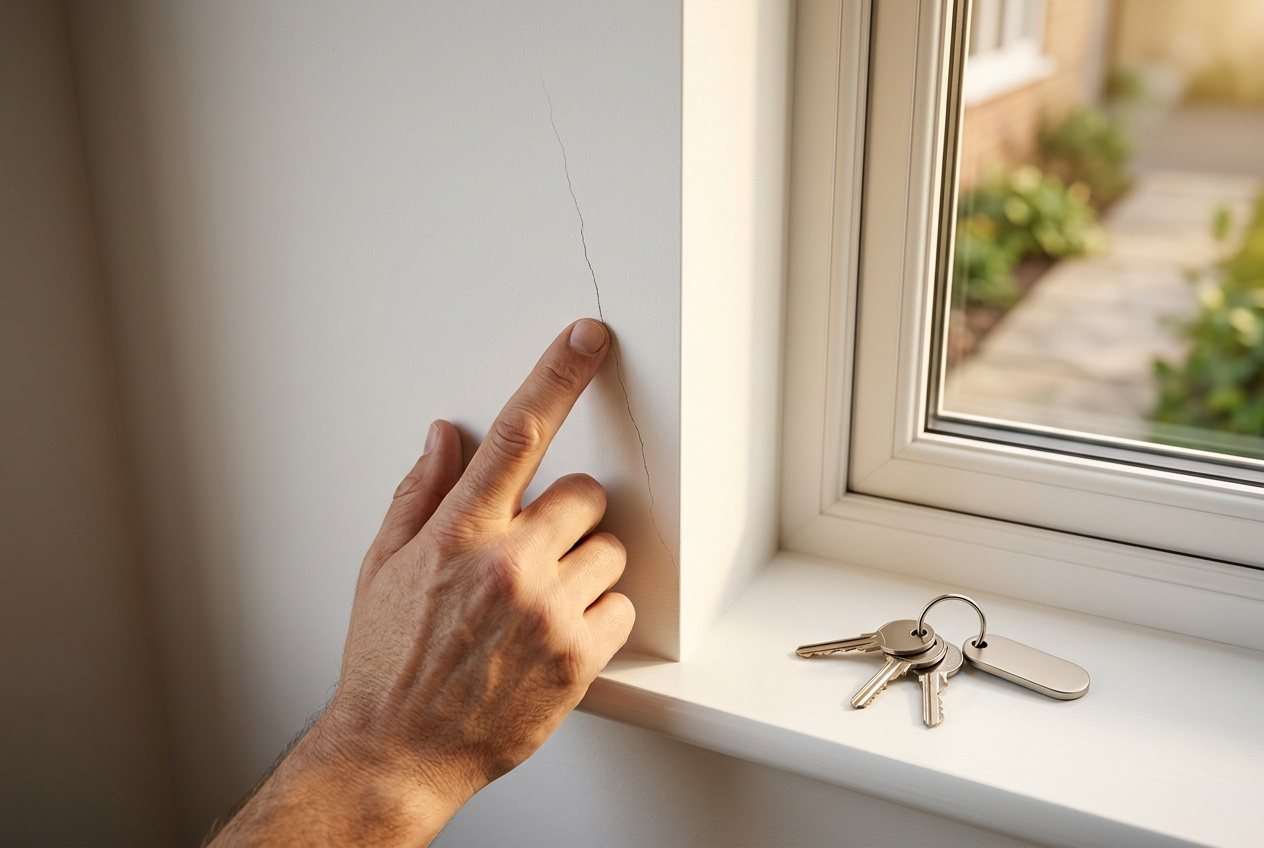 Three clocks, not oneDefects period
Part of a bigger picture: the whole checklist for choosing a builder in Queensland.
Layer one: the defects period in the contract
This is the one people mean when they say “the warranty.” It starts at practical completion, runs for the period in the contract schedule, and obliges the builder to return and rectify defects you report during it. Minor items that were listed on the defects document at handover are fixed in the same way.
What's in it is between you and the contract. Read the length, read how a defect has to be reported (usually in writing), and read what's excluded — normal shrinkage cracking in the first months is often called out. It's a service commitment. The law's protection is longer.
Layer two: the statutory warranties
“Schedule 1B of the Act sets out statutory warranties which are deemed to be part of all regulated domestic building contracts, even if not stated in the contract. The warranty period is 6 years from completion, termination or cessation of the work for breaches resulting in structural defects; 1 year for all other breaches. Legal proceedings for any breach must be started within the warranty period or a further 6 months if the breach becomes apparent within the last 6 months of the warranty period.”
Queensland Building and Construction Commission, Consumer Building Guide, version 3, effective July 2023 (sections 19–29 of Schedule 1B). These apply even if your contract never mentions them.
The warranties cover things like the work being done with reasonable care and skill, in accordance with the plans and specifications, with suitable materials, and in compliance with the law. A contract can't sign them away.
Layer three: the Home Warranty Scheme
The scheme is the QBCC's insurance for owners, and it has its own clocks:
- Cover runs six years and six months from the earliest of the premium being paid, the contract being agreed, or work starting — and may be extended where the work takes longer than six months.
- Structural defects: claim within three months after the day you first become aware of the defect, inside the cover period.
- Non-structural defects: noticed within six months after substantial completion, and claimed within seven months after that day.
Those windows are strict. The guide's own warning: strict timeframes apply for notifying the QBCC about defects. Noticing something and waiting to see if it gets worse can cost you the claim.
What counts as structural?
In broad terms, a defect that affects the building's structural integrity or its health and safety: footings and slabs, the frame, the roof structure, waterproofing that lets water into the structure, and the like. Cosmetic and finishing problems — paint, a door that binds, a cracked tile — are non-structural. The QBCC's rectification guidance draws the line in detail and the distinction decides which clock you're on, so if you're not sure, treat it as urgent and ask.
What do you do the day you notice something?
- Photograph it, with the date.
- Write to the builder describing it, and keep the email. This is the first step in the guide's dispute process and it starts the contract's defects procedure.
- Give a reasonable time to respond and fix. A good builder's answer is a date.
- If nothing happens, the QBCC's free Early Dispute Resolution service is next, and a complaint about defective work can lead to a direction to rectify. Do it inside the windows above.
Common questions
Are hairline cracks in the first year a defect?
Some cracking as a new house dries and settles is normal and many contracts say so. Cracks that widen, step through brickwork, or come with doors that stop closing are a different matter. Report it in writing either way; it costs nothing and it dates the observation.
Does the defects period restart after a repair?
Not usually under the contract. The statutory warranties and the scheme run from completion regardless. Check your contract's wording.
What if the builder has closed down?
That's one of the situations the Home Warranty Scheme exists for. What happens if a builder goes under is here.
What's Sabre's defects period?
It's in the contract, and Nathan will show you the clause and explain how to report something before you sign. Ask him what happens on day one after you ring.
Sources: Queensland Building and Construction Commission, Consumer Building Guide (version 3, effective July 2023) and Time limits for cover and claims (reviewed 23 September 2021); Schedule 1B, Queensland Building and Construction Commission Act 1991. Read 17 September 2026. Time limits are strict and can change; check the QBCC's current pages. This is a plain-English guide, not legal advice.
Keep reading
 Four kinds, one protects youThe builder's insurance
What insurance should a builder have, and what does it cover you for?
Four kinds. The Queensland Home Warranty Scheme protects you; contract works, public liability and workers' comp protect the house, the neighbours and the workers. What each covers and what to ask to see.
 The rules, in plain wordsProgress payments
Progress payments: what you pay, and when, on a Queensland house build
Deposit limits, claims that must match work on site, the commencement notice, practical completion, and the QBCC's warning that paying early cuts your Home Warranty protection.
 Fifteen questionsBefore you sign
What questions should we ask a builder before we sign?
Fifteen questions, most from the QBCC's own checklist: the licence, the contract type, the allowances, the deposit, the dates, the cooling-off, the variations, the warranty, and who you'll talk to in month four.
Where most families start
A walk through your house with Nathan.
Ask Nathan what Sabre's defects period is, how to report something, and what happens on day one after you ring. Then hold him to it.
Book your walk-through with Nathan Call 0422 831 306
Already thinking about a rebuild? The free block check is on the same page.