

Your questions answered · Knockdown rebuild
How much of the old house can be
reused in a knockdown rebuild?
It feels wasteful to knock down a house full of hardwood. Some of it can go somewhere useful. Almost none of it can go into the new house, and the reasons are worth knowing before you plan around a pile of old timber. Here's the honest list.
 Nathan Brain, carpenter and builder at Sabre
17 September 2026
5 min read
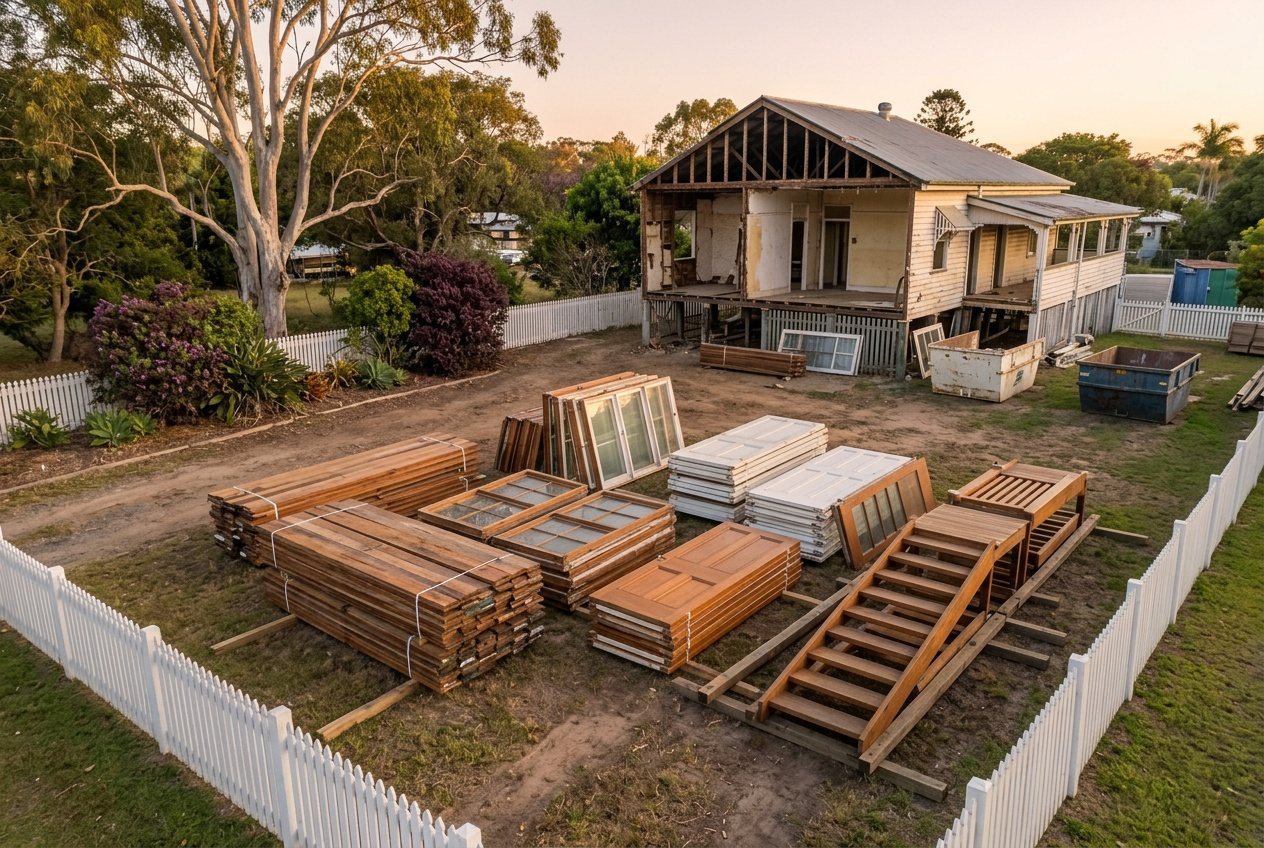 The honest listWhat can be reused
Part of a bigger picture: the whole knockdown rebuild path, step by step.
Why can't the old house go into the new one?
Three reasons, and they're not about taste.
- The code. A new house is certified against the Building Code of Australia: graded structural timber, termite management, wiring and plumbing to current standards, glazing and energy efficiency that a 1960s window doesn't meet. Old material can't be certified as new.
- The warranty. New domestic building work in Queensland carries statutory warranties — six years for structural defects, one year for the rest — and the builder stands behind the materials. Nobody can warrant seventy-year-old bearers.
- The labour. Pulling old material out carefully, de-nailing it, storing it and re-fitting it costs more in hours than the material is worth, most of the time. Where it isn't, it's usually the pieces below.
Schedule 1B of the QBCC Act “sets out statutory warranties which are deemed to be part of all regulated domestic building contracts, even if not stated in the contract.” Structural defects: six years. Other breaches: one year.
Queensland Building and Construction Commission, Consumer Building Guide, version 3, effective July 2023. The builder warrants the new work. That's the reason the new work is new.
What's worth saving?
The things an old Bayside house is famous for.
- Hardwood floorboards — wide, old-growth, and increasingly hard to buy new.
- VJ (vertical joint) wall boards and tongue-and-groove lining.
- Casement windows, French doors, fanlights, fretwork and balustrades from the pre-war houses.
- Internal doors, especially solid timber ones with the old hardware.
- Timber stairs and posts, where the timber is sound.
- A cast-iron bath, a pedestal basin, brass tapware.
- Roofing iron, sometimes, for sheds and fences.
The condition is everything. Termite-damaged or rotten timber isn't worth the truck.
What can come back as a feature?
Anything that doesn't have to hold the house up or keep the weather out.
Old floorboards become a bench top, a dining table, a feature wall or a set of shelves. A VJ wall becomes the lining of the new entry. A pair of casements becomes an internal window between the kitchen and the hall. A door becomes the door to the study. The old house numbers go on the new gate.
It's a good way to keep the house in the house. It's done as joinery and decoration, planned with the designer, and it needs to come out before demolition, carefully, not be rescued from the skip.
What's never reused?
- Anything containing asbestos. Fibro sheeting, eaves, vinyl floor tiles, some roofing, the bathroom linings. Licensed removal, wrapped, disposed of at a licensed facility. More here.
- Wiring, switchboards, plumbing, hot water systems. Age, standards and safety.
- Structural framing, bearers, joists, stumps. Can't be graded or certified as new.
- Old insulation, plasterboard, carpet, most kitchens and bathrooms.
What happens to the rest?
Demolition contractors sort. Concrete and brick go to crushing for road base. Steel and iron go to metal recycling. Clean timber goes to timber recycling or salvage. Asbestos goes to licensed disposal, separately and first. What can't be sorted goes to landfill. Ask the demolition contractor what their recovery rate is; the good ones know.
Common questions
Can we sell the salvage to offset the demolition?
Sometimes. Salvage yards buy good hardwood, windows and fittings, and some demolition contractors price a job lower if they keep the salvage. Ask both. Don't expect it to change the number much; it's a tidy-up, not a rebate.
Can the old roofing iron go on the new house?
No. New roofing has to meet the current standards for wind, fixing and corrosion, and it's warranted. Old iron makes good fencing and shed roofing.
Who takes the pieces out?
A salvage-minded demolition contractor, or a carpenter before demolition, for anything you want to keep. Tell the builder early so it's in the sequence. Once the excavator starts, it's gone.
Is it greener to renovate than rebuild?
Often, if the house is worth keeping — and that's a different question, answered here. If it isn't, a sorted demolition and a well-insulated new house is the honest comparison.
Sources: Queensland Building and Construction Commission, Consumer Building Guide v3 (implied warranties, ss19–29 of Schedule 1B); Queensland Government, asbestos.qld.gov.au (removal and disposal); Building Code of Australia (National Construction Code) as applied to Class 1a buildings. Read 17 September 2026. Plain-English guidance from a builder, not legal advice.
Keep reading
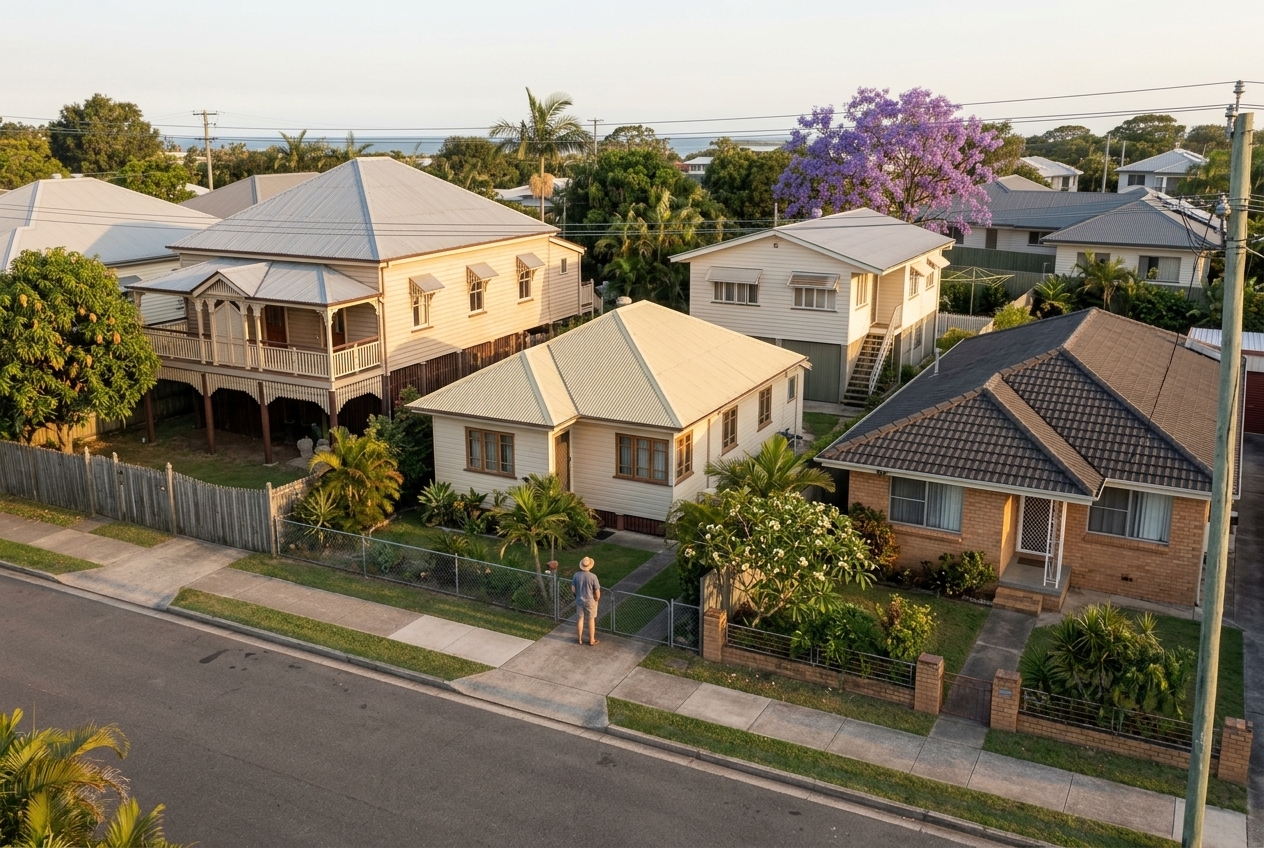 Four eras, one streetWhat they're made of
What are the houses on the Bayside actually made of?
Pre-war timber, post-war fibro, the 1960s highset, 1970s brick. What each one is like to live in, to change, and to knock down — from a builder who's opened up all of them.
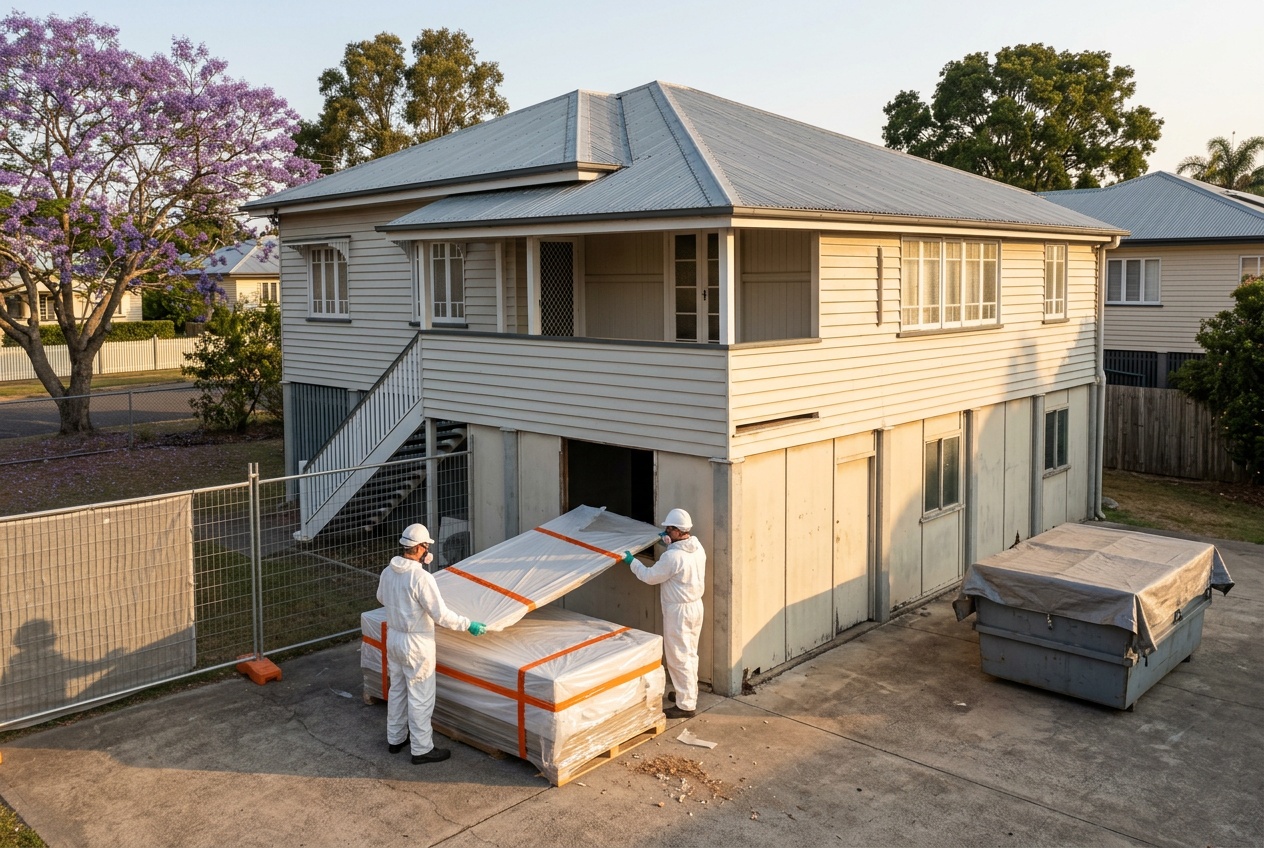 Knockdown rebuildAsbestos
What is asbestos removal going to mean for our rebuild?
Most Bayside houses from before 1990 have it somewhere. Who's allowed to remove it, what happens before the demolisher arrives, and why it moves the price.
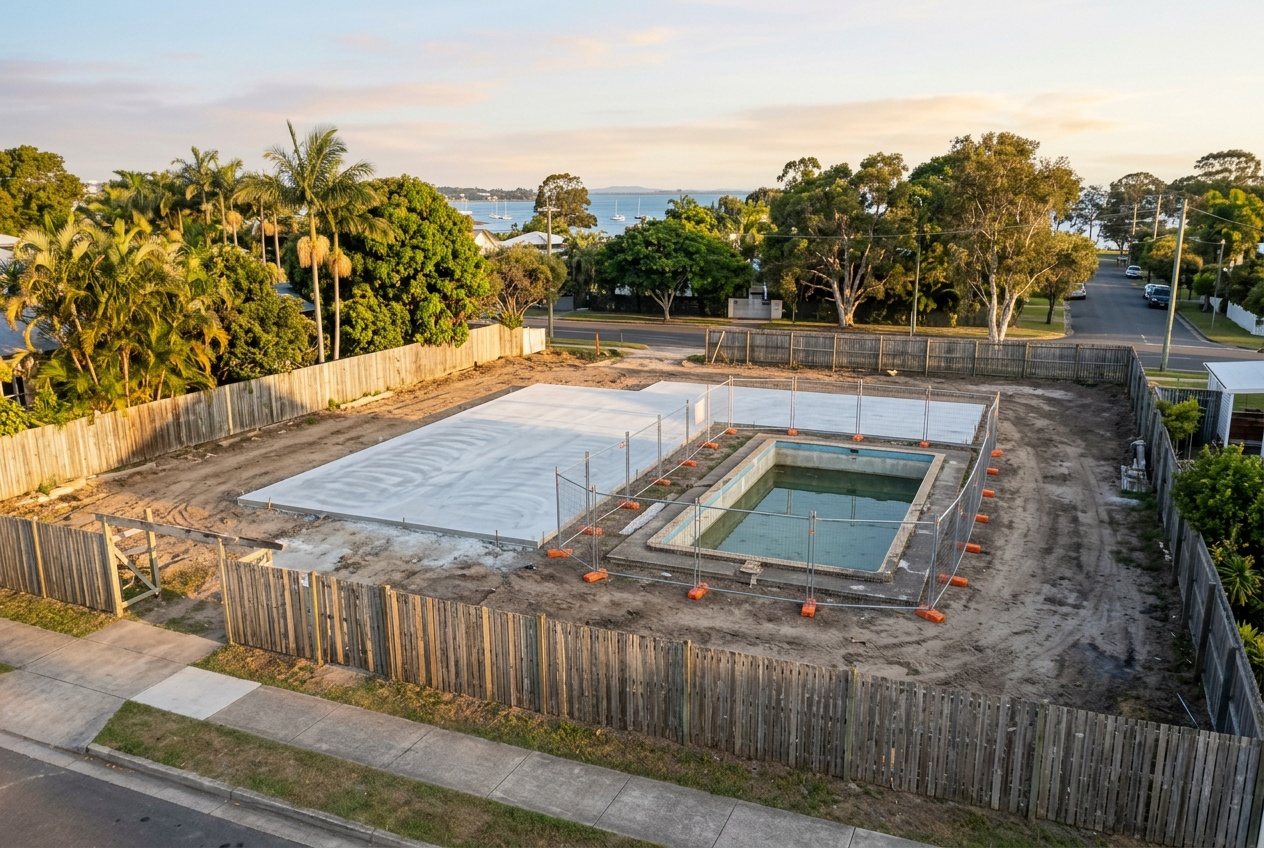 What stays and what goesThe pool, the shed, the fence
Can we keep the pool, the shed or the front fence in a knockdown rebuild?
Sometimes. What decides whether the pool, the shed, the fence, the driveway or the retaining wall survives: where it sits, what it's made of, what the machinery needs, and the rules.
Where most families start
A walk through your house with Nathan.
Tell Nathan what you'd like to keep from the old house. He'll tell you what's worth pulling out before the excavator arrives, and what to let go.
Book your walk-through with Nathan Call 0422 831 306
Already thinking about a rebuild? The free block check is on the same page.