

Your questions answered · Living on the Bayside
Bayside storm season: what it means for
your roof, your trees and your insurance.
Every October the afternoons get heavy, and every Bayside house gets tested. Here's what council and the state say to check before the season, what a builder actually looks at on a seventy-year-old house, and why the first big storm is often the day a family decides about the house.
 Nathan Brain, carpenter and builder at Sabre
17 September 2026
6 min read
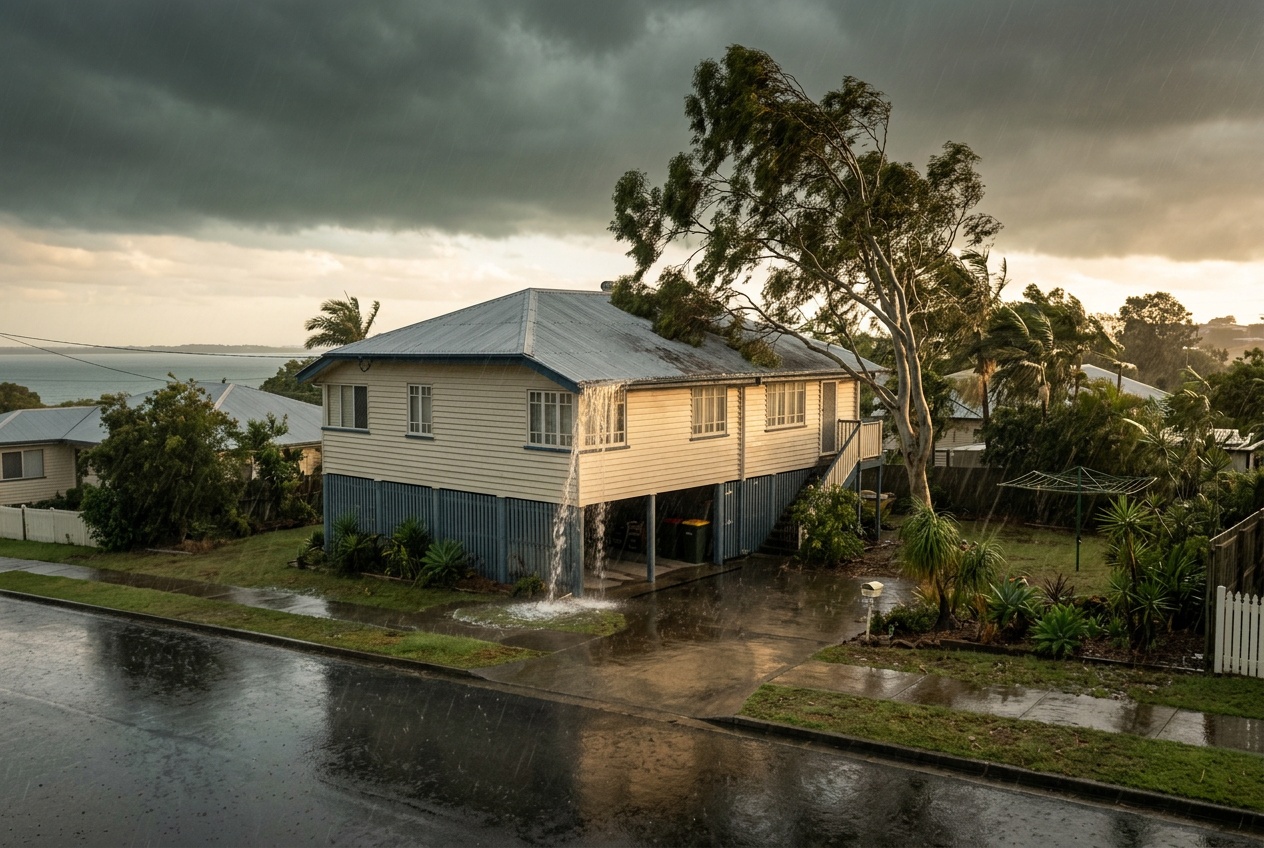 October to MarchStorm season
Part of a bigger picture: the honest guide to living on Brisbane's Bayside.
When is storm season, and what does it bring?
“Storm season typically lasts from October to March. During this time, prepare for potential heavy rain, strong winds, hail and other severe weather conditions.”
Brisbane City Council, Brisbane Severe Weather Alert. Council runs an alert service for severe storms and flooding in the Brisbane area; sign up before October, not during it.
On the Bayside the storms arrive from the west and south-west in the late afternoon, and the wind that follows comes off the bay carrying salt. That combination — a hot day, a black sky at four o'clock, hail, then a night of salt wind — is the Bayside summer. Houses here are built for it or they aren't.
What does the state say to check?
“Check the condition of your roof and repair if needed.” “Keep gutters and downpipes clear of leaves and other blockages.” “Trim trees and branches that are close to your buildings.” “Fix any rust, loose fittings and rotting or termite-affected timber.” “Secure loose items that could cause damage if blown around in high winds.” “Make sure to check your insurance policy has enough cover for your home and contents.”
Get Ready Queensland, Protect your home, Queensland Government. Six lines. On a post-war Bayside house, the first and the fourth are the ones that cost money.
What does a builder look at on an old Bayside roof?
The state says “check the roof.” Here's what that means when the roof is sixty years old and three streets from the bay.
- The screws and the sheets. Salt air corrodes roofing screws from the head down. A sheet that's held by rust is a sheet that lifts in a gust.
- The gutters. Old steel gutters rust through at the joins and behind the fascia, where nobody sees it until the water is running down the inside of the wall.
- The flashings. Around the chimney, the vent pipes, the change of pitch. The places a roof leaks are rarely the middle of a sheet.
- The battens and the frame. Under the sheets, in a hardwood-framed house, the battens may be fine at seventy. Where the roof has leaked for years, they aren't.
- Tiles. On a 1970s brick house, cracked tiles, slipped ridge capping and mortar that's gone to sand. Hail finds all three.
A roof plumber can fix most of this. What they can't fix is a roof that's at the end of its life on a house that's at the end of its life, and that's the conversation storm season starts.
What about the trees?
The Bayside's old suburbs have old trees, and the state's advice is to trim the ones close to the buildings. Two things to know locally.
- Some trees are protected. Brisbane City Council has vegetation protection rules, and some trees on private land can't be removed without approval. Check before you cut, not after.
- The tree that falls is usually the neighbour's. Talk to them in September, not in the dark in December.
If you're planning a rebuild, the trees on the block are one of the first things a builder and a designer look at — what stays, what's protected, what the new house has to be designed around.
What about insurance?
We're builders, not insurers, so this is short. The state's checklist says make sure the policy has enough cover for the house and contents. Two things a builder would add:
- Insure the rebuild cost, not the purchase price. On the Bayside the land is most of the value; the house is what the insurer pays to replace. Ask your insurer how they set the sum insured.
- Tell them what the house is. Age, construction, roof type, whether it's been rewired. A new house designed to current standards and flood levels is a different risk from a 1960s house that wasn't, and it's worth saying so.
Why the storm is often the decision
Here's the pattern. A family has been meaning to do something about the house for years. Then a storm lifts a sheet, or the gutter gives up and the water comes through the ceiling, or the tree comes down on the carport. The insurer sends someone. The someone says the roof needs replacing, and while they're up there, the frame under it has been wet for a decade.
Now the family is pricing a new roof on a small old house with fibro walls and one bathroom, on a block that's worth more than the house. And they ask the question that was always coming: is this the house we want to spend that on?
Sometimes yes. A sound hardwood house with a new roof has decades in it. Sometimes no, and the storm has just told them what a builder would have. Why that answer is so common on the Bayside is here. Either way, the honest thing is to get the whole house looked at, not just the roof, before the money goes anywhere.
Common questions
When should we do the checks?
September, before council's October start. Roof plumbers and arborists are booked out once the first storm has been through.
Can we clean the gutters ourselves?
On a lowset, many people do. On a highset, it's a ladder job at height, and on a pre-1990 house the eaves may be fibro — don't drill, cut or pressure-wash them. The asbestos rules are here.
Does a new house handle storms better?
It's built to the current wind, water and flood requirements, with new fixings and flashings, and designed for the block. That's not a guarantee against a big storm; it's a different starting point.
Should we wait until after storm season to start a build?
Ask your builder how they sequence the roof. A house that's framed and roofed before the wet is a different job from one that's open to it, and that's a scheduling conversation, not a rule.
Sources: Brisbane City Council, Brisbane Severe Weather Alert; Get Ready Queensland, Protect your home, Queensland Government. Read 17 September 2026. The roof and tree observations are a builder's, not an inspection of any particular house. Not insurance, arboricultural or legal advice.
Keep reading
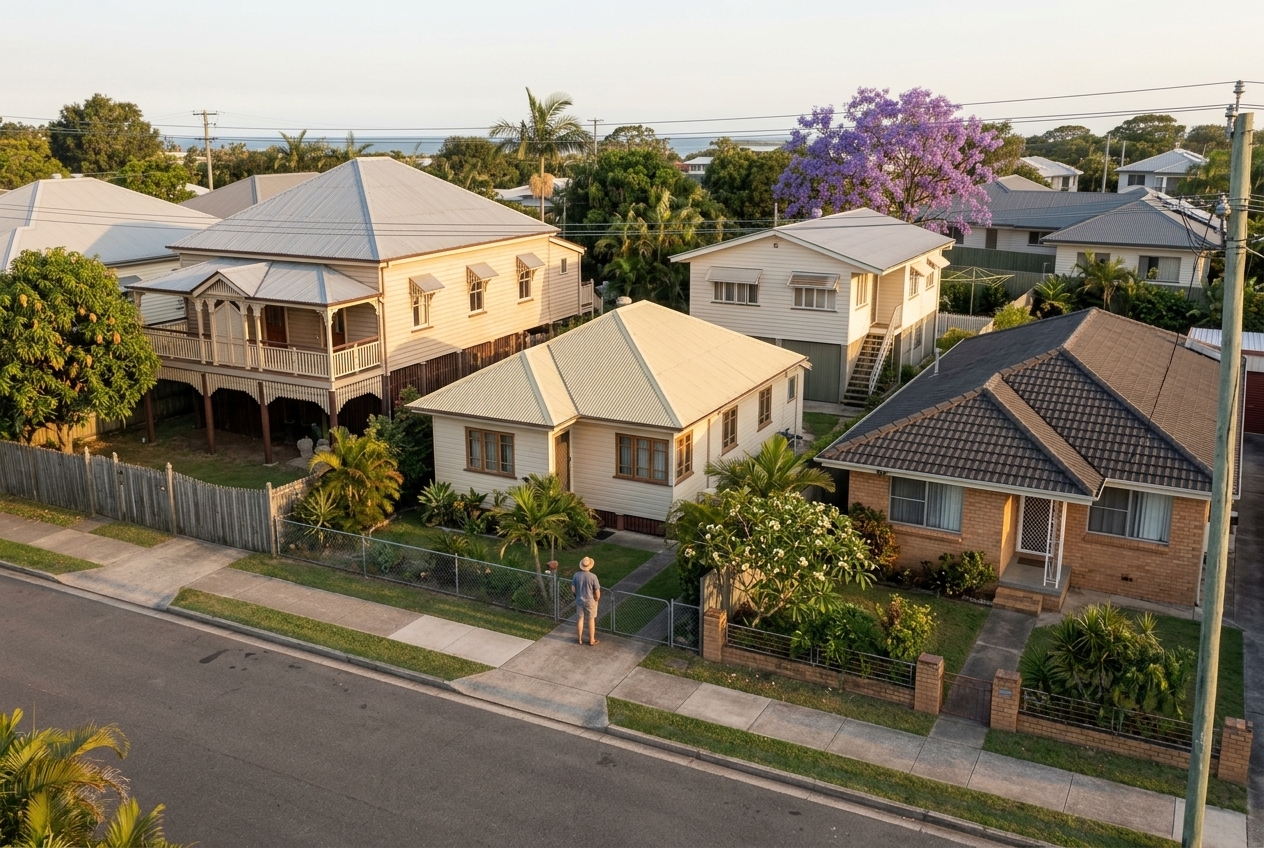 Four eras, one streetWhat they're made of
What are the houses on the Bayside actually made of?
Pre-war timber, post-war fibro, the 1960s highset, 1970s brick. What each one is like to live in, to change, and to knock down — from a builder who's opened up all of them.
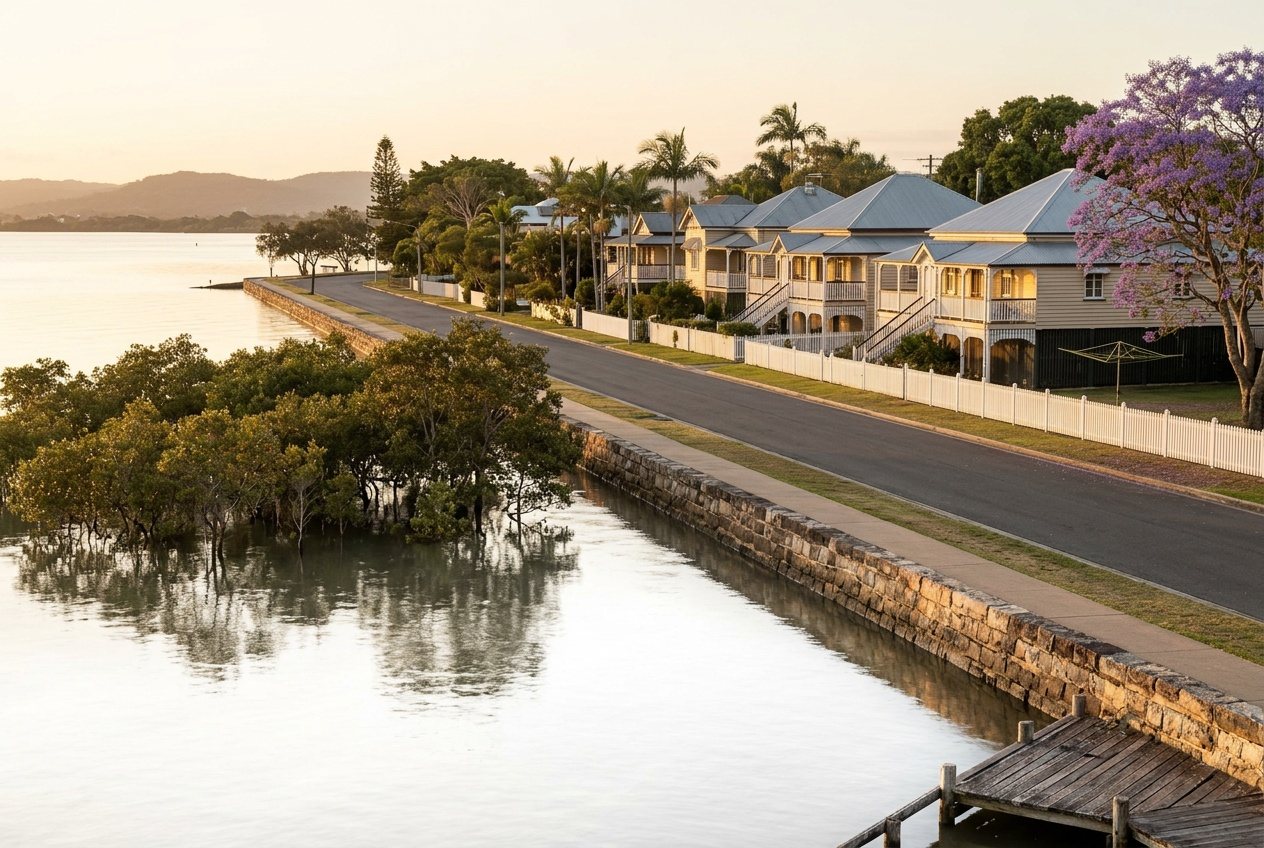 Reading council's mapDoes Wynnum flood?
Does Wynnum flood? What the council maps actually show
Not from the river. Storm tide, creeks and overland flow, mapped lot by lot. How to read council's Flood Awareness Map and FloodWise report for your address, without the panic.
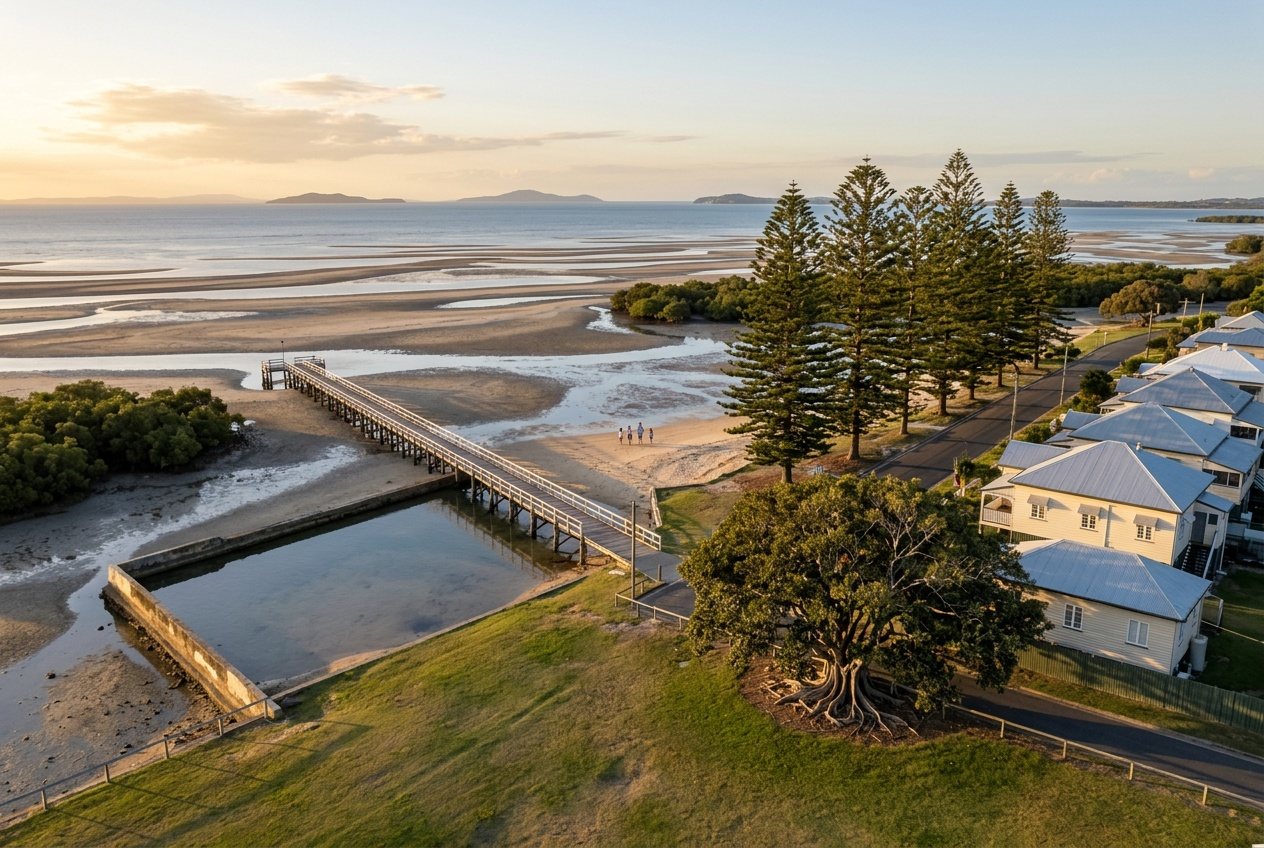 The Bayside suburbsWynnum
Is Wynnum a good place to live? An honest look at the good and the annoying
The water, the train, the village and the schools; the tide, the salt, the storms and the seventy-year-old houses. Written by a builder, not an agent.
Where most families start
A walk through your house with Nathan.
If the last storm told you something about the house you didn't want to know, that's a walk-through, not a panic.
Book your walk-through with Nathan Call 0422 831 306
Already thinking about a rebuild? The free block check is on the same page.