

Your questions answered · Living on the Bayside
What is the Wynnum–Manly foreshore
actually like to live near?
The streets along the water are the ones everybody wants, and the houses on them work harder than any others on the Bayside. Salt, wind, tide and weather all come off the bay, and a house near the foreshore is either built for that or slowly losing to it. Here's what living there is actually like, and what it means for the house.
 Nathan Brain, carpenter and builder at Sabre
17 September 2026
5 min read
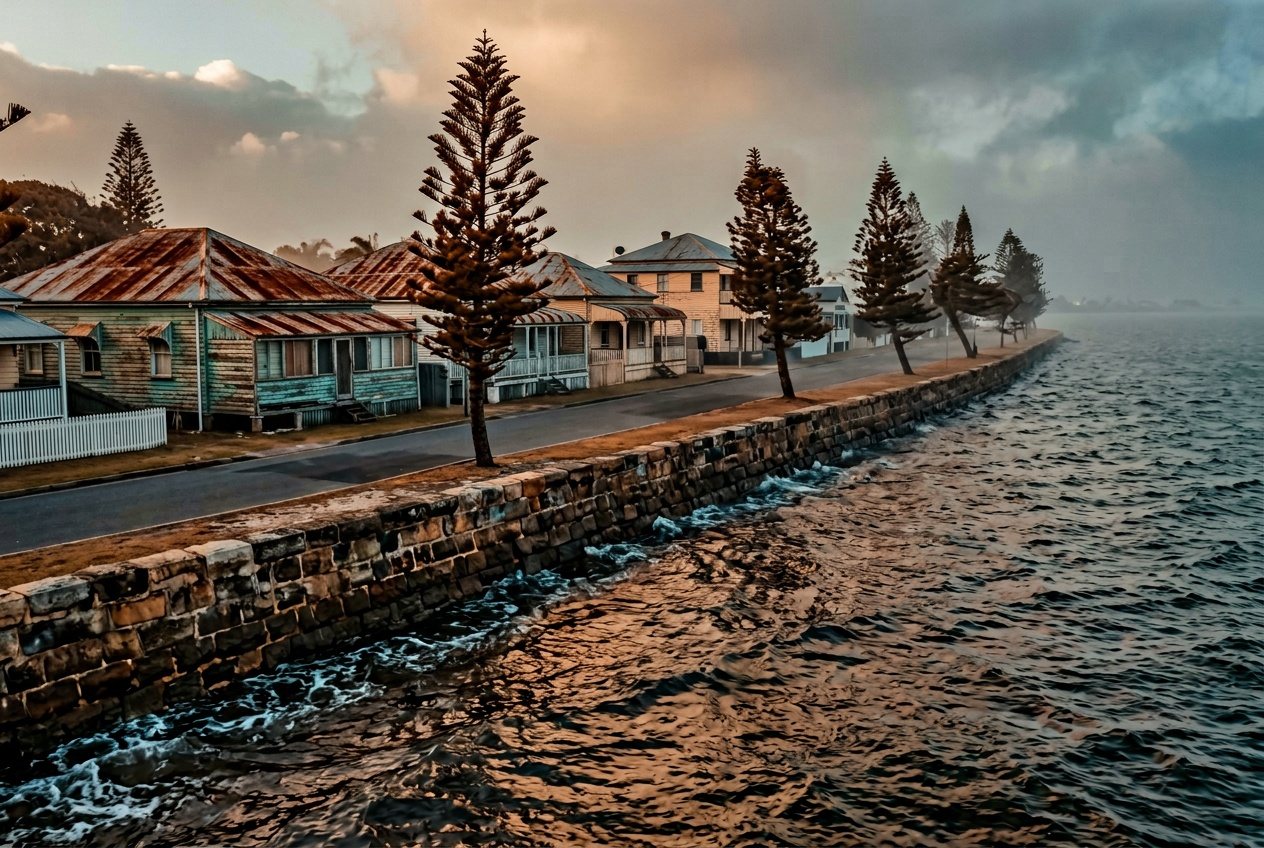 Salt, wind, tideLiving on the foreshore
Part of a bigger picture: the honest guide to living on Brisbane's Bayside.
What does the salt do?
It corrodes. Salt carried on the air settles on every surface facing the bay and gets into everything that isn't sealed. On an old foreshore house you see it as rust on the roofing iron and the gutters, rusted nails and screws bleeding through paint, corroded hinges and window winders, and pitting on anything aluminium or galvanised that wasn't rated for the coast.
It's a maintenance load, not a mystery. Materials exist that are made for marine environments, and the difference between a foreshore house that ages well and one that doesn't is mostly whether they were used. Which is a design and specification decision, made once, at the start.
What does the wind do?
The afternoon north-easterly off the bay is the reason the old houses along the water were built with their verandahs facing it. In summer it's the best thing about the street.
In a storm it's the load the house has to carry. The frame's tie-downs, the roof fixings and the way the roof is designed are engineered to a wind classification, and a house on an exposed foreshore street is designed to a higher one than a house three streets back. On an old house nobody engineered it at all, which is what council's storm-season advice about roofs is really about. That post is here.
What does the tide do?
Two things, at two scales.
Every day, it goes out a long way and comes back. The foreshore is sand and mudflats at low tide and water to the seawall at high. It's the rhythm of the place, and it's why the wading pool and the jetty exist.
A few times a year, on a king tide with a swell behind it, the water reaches the top of the wall and the lowest streets see it in the gutters. That's the ordinary end of what council models as storm tide: the bay pushed up by a storm surge on top of a high tide. The old houses along the water were built before anyone mapped it. The new ones are built to the map.
What do council's maps say about the foreshore streets?
Council's FloodWise Property Report shows which kinds of flooding could affect a property — river, creek, storm tide and overland flow — the flood levels at different likelihoods, and the minimum habitable floor level a new house must meet. Storm tide is mapped under the coastal hazard overlay.
Brisbane City Council, FloodWise Property Reports and Flood Awareness Online. For a foreshore address, pull the report before you buy or build. It's free and it takes a minute.
What it means in practice: a new house on the water side usually has its living areas above the mapped level, and the ground floor is the garage, the storage and the room that can be hosed out. What a flood overlay changes for a rebuild is here.
What does a house built for the foreshore do differently?
- Materials rated for the coast. Roofing, gutters, fixings, hardware, balustrades, external lights: all specified for a marine environment, not the standard catalogue.
- A wind design to suit the exposure. Tie-downs, roof fixings and openings engineered for the site's wind classification.
- The floor level from the report. Living up, wet-tolerant space down.
- Facing the breeze, shading the west. The old houses had this right: openings to the north-east, protection from the afternoon sun.
- Maintenance designed in. Surfaces you can wash the salt off, paint systems made for it, and no hidden steel.
That's a different specification from a house three streets back, and it should look different on the quote. What a complete quote carries is here.
Common questions
Does living on the water mean the house will flood?
It means council has mapped what the bay could do in a storm-tide event and set a floor level for new houses accordingly. An old house below that level carries the risk; a new one designed to it doesn't carry it the same way. The report for the address is the honest answer.
How much more maintenance is a foreshore house?
Noticeably more on an old one that wasn't built for it: paint, roofing, hardware, stumps. Much less on one specified for the coast. It's the difference between fighting the salt and having planned for it.
Are the foreshore streets in the character overlay?
Many of the older ones are. If the house is pre-1947, demolition needs a development application and council may say no. Check the street here.
Would you build on the water side?
Yes, designed for it. The best streets on the Bayside deserve houses that can take what the bay gives them.
Sources: Brisbane City Council, FloodWise Property Reports, Flood Awareness Online and Brisbane Severe Weather Alert; Brisbane City Plan 2014, coastal hazard overlay. Read 17 September 2026. Plain-English guidance from a builder; not engineering, insurance or planning advice. Wind classification and material specification for a given site are set by the engineer and the designer for that site.
Keep reading
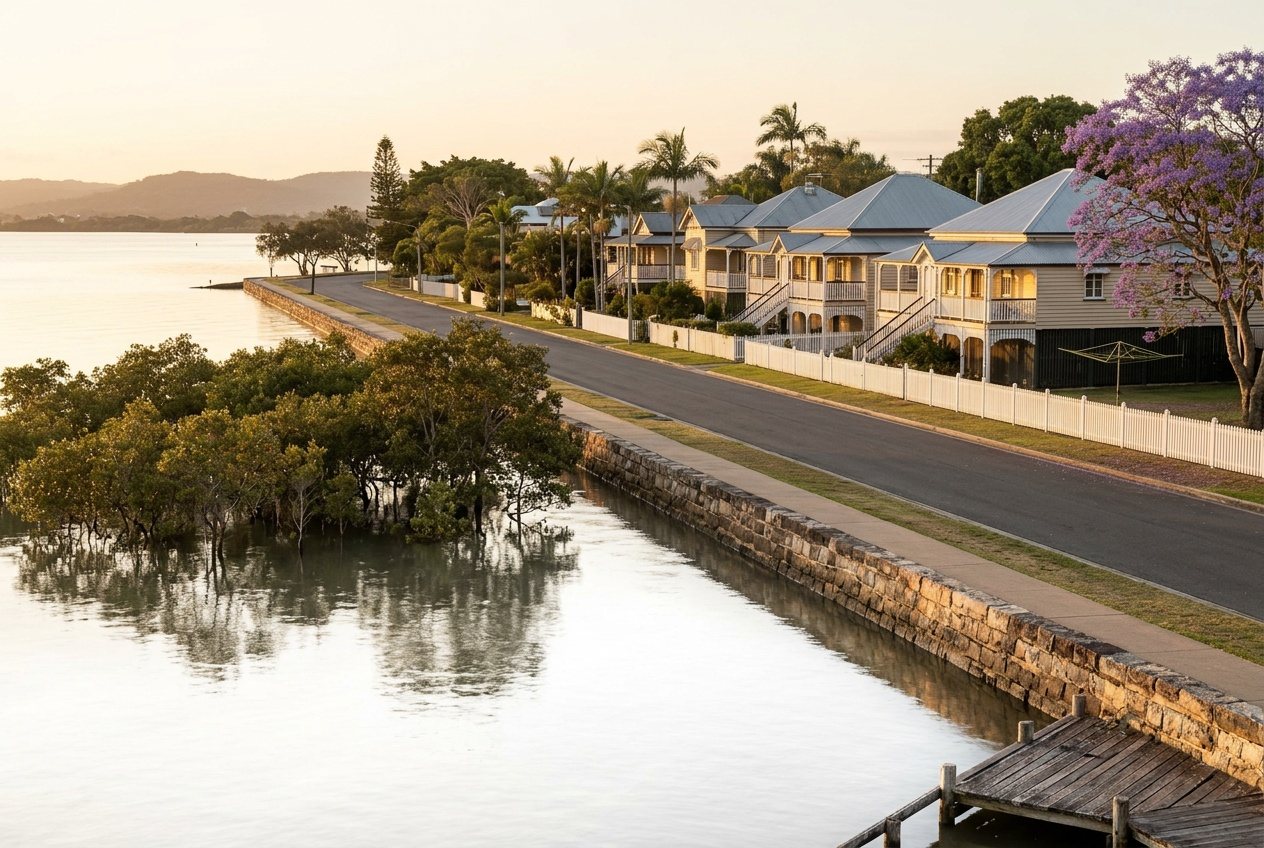 Reading council's mapDoes Wynnum flood?
Does Wynnum flood? What the council maps actually show
Not from the river. Storm tide, creeks and overland flow, mapped lot by lot. How to read council's Flood Awareness Map and FloodWise report for your address, without the panic.
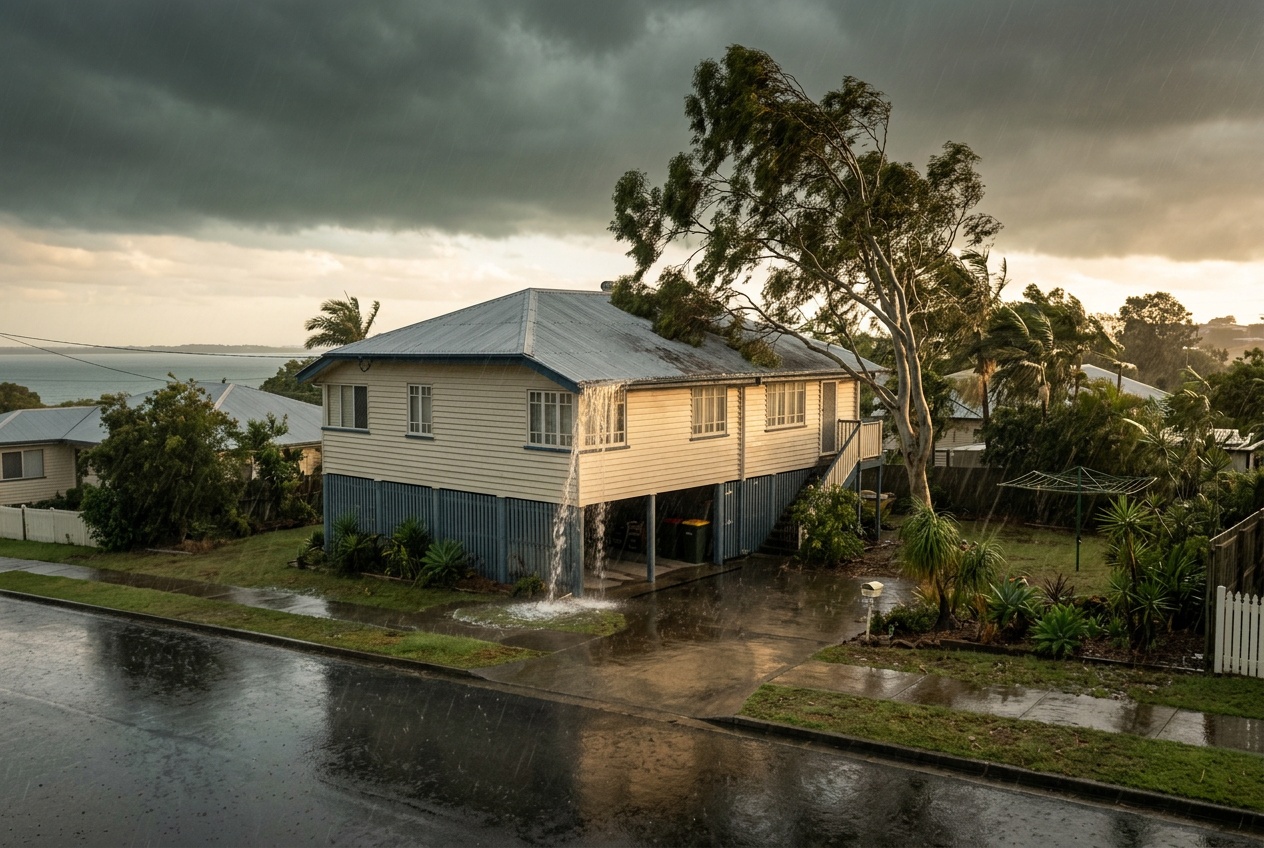 October to MarchStorm season
Bayside storm season: what it means for your roof, your trees and your insurance
October to March, every year. What Get Ready Queensland says to check before it starts, what a builder looks at on an old Bayside house, and why the storm is the first honest look at the roof.
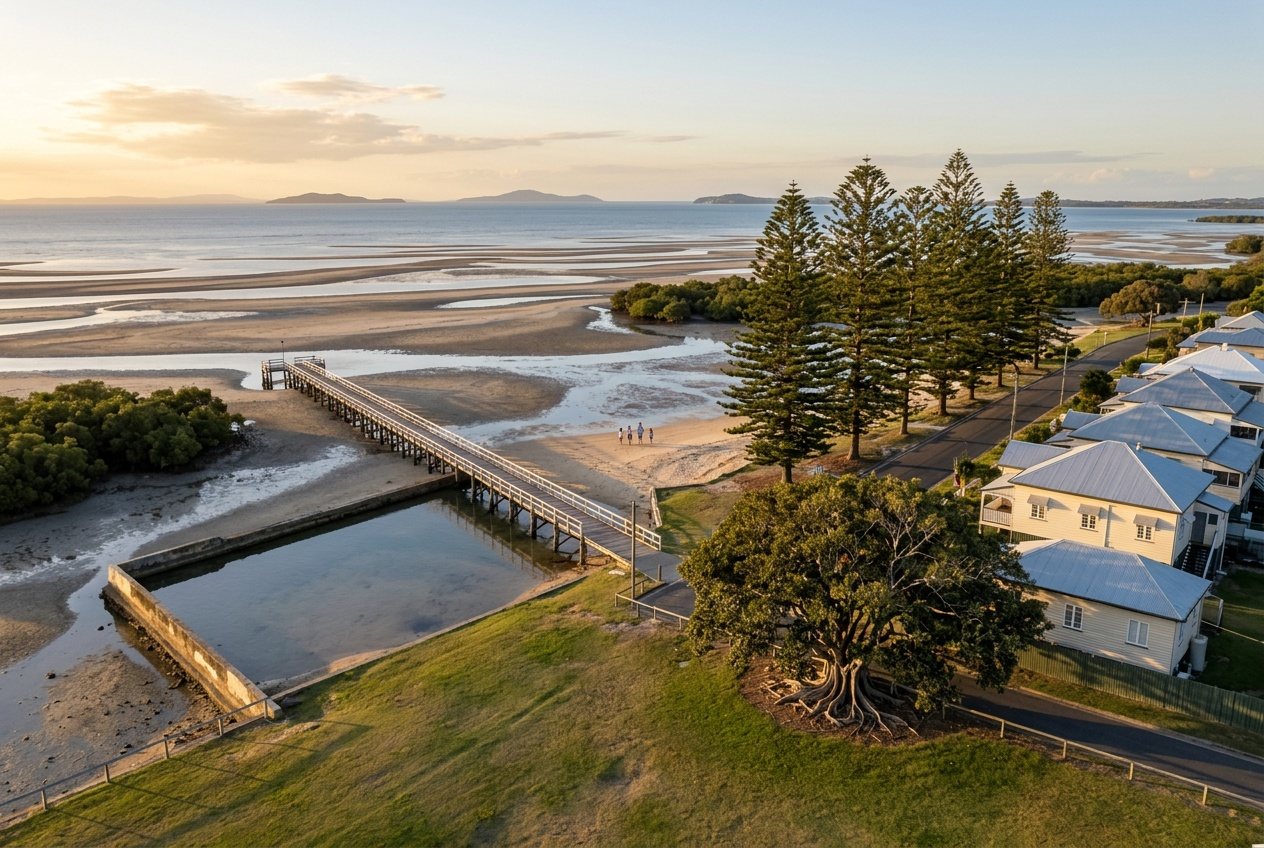 The Bayside suburbsWynnum
Is Wynnum a good place to live? An honest look at the good and the annoying
The water, the train, the village and the schools; the tide, the salt, the storms and the seventy-year-old houses. Written by a builder, not an agent.
Where most families start
A walk through your house with Nathan.
If your house is on the water side and it's showing its age, Nathan will walk it and tell you what the salt has done and what a house built for the foreshore would do differently.
Book your walk-through with Nathan Call 0422 831 306
Already thinking about a rebuild? The free block check is on the same page.