

Your questions answered · Dealing with a builder
What insurance should a builder have,
and what does it cover you for?
“Fully insured” is on every builder's website and it means four different things. One of them is a state scheme that protects you if the builder can't finish or the work is defective. The others protect the house, the neighbours and the workers while it's being built. Here's what each one is and what to ask for.
 Nathan Brain, carpenter and builder at Sabre
17 September 2026
5 min read
 Four kinds, one protects youThe builder's insurance
Part of a bigger picture: the whole checklist for choosing a builder in Queensland.
The Home Warranty Scheme: what it covers
It's run by the QBCC and it's the one policy on the list that exists for the owner.
“Residential construction work valued at more than $3,300 is covered by the Qld Home Warranty Scheme. The Scheme provides protection for home owners against non-completion, defective work and subsidence for up to 6 years from completion, provided a licensed contractor performs the work.” The builder must collect the premium and pay it to the QBCC within 10 business days of the contract or before work starts, whichever is earlier.
Queensland Building and Construction Commission, Consumer Building Guide, version 3, effective July 2023. If you haven't received a Notice of Cover within two weeks of signing, ask why.
Three things to know about it:
- It needs a licensed contractor. Work by an unlicensed builder may not be covered. That's the reason the licence check comes first.
- It has time limits. Cover runs six years and six months from the earliest of the premium, the contract or the start of work; structural defect claims must be made within three months of first becoming aware; non-structural defects noticed within six months of substantial completion and claimed within seven. The periods are explained here.
- It doesn't cover non-completion on cost-plus contracts. The QBCC says so directly. That's here.
Contract works insurance
Sometimes called construction or builder's risk insurance. It covers the works themselves while they're being built: the frame that blows over in a storm, the fire in the half-finished kitchen, materials stolen from the site. The builder holds it and it runs for the length of the job.
Why it matters to you: until practical completion the house is the builder's responsibility, and if something destroys it, this is the policy that rebuilds it. Ask who carries it and confirm it's current. Some contracts require the owner to take it out instead; read the schedule.
Public liability and workers' compensation
Public liability covers injury to people who aren't employees, and damage to property that isn't the works: the neighbour's car under a falling sheet, a visitor who trips on site. A builder without it is putting those risks onto whoever's nearest, which can be you as the owner of the land.
Workers' compensation is compulsory for employers in Queensland and covers the builder's employees if they're injured. Subcontractors carry their own. It's the builder's obligation, not yours, and it's the one you ask about so you know the builder runs a proper business.
What should you ask to see?
- The Home Warranty Notice of Cover for your contract, from the QBCC, within two weeks of signing.
- Certificates of currency for contract works and public liability, showing the insurer, the period and the cover.
- Confirmation of workers' compensation for the builder's own employees.
A builder who runs a proper business has these in a folder and will send them without a fuss. It's a normal question. Sabre answers it before you ask.
What about your own insurance?
Tell your home insurer before demolition. A vacant block and a building site are different risks from an occupied house, and the policy you had on the old house doesn't quietly become a policy on the new one. Ask them what they cover during the build and from when. We're builders, not insurers; that conversation is yours.
Common questions
Who pays the Home Warranty premium?
You do, through the builder, who collects it and passes it to the QBCC. It's usually a line in the contract price. The Notice of Cover is your proof it was paid.
Does Home Warranty cover the builder's bad workmanship?
Defective work is one of the three things it covers, within its time limits, after the QBCC's complaint and rectification process. The first step is always a written complaint to the builder.
Is “fully insured” on a website enough?
No. Ask for the documents. A certificate of currency takes a builder five minutes to send.
What if a storm damages the frame?
That's what contract works insurance is for, and it's the builder's claim, not yours. The Home Warranty Scheme also has limited cover for fire and storm damage to incomplete work in a non-completion claim.
Sources: Queensland Building and Construction Commission, Consumer Building Guide (version 3, effective July 2023); Time limits for cover and claims (reviewed 23 September 2021); Home warranty for non-completion claims; Contracts and agreement types (reviewed 27 June 2025). Read 17 September 2026. Cover amounts and limits change; check the QBCC's current pages. This is a plain-English guide, not insurance or legal advice.
Keep reading
 Dealing with a builderThe QBCC check
What is the QBCC, and what should you check on a builder's licence?
The regulator, the public register and the Home Warranty Scheme, in plain words. How to look any builder up in five minutes — including us.
 The fear behind every questionIf the builder goes under
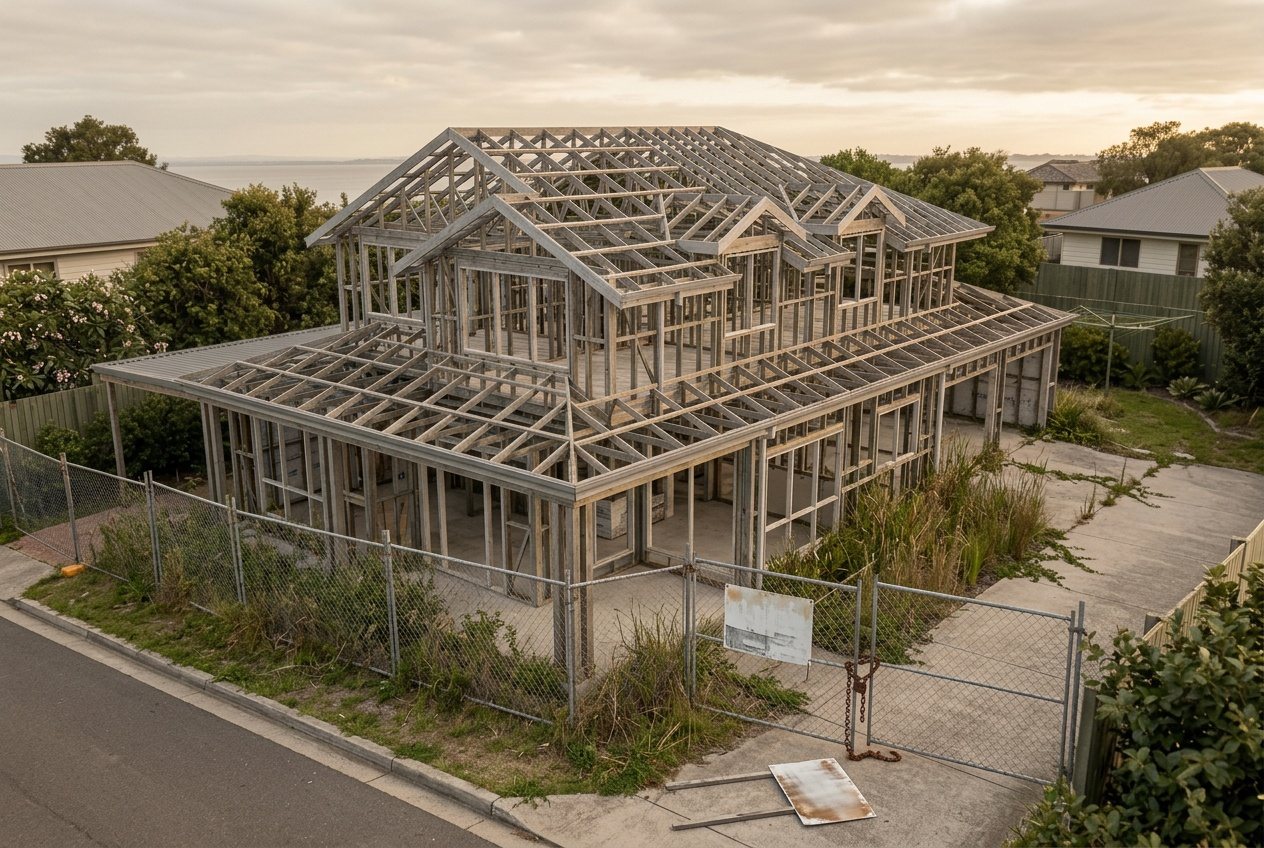
What happens if a builder goes under mid-build?
The Home Warranty Scheme's non-completion cover: when it applies, the three-month window, what it pays, and the two things that shrink it before you ever need it.
 Three clocks, not oneDefects period
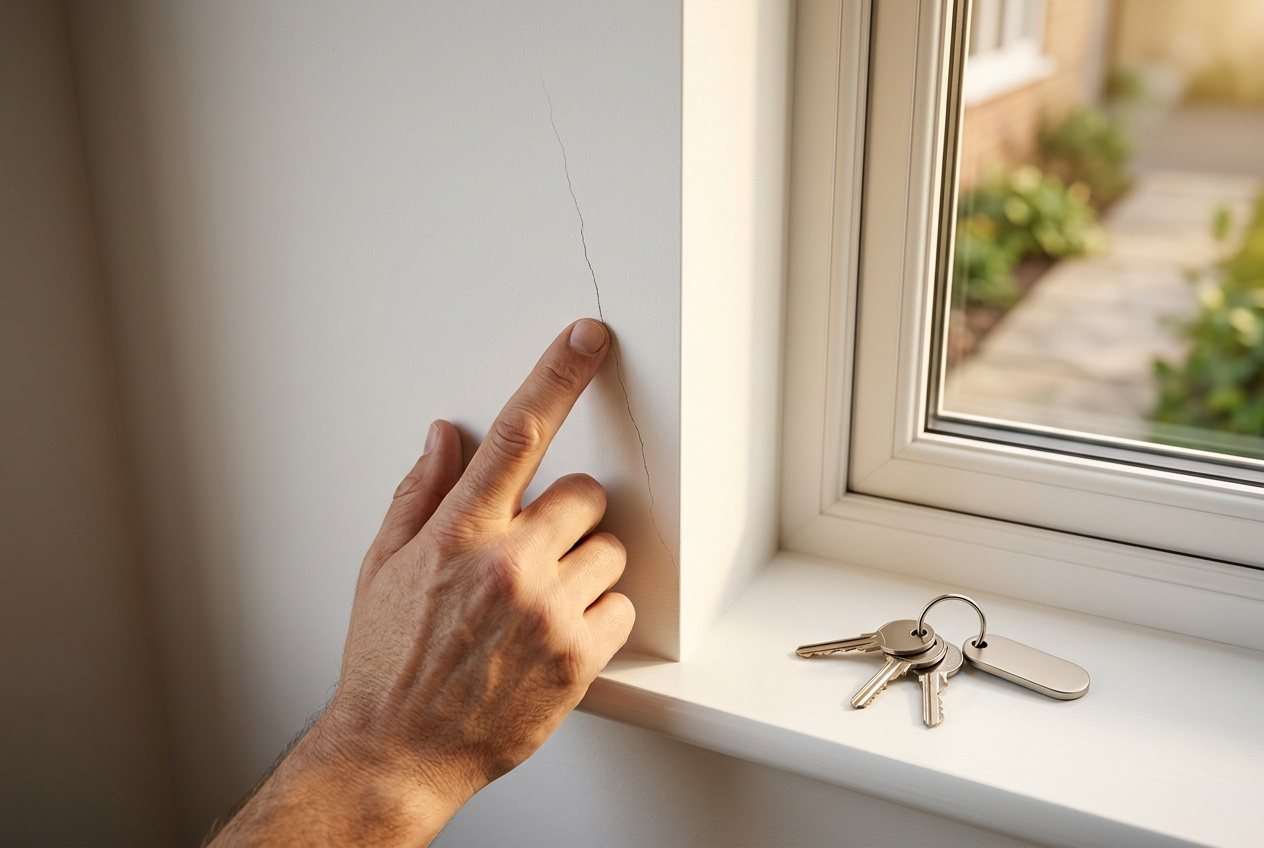
What is a defects liability period, and what protects you after it?
Three layers: the defects period in your contract, the statutory warranties in the QBCC Act, and the Home Warranty Scheme's windows. What each does, when each ends, and what to do when you notice a crack.
Where most families start
A walk through your house with Nathan.
Ask Nathan for the Notice of Cover and the certificates of currency. He'll have them, and he'll explain what each one does for your job.
Book your walk-through with Nathan Call 0422 831 306
Already thinking about a rebuild? The free block check is on the same page.